Menu

Blog
Filtration Filters: What Are They and How Do They Work?
Nov 25 2026
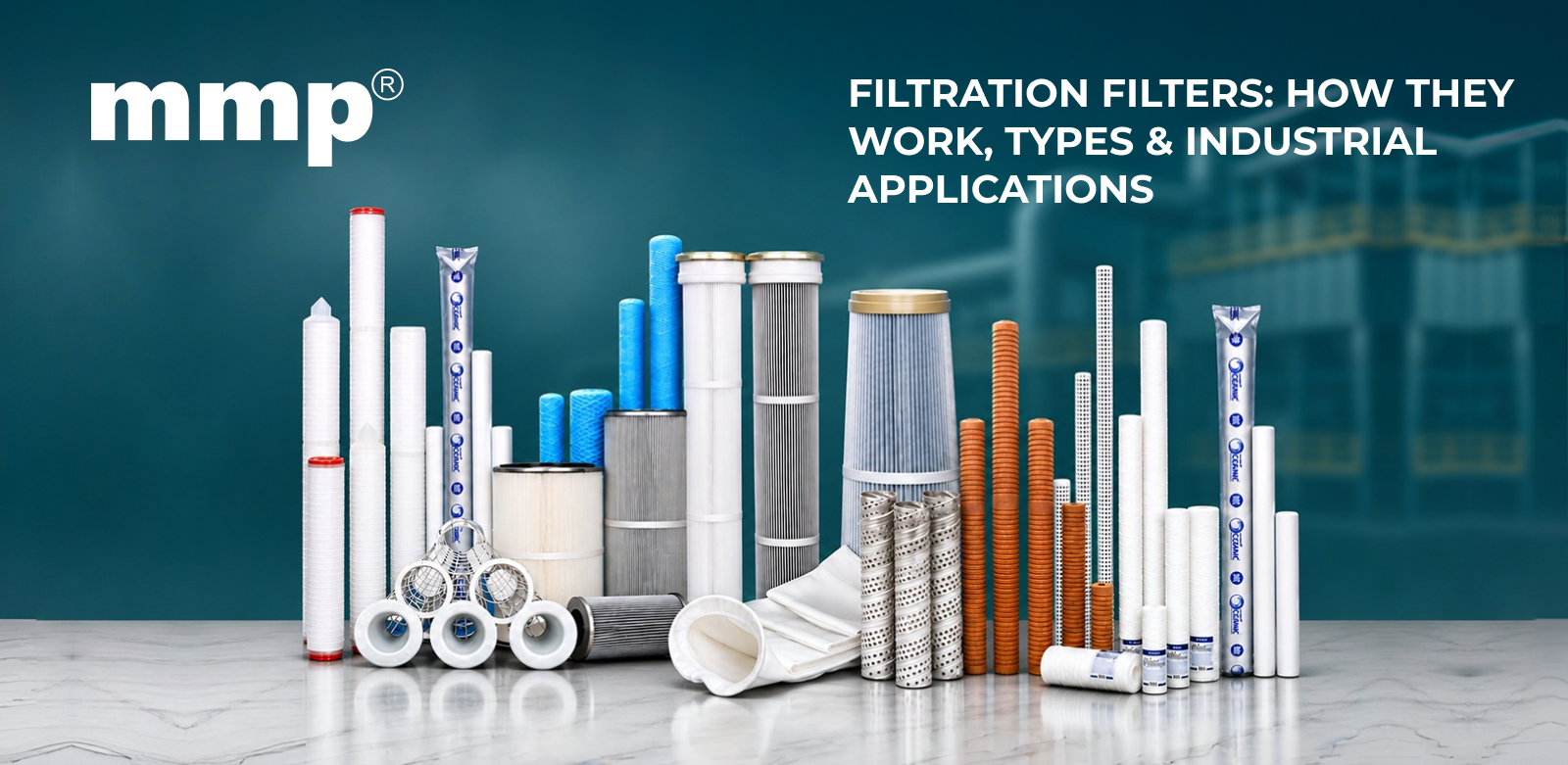
Filtration filters are a major factor in the quality of water, air and industrial process fluids. They're used to remove suspended particles from water in water treatment plants, to capture dust in manufacturing facilities and so on. They're a vital part of the process in terms of controlling contamination and protecting the process, the equipment and the end product.
However not all filters work in the same way. It's the construction of the filter, the filter media, the micron rating and the application that will determine what it can capture and how well it will perform. Knowing the differences is key to the industry being able to select the right filter for their application.
1. What Are Filtration Filters? Understanding the Basics
Filtration filters are components which are designed to remove unwanted particles and contaminants from a fluid or a gas by passing it through a filtering medium. The medium will capture the particulates (suspended solids, dust, fibres etc) and allow the filtered fluid/gas to pass through.
A filtration system will generally comprise a filter housing, a filter element and the appropriate connections for the flow of fluid or air. The filter element is the part which contains the media for the actual retention of the contaminants.
Filtration is used in a number of industries as contamination can have an impact on product quality, equipment performance and process efficiency. Water filtration is used to remove suspended solids and air filtration is used to remove dust and particulate matter from the air.
It's vital to appreciate that different filters are designed to remove different things. A particulate filter for instance may remove suspended particles but won't necessarily remove dissolved salts, gases or micro-organisms. The right filter therefore has to be chosen depending on what you're trying to achieve with the filtration.
2. How Do Filtration Filters Work? Understanding the Filtration Process
The filtration process works by passing a fluid or a gas through a porous medium which allows the required substance to pass whilst retaining the unwanted particles.
Although the operating principle varies with filter design, the process generally follows four stages:
- Entry: Unfiltered water, air or process fluid enters the filter housing.
- Filtration: The substance passes through the filter media and the contaminants are picked up there.
- Retention: The particles remain on the surface or in the depth of the media.
- Outlet: The filtered material leaves the system and proceeds to the next stage of the process.
Filters can capture particles via a number of different mechanisms.
Surface filtration: particles larger than the media opening are retained on the surface of the filter. This is the method most often used where retention of the particles on the surface is the requirement.
Depth filtration: Contaminants are trapped within the thickness of the filter media. The layered or porous structure provides multiple points for particle retention.
Adsorption: Certain filter media will adsorb (attract and hold) specific substances onto their surface. This is the mechanism used in applications where you want to remove a particular dissolved constituent or impurity.
The efficacy of the process is a function of the filter design, the media, the operating conditions and the nature of the contaminants.
3. What Are the Different Types of Filtration Filters?
Filtration filters are available in a range of forms to meet the requirements of water, air and industrial processes. The form of the filter and the type of media used will determine its suitability for a particular application.
Water Filter Cartridges
Water filter cartridges are used in filtration systems to remove suspended solids and other specific contaminants from water. They are available in a range of constructions including melt-blown, string-wound and pleated.
The choice is down to the required micron rating, the flow rate, the contaminant load and the water quality.
Explore mmp’s water filter cartridges for filtration applications.
Air Filter Cartridges
Air filter cartridges are designed to pick up the dust and particulate matter that's present in the air in an industrial air filtration system. They're pleated to give a much greater filtration surface area in a relatively small footprint.
They are commonly used in dust collection and industrial air filtration. Explore the mmp air filter cartridges for industrial air filtration requirements.
Filtration Yarns
Filtration yarns are used in the manufacture of filter bags, cartridges and other textile based filtration products. The material, construction and properties of the yarn will have an effect on the structure and performance of the final filter.
Depending on the application, filtration yarns can be made from polypropylene, polyester, cotton and other appropriate fibres.
Explore mmp Filtration Yarns for yarn solutions used in filtration applications.
4. Water Filtration Filters: Cartridges, Bags and Other Solutions
Water filtration is vital in industrial operations where suspended solids and other contaminants can have an impact on the process water, the equipment and the final product. The method of filtration will be dictated by the source water, the type of impurities present and the required quality at the outlet.
Common water filtration solutions include:
Filter Cartridges
A filter cartridge is a replaceable filtration element which is fitted into a compatible housing. It is used in industrial lines and commercial water filtration systems to remove suspended particles from water and other process liquids.
Common cartridge designs include:
- Melt-blown cartridges: made from layered fibres which capture the particles as they pass through the depth of the media.
- String-wound cartridges: these are made by winding yarn around a central core to create a graded filtration structure.
- Pleated Cartridges: use folded media to provide a greater filtration area in a smaller element.
- Resin bonded cartridges: use bonded fibre structures for applications where you need a specific filtration characteristic.
- High Flow Cartridges: for systems that need higher flow capacity and fewer filter elements.
Each design has different filtration characteristics so it's very important to match the cartridge to the operating conditions.
View mmp’s range of water filter cartridges for a variety of industrial filtration applications.
Filter Bags
Filter bags are used in liquid filtration systems to capture the suspended solids as the water or process fluid passes through the bag. They're normally fitted into a bag filter housing and are available in a range of materials and filtration ratings.
They are appropriate for use in applications where the contaminant load, the flow and the maintenance regime all make bag filtration the right solution.
Selecting a Water Filtration Solution
A suitable water filtration system, whether for an industrial plant or a commercial water filtration system in a hotel, hospital or office building, should be selected on the basis of the water source, the type of contaminant, the level of particle removal required, the flow rate and the operating pressure.
For additional guidance, read mmp’s blog on Replacement Water Filters for Home and Commercial Use and Buying Water Filter Cartridges Online.
5. Air Filtration Filters: Pleated Cartridges, Bags and Dust Collection
An industrial air filtration system is used to remove the dust and particulates generated during manufacturing and material handling. It's an effective way of maintaining a cleaner workplace, protecting equipment and controlling particulate emissions. Smaller facilities such as workshops, food units and fabrication shops use a commercial air filtration system built on the same principles, scaled to their airflow and dust load.
Common air filtration solutions include:
Pleated Air Filter Cartridges
Pleated cartridges use folded filter media to provide a much greater filtration surface area without a corresponding increase in the overall size of the element. They're extremely common in industrial dust collection systems. Their performance is a function of the media type, pleat design, filtration area and operating conditions. Explore the mmp Air Filter Cartridges for industrial applications.
Filter Bags
Filter bags are used in baghouse dust collectors to capture the dust from the process air. The air passes through the filter fabric with the dust being held on to the media surface or in the media itself.
The accumulated dust can be removed via the cleaning mechanism, depending on the dust collector design.
Dust Collection Systems
Dust collection systems use filter elements to separate the dust from the industrial exhaust or process air. They are used in a wide variety of industries including cement, chemicals, metal working and wood working where dust is generated as a result of the processes.
The choice between cartridges and bags will be a function of the dust characteristics, the airflow, the temperature, the operating conditions and the design of the collection system.
For more information, refer to mmp’s Air Filters: Selection, Efficiency and Maintenance Guide.
6. Filter Media and Materials: What Makes a Filter Effective?
Filter media is the material that the water (or air or whatever fluid) passes through during filtration. The physical structure of the media and its material properties will all have an effect on particle retention, flow capacity, durability and compatibility with the operating conditions.
Common materials include:
- Polypropylene (PP): used in liquid filtration applications, again due to its chemical resistance and the fact that it's suitable for a number of industrial processes.
- Polyester: used in industrial air filtration and dust collection.
- Nylon: provides mechanical strength and is used in a number of filtration applications.
- Cotton: used in certain textile-based filtration products.
- Other synthetic fibres: selected on the basis of temperature, chemical exposure and filtration requirements.
The media itself is equally important. Melt blown uses a layered fibrous structure to create depth filtration. Pleated media increases the filtration area. Woven and non-woven media also have different characteristics.
Filtration yarns are another key component in textile based filters. The fibre content of the yarn, the yarn count and the way the yarn is constructed all have an effect on the properties of the final filter fabric or element.
So filter media selection is more than just picking the right material name. It has to be assessed in terms of the contaminants, the operating environment and the required level of filtration performance.
7. Key Factors That Affect Filtration Performance
Choose a filter purely on the basis of its type or its micron rating and you may well be disappointed. A number of operating and application specific factors will have an influence on the actual filtration performance.
1. Micron rating: this indicates the particle size that the filter is designed to retain under defined conditions. The rating you need will depend on the size and type of contaminants you're dealing with.
2. Flow rate: the filter must be able to cope with the required volume of water, air or process fluid without creating an undue restriction.
3. Pressure drop: there is an increase in resistance as the fluid or air passes through the media. Build up of contaminants can also contribute to an increased pressure drop.
4. Temperature: the suitability of the filter media and its service life will be affected by the operating temperature. The media must be suitable for the process temperature.
5. Chemical compatibility: the filter material must be able to tolerate exposure to the chemicals present in the fluid or in the surrounding environment.
6. Contaminant characteristics: particle size, shape, concentration and nature all affect how the contaminant will interact with the filter media.
7. Filter dimensions and compatibility: cartridge length, diameter, connection type and housing design must all be compatible with the filtration system.
8. Maintenance requirements: cleaning or replacement intervals will vary depending on contaminant loading, operating conditions and the filter manufacturer's recommendations.
Considering all of these factors together is what enables you to identify a filter that actually meets the process requirements.
8. Industrial Applications of Filtration Filters
Filtration filters are used in a variety of industries to control contamination, support the process and maintain product quality.
- Water Treatment: to remove suspended solids from raw water, process water and treated water applications.
- Food and Beverage: helps to control particulate contamination in water and process liquids (subject to the applicable material and hygiene requirements).
- Pharmaceuticals: used at various stages of the process water and air filtration depending on the required filtration standard.
- Chemical Processing: Removes suspended solids from the process fluid and helps to protect the downstream equipment.
- Cement and Construction Materials: industrial dust collection systems to capture the particulates generated during handling and processing.
- Textiles: filtration is used to deal with process water, liquids and airborne fibres/dust.
- Oil and Gas: for use with process fluids, utility water and industrial air.
- Power generation: to support water treatment, cooling and dust control in the relevant operations.
The filter type and media must be selected in accordance with the particular process, operating conditions and required level of contamination control.
9. Conclusion
Filtration filters are a fundamental part of any industrial water, air or process filtration system. Their performance is a function of the filter construction, the media material, the micron rating and the compatibility with the environment in which they are being used.
Understanding the difference between cartridges, bags, pleated elements and filtration yarns is key to making the right selection in any industry. Flow rate, pressure, temperature and the nature of the contaminant all have to be considered in order to ensure that the right filter is being used for the application.
Selecting the right filtration solution is not just about particle removal. It's about meeting the process requirements and at the same time enabling consistent operations and product quality.