Menu

Blog
Water Filtration Cartridges: Types, Applications, Micron Ratings & Filtration Methods
Oct 15 2026
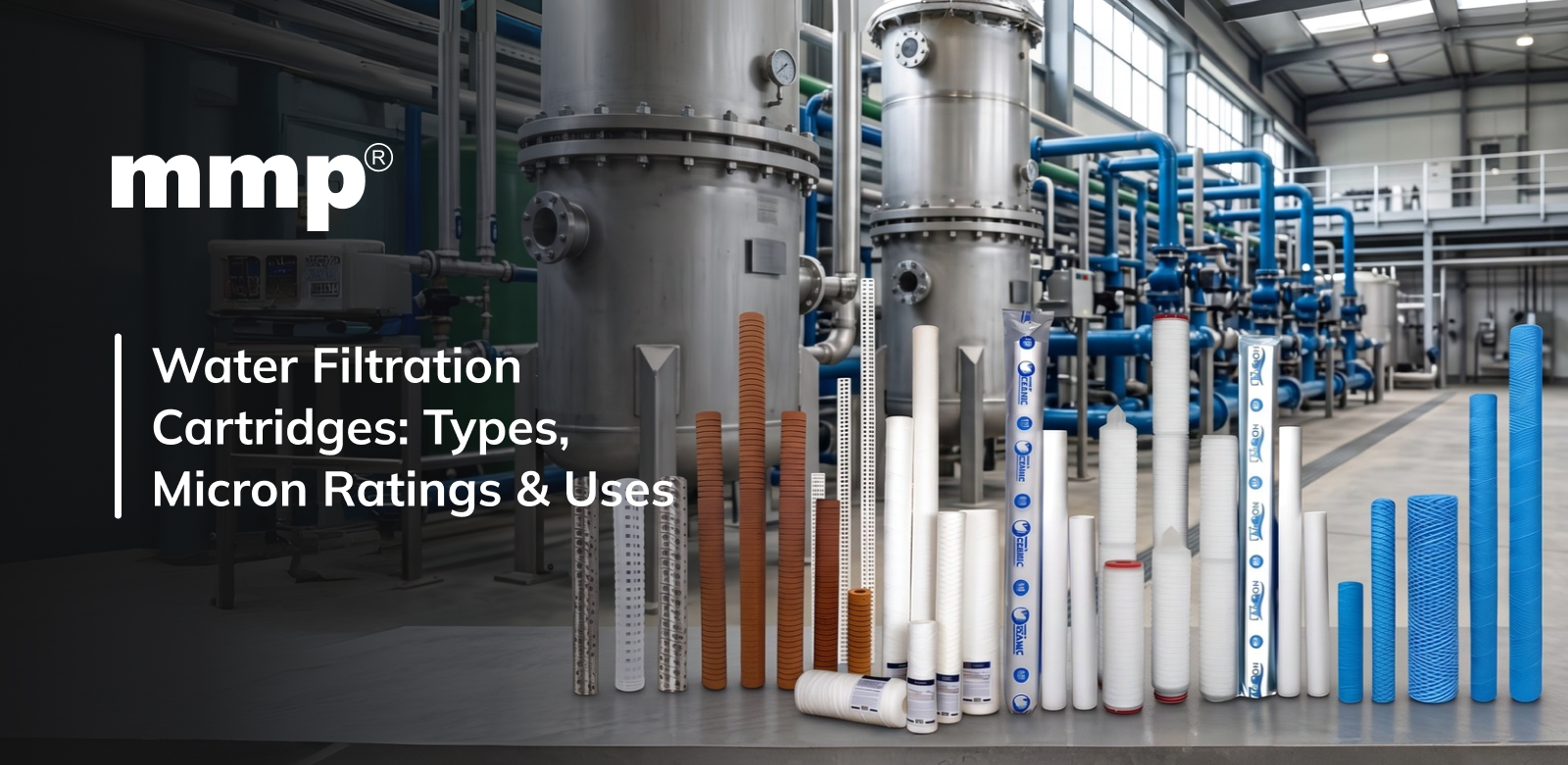
In any body of water regardless of its source whether it's in a household or in industry, it may contain many invisible impurities such as dust and tiny rust particles from old pipes and some chlorine and tiny iron specks. Water filtration cartridges function by being housed in cartridge cases and trapping impurities contained in it as water passes through. With the right cartridge, water will be purified and the devices will work without breaking down regularly, while with the wrong one clogged taps or new cartridges every week appear in the picture.
What Are Water Filtration Cartridges?
Fundamentally, we have a filtering cartridge, which is simply an element capable of cleansing water in the process of filtration by means of various filter media. Therefore, one simply pours water into one end of the filter device and ends up with water free of impurities on the other side. The impurities removed by the filter remain there until the moment of replacement.
Different parts comprise the filter, each fulfilling its own function:
- Filtering material traps dirt, practically always made of polypropylene, polyester, or cotton.
- End caps are used to keep the filtering material in place and connected to the casing.
- Core runs inside the filter to support the filtering material under pressure.
- Gaskets and O-rings prevent water from entering the filter unfiltered.
Get those four pulling together and every drop goes through the media. That is the whole game. And across the many types of water filtration cartridges you will come across, the build keeps changing but those four parts never do.
How Water Filtration Cartridges Work (Filtration Methods Explained)
Two cartridges can look identical and still work in completely different ways. The difference lies in the filtration method. Whether you're choosing water filters for home and commercial use or for an industrial line, knowing these three methods makes the choice much easier.
Mechanical Filtration
- The media has pores of a set size.
- Particles larger than the pores simply can't pass through.
- It works best for sand, silt and rust.
Depth Filtration
- The media is thick and graded, loose on the outside and tighter toward the centre.
- Dirt gets caught throughout the full thickness, not just on the surface.
- The cartridge holds more dirt before it clogs, which means longer service life.
Adsorption
- This works on chemistry, not particle size.
- Activated carbon attracts compounds like chlorine onto its surface.
- It improves taste and removes odour.
How They Work Together
The best systems combine all three in stages:
- First stage: removes the bulk sediment.
- Second stage: catches finer particles.
- Final stage: corrects taste and odour.
Types of Water Filtration Cartridges
There's no single best cartridge, only the right one for the load in front of you. Cartridges are sorted by how they're built and how well they cope as dirt builds up. You can explore the full range of water filter cartridge options to see how each type is made.
- Melt Blown Cartridges
- Wound (String Wound) Cartridges
- Pleated Cartridges
- Other Common Types
- Spun (PP spun): a cheap sediment filter that stocks and replaces easily.
- Resin bonded: rigid depth structure for high retention and long life.
- Sediment: depth filtration pointed straight at dust, mud, and solids.
- Carbon: adsorption media for chlorine, taste, and smell.
Fine polypropylene fibres blown into a graded depth structure. Light, cheap, and the go-to pre-filter for domestic RO and everyday sediment work.
Yarn wound diagonally over a central core, which buys strong dirt-holding. A safe bet where sediment is heavy or keeps swinging about, and a fixture on industrial lines.
Media folded into pleats to pack more surface area into the same length. More surface, more flow, and a longer run before it clogs.
Out of all of them, melt blown and wound are the two you will run into most.
Water Filter Cartridge Materials
Whatever the media is made of ends up deciding what the cartridge can take, both in chemistry and in heat. So it pays to match it to your water as carefully as you pick the micron.
| Material | Strengths | Watch for | Best use |
|---|---|---|---|
| Polypropylene (PP) | Broad chemical resistance, food-safe, low cost | Lower heat ceiling | The default, home to industrial |
| Polyester | Good heat tolerance, durable | Weak in high alkalinity | Warmer process water |
| Nylon | Wide pH range, reliable in fine filtration | Costs more than PP | Chemical, specialised lines |
| Cellulose | Economical for coarse sediment | Poor with chemicals and heat | Light, dry sediment duty |
| Stainless steel | Reusable, very high heat and chemical resistance | High upfront cost | Harsh industrial duty |
PP is the workhorse, and it is not close. It brushes off most chemicals, stays food-safe, and keeps the price down, which between them handle most water jobs out there. The others only get a look once the water runs hotter or nastier than PP will put up with.
Micron Ratings Explained
The micron rating relates to the size of the particulates that a particular type of water filter cartridge can collect. The lower the micron number, the finer the filtration. For example, a one micron filter is able to filter out smaller particulate sizes than a 50-micron filter. But it is simply not true that the finer filtration is always better.
If the filter is finer than needed, it will be blocked very soon and the water flow will slow down making the filter replacement a regular hassle, while if it is too coarse the finest particulates will be let through into the filter which may not be able to handle them. What matters is that the proper rating must be selected.
Here's an easy rule to remember:
- 0.5 to 5 microns: fine filtering and polishing as a last step before using sensitive equipment or water for drinking.
- 10 to 50 microns: pre-filtering process that allows to get rid of larger particles first keeping fine filtering stages from getting over-clogged.
There is one more thing worth knowing, nominal against absolute. Nominal pulls out most particles of that size, which is fine for general sediment. Absolute pulls out nearly all of them, and that is what pharma and food work insist on. On water that keeps shifting about, stage it, coarse first and fine last.
Filter Cartridge Sizes and Housing Types
The concept of set sizes is crucial for cartridges, as it is, in fact, what helps make ordering hassle-free once one learns how much their housing requires. The lengths are based on common increments of 10, 20, 30, and 40 inches. As far as homes and smaller businesses are concerned, the 10-inch and 20-inch cartridges are the most common ones.
The size of the diameter also counts. A typical cartridge has about 2.5 inches in diameter, while the larger cartridge can reach 4.5 inches making it suitable for heavy flow and lesser frequency of changes during its lifespan.
The thing people get wrong is the end cap:
- DOE (double open end): open both ends, sealed by the housing's own fittings.
- Closed end (222 or 226): bayonet fitting, locked in with O-rings.
Fit the wrong end type and the water simply bypasses the filter, even with a fresh cartridge sitting in there. It is a dull rule, but it holds: check your housing's size and seal before you order, never after.
Applications of Water Filter Cartridges
In all cases, filtration involves the use of cartridges. The type of work can change depending on the situation. However, thus far the principle remains the same.
- Drinking water – impurities, such as chlorine, are eliminated from the water.
- Food and drinks – hygiene and good conditions of the product are guaranteed.
- Dairy products – cleanliness of the product is ensured.
- Pharmaceutical industry – all water must be as pure as possible.
- Industry – The industrial filtration handles iron water filtration to filter out impurities from mud and iron, which damages pumps and valves and makes them unusable. Wound filter cartridges are a common choice here because they handle heavy sediment well.
- Chemical and oil industries – cleans all incoming liquids.
- Rainwater harvesting: rain water filtration clears debris and silt before storage.
In a commercial water filtration system, the cartridge is cheap insurance against costly repairs. In all situations, the main purpose is to minimize damage.
How to Choose the Right Water Filtration Cartridge
Everyone has the same question: what is the right choice but it all depends on your choice and your project's requirements, but by asking or knowing these few questions, you can get the right products rather than guessing work.
Quick Checklist
- Know your water. Source and contaminants, sediment, silt, iron, chlorine, set the method and material.
- Define what you protect. A tap, an RO membrane, a boiler, each wants a different final micron.
- Size for peak flow. Not the daily average, or it chokes the moment demand spikes.
- Set the micron strategy. Coarse first, fine last, on a heavy load.
- Match the housing. Size and end-cap type, down to the detail.
As you work through those processes, the selection becomes smaller. The best approach to secure home water filtration or the best home water filtration or an industrial system is to think of it as a system call and not the purchase of just one element.
Maintenance and Cleaning Tips
A cartridge has its quality dependent not only on the design but also on its usage. Leave it in longer than it should be and clogging will reduce the flow, overstress the pump and allow the contaminants enter through the filter.
Always pay attention to the indications of the cartridge, and not its age. If the flow drops, if you feel like the water is getting unclean or the pressure increases despite the filter working fine then it is the signal from the cartridge. Most filter cartridges will last anywhere from 3 to 12 months, but commercial applications or higher flow will destroy them much faster.
Replacing a Cartridge
- Shut off the water supply.
- Open the housing and take out the old cartridge.
- Wash the housing with warm, soapy water.
- Fit the new cartridge and turn the supply back on.
Quick word on cleaning. Most depth and spun cartridges are not meant to be washed and reused, because cleaning just stirs up the media and the dirt it is already holding. Only some stainless steel or pleated designs are built for it. And where a system runs several at once, change them as a set, since a mix of old and new only ever gives you uneven performance.
Certifications and Standards
Anything that touches drinking water, certification is not some nice extra you can skip. It is the proof the cartridge is safe to use at all. The name to look for is NSF/ANSI, and two parts of it land right on cartridges.
- NSF/ANSI/CAN 61: covers drinking water system components, confirming the materials do not leach anything harmful.
- NSF/ANSI 372: certifies low-lead compliance.
Carry both and a cartridge is verified safe for potable water. That is exactly what mmp Filtration holds on its melt blown OCEANIC and LAGOON ranges, conforming to NSF/ANSI/CAN 61 and 372 under certificate numbers in the C0751134 to C0751136 series. Worth knowing too: mmp was the first company in India to earn NSF certified for its melt blown filter cartridge ranges, for its filter cartridges, and has been supplying them since 1994.
So the buyer's takeaway is blunt and useful. For drinking water, look for the NSF mark and the matching certificate numbers, then ask the supplier to put them in front of you.
Buying Guide for Bulk and Industrial Buyers
Buying by the pallet is very different from picking one cartridge for the kitchen. The goal shifts from one good choice to a repeatable one: the same spec performing the same way on every reorder. If you're sourcing digitally, our guide on buying water filter cartridges online covers what to check before you place an order.
Before You Order
- Confirm size and end-cap type so each cartridge drops in without bypass.
- Fix micron and material on a spec sheet, so procurement is not guessing afresh each cycle.
- Size for peak flow at your busiest point.
- Set a replacement trigger, a pressure rise or flow drop, so changes stay planned.
The true measure of a supplier is seen on its second and third orders, not the first, with evidence shown through consistency in batch production. A cartridge that works in the housing but has a different media weight will likely fall away within weeks. That, in a sentence, is the case for in-house manufacturing. mmp runs the full chain itself, from PP yarn and cores to finished melt blown and wound cartridges, does custom sizes, micron ratings, and materials, and ships in bulk worldwide, the USA, UK, UAE, and Australia among them.
Conclusion
The best water filtration comes down to three matches: method, micron, and seal. When it comes to selecting a water filtering cartridge, it will depend on a number of criteria: the method and material used for filtering your water, number of microns for what you are filtering, as well as size and seal being used for the process. Finally, this gets the job done when the water is thick, changing when there is something to change rather than referring to the calendar.