Menu

Blog
Pleated Filter Cartridges: Types, Applications & Benefits
Sep 23 2026
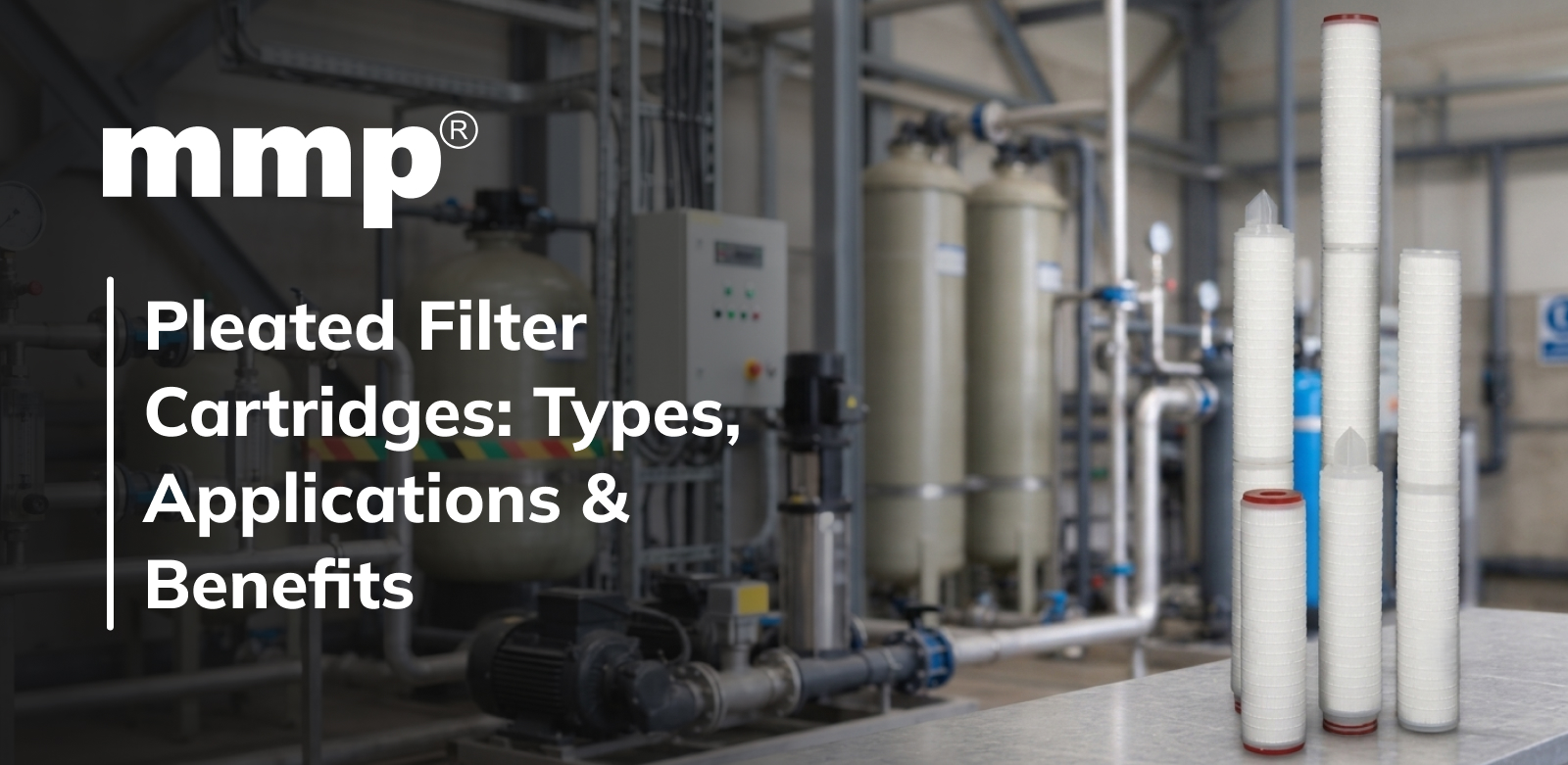
Pleated filter cartridges are an effective, versatile, and cost-efficient solution for filtration systems requiring a balanced combination of filtration efficiency, flow rate, and maintenance simplicity. Due to their folded media, pleated cartridges feature an increased filtration area over traditional depth filter media in a small cartridge and are applied to water treatment, food and beverage, pharmaceutical, chemical, oil & gas, and other process applications.
But selecting the appropriate cartridge isn't just about micron size. The media type, flow rate, operating pressure, temperature, chemical resistance, housing style, and contamination all impact how it performs.
Pleated Filter Cartridge: Definition and Working Principle
Pleated filter cartridges are cylindrical filter elements formed by pleating filter media into tightly spaced folds. Rather than depending solely on a deep depth of media, pleats expand the surface area of the cartridge to fit the effective filtration area into a more compact design.
Fluid or gas flows into the filter housing and through the pleated media. Particulates greater than the selected micron rating are intercepted by the media; fluid or gas that passes through the media is then carried downstream through the cartridge. Surface-flow filtration enables you to link filtration efficiency to a known micron rating and provides easier observation of pressure-drop variations during operation.
Pleatex range is made in various sizes and configurations for specialty chemicals, liquids, sterile water, and other vital filtration applications. The company's product list states micron ratings of 0.1, 0.2, 0.45, 1, 2, 5, and 10 µm, and DOE and SOE configurations.
For businesses evaluating a suitable product range, pleated filter cartridges are available in multiple materials, fitments, and configurations to accommodate different filtration requirements.
Types of Pleated Filter Cartridges
Not all pleated cartridges are right for your application. Because the media, construction, micron rating, and end connection can all be selected to suit the process needs, there is not a standard pleated cartridge for all applications.
1. PP Pleated Filter Cartridges
A PP pleated filter cartridge employs polypropylene as the filter-media material. Polypropylene is the most common material used for liquid filtration because of its impressive range of chemical compatibilities and its ability to cater to many different water and process-fluid requirements.
Pleatex range of cartridges features polypropylene in its list of filter-media options for use in applications requiring specialty chemicals, liquids, sterile water, and other filtration solutions.
2. Cellulose Pleated Filter Cartridges
A cellulose pleated filter cartridge uses cellulose-based filter media in a pleated construction to provide a greater filtration area within a compact cartridge. The pleated design allows the media to capture suspended particles while supporting practical flow and contaminant-holding capacity.
Consider cellulose media for applications that require particulate filtration and process conditions compatible with the media. Select based on micron rating, fluid characteristics, temperature, pressure, flow rate, and expected contaminant load to ensure the cartridge performs reliably within the filtration system.
3. Pleated Sediment Water Filters
A pleated sediment water filter captures particles suspended in a stream of water, such as sediment, rust, or other particulates. Due to the expansive pleats of these cartridges, they are capable of capturing valuable dirt load and still occupy a minimal amount of space.
Pleated sediment water filters are suitable for use in water treatment and pre-filtration where removing particles from the water is necessary before a second treatment step.
4. Air and Gas Pleated Cartridges
A pleated cartridge is not only suitable for liquid filtration. mmp also lists air and gas filtration as uses of its pleated cartridge range.
Dust collection and air pollution control applications can also be served by air filter cartridges.
Materials Used in Pleated Filter Cartridges
Filter media controls how a cartridge will behave in a variety of operating conditions. Choosing the right media for a particular application is equally as important as selecting the appropriate micron level.
Pleatex' pleated cartridge range from mmp covers all media types, such as spun-bonded polypropylene, polypropylene, aramid, PPS, PTFE, and cellulose. The company provides a listing of coating and treatment options, including PTFE membrane lamination, oil and water repellency, antistatic treatment, and PTFE coating.
- Polypropylene: Polypropylene is a popular material choice for liquid filtration as it provides a wide-ranging chemical compatibility and can be appropriate for many water and process-fluid applications. It is especially suited when a lightweight synthetic media is needed.
- PPS and Aramid: PPS and aramid media should be used where additional or more specific material properties are needed than standard polypropylene filtration media offer. The proper material is determined by operating environment, temperature, fluid and dust specifications, and filtration environment.
- PTFE: PTFE may be suitable in applications requiring particular chemical compatibility and/or unique filtration characteristics. We supplies PTFE as a media selection as well as offering PTFE surface finishes on particular cartridge types.
The key is to select the right material based on your actual process requirements. Do not just select a cartridge because it is made from a material that people tend to use.
Applications of Pleated Filter Cartridges
The two main features of a pleated cartridge are its small size with a large filtration area, which allows the cartridge to be used in many applications. We recommends cartridges for food and beverage, biotech, pharma, brew, water treatment, specialty chemicals, wastewater, RO pre-filtration, and many industrial processes.
Water Treatment
Suppose you need to filter out particulates before the water goes to another step further down the line. In that case, a pleated water filter cartridge can provide an effective solution for pre-filtering sediment, rust, particulate matter, and other substances before additional water treatment steps occur. The micron rating is determined by the incoming water quality and the downstream equipment specifications.
In reverse osmosis systems, pre-filtration can help reduce particulates at the membrane.
Food and Beverage Processing
Food & beverage filtration is important in food and beverage manufacturing for process fluid, ingredient water, and products that may require clarification or the removal of particulates.
Pleated cartridges can offer more controlled filtration and are typically contained in a modest footprint inside the filtration vessel. Material selection is paramount in these applications, as the cartridge must meet process conditions and specifications.
Pharmaceutical Applications
Repeatable filtration and contamination control are typically demanded for pharmaceutical processes. Pleated cartridges are suitable for use in pre-filtration and non-sterile process filtration applications, under the right cartridge specifications and process conditions.
Chemical Processing
Chemical processes and other applications may require solids to be removed from the process liquid without removing the process fluid itself. In this case, chemical compatibility could influence cartridge media selection.
A cartridge that works perfectly in water might not be compatible with an aggressive chemical solution. The fluid makeup, temperature, and pressure should all be considered.
Oil and Gas Applications
Pleated cartridges are suitable for filtering fuels, oils and process liquids. In such applications, the filter must be capable of resisting the properties of the process liquid while providing the appropriate flow rate and filtration area.
For demanding industrial applications, pleated filter cartridges for industrial filtration selection should consider the complete operating environment rather than focusing only on the nominal micron rating.
Key Benefits of Pleated Filter Cartridges
The advantages of pleated filtration stem from the media configuration. The media folds of pleated filter media multiply the surface area of the filter media, and therefore expand the overall effective surface area of the filter.
1. Large Filtration Surface Area
The pleated design offers significantly more media area than a flat sheet of similar footprint. This provides the cartridge with additional available surface area for particle capture and may allow for higher flow rates.
2. High Dirt-Holding Capacity
The more extensive available surface area can assist with spreading the contaminant load onto the cartridge. This may be especially beneficial when the fluid going in contains a fairly high level of suspended solids.
3. Controlled Micron Filtration
For example, if the filter is manufactured as a pleated element, it can be manufactured to a specified micron rating. Pleatex, with ratings between 0.1 and 10 µm in the Pleatex range so that you can select the appropriate filter.
4. Compact Construction
A pleated cartridge can offer a large filtration area in a comparatively small element. This can be especially beneficial where space for installation is restricted, or where there is an existing housing that needs to contain higher capacity filtration without extensive modification.
5. Reduced Maintenance Requirements
Matching the right cartridge to the job helps optimize its large surface area and capacity to hold dirt for longer between changes. We believes that benefits such as lower downtime, fewer change-outs, increased efficiency, and decreased costs can all be achieved with its pleated cartridges.
6. Stable Filtration Performance
A good cartridge will exhibit consistent filtration characteristics over its effective life. By monitoring pressure drop and flow, the operator will know when the service life of the filter is nearly reached.
Specifications of Pleated Filter Cartridges
All specifications are dependent on the cartridge design, media, and application. Always ensure that the manufacturer's specification for the specific configuration is available before purchase. Pleatex cartridges from mmp are available in a selection of media: spun-bonded polypropylene, polypropylene, aramid, PPS, PTFE, and cellulose.
| Specification | Details |
|---|---|
| Filter Media | Polypropylene, Spun Bonded Polypropylene, Aramid, PPS, PTFE, Cellulose |
| Micron Ratings | 0.1, 0.2, 0.45, 1, 2, 5 & 10 µm |
| Pleat Size | 16–48 mm; customised sizes available |
| Fitment Options | 3-Lug, DIN, PCD |
| End Configuration | DOE and SOE |
| Top & Bottom Material | SS, Aluminium, MS |
| Coating Options | PTFE, oil & water repellent, antistatic, and combination options |
Factors to Consider When Buying Pleated Filter Cartridges
Understand the environment and actual conditions where you are going to use the pleated cartridge before the purchase. The right cartridge needs to satisfy the filtration needs and also fit the process and housing.
- Micron Rating: The micron rating indicates how fine the size of particles that the cartridge will trap. A too-fine rating will cause increased resistance or loading or will unnecessarily trap larger particles, which are unneeded and buy you nothing. Too coarse a rating may not trap enough dirt.
- Flow Rate: The cartridge must be capable of delivering the desired flow with minimum pressure drop. The anticipated flow rate must be compared with the fluid viscosity, temperature, contamination content, and the area of the cartridge surface.
- Chemical Compatibility: The media used should be compatible with the liquid or gas being filtered. Exposure to chemicals can influence media integrity and the service life of the cartridge if inappropriate media material has been chosen.
- Temperature and Pressure: Media and cartridge construction may also be affected by temperature and working pressure. For these factors, the extremes can be taken into account by looking at extreme conditions, not just the run's average process value.
- Housing Compatibility: The final connection, cartridge size, load direction, and sealing must be compatible with the filter housing. mmp's cartridges are available in various fitments and are designed to be compatible with standard housing configurations.
How to Choose the Right Pleated Filter Cartridge
The required cartridge is the one that matches the filtration criterion and the operating environment simultaneously. You start by first defining the removal requirement and then work backwards through the operating conditions.
In water applications, determine the type and concentration of sediment or particles present; for chemical or process-fluid applications, review chemical compatibility, viscosity, temperature, and flow requirements; for air or gas applications, specify contaminant type, airflow, operating temperature, and pressure requirements.
Finally, consider the service life and maintenance needed; a cartridge which appears to be a good value at the time of purchase may turn out to be expensive if it loads rapidly and/or needs to be replaced frequently. Looking at the total operating requirement provides a more sensible basis for selection.
Pleated Filter Cartridge Maintenance and Cleaning
The cartridge should be cleaned regularly so the cartridge performance remains consistent. The pressure drop, flow rate, contamination levels, and visible cartridge condition should be checked before a change is needed.
Pressure should gradually increase during the filtering process as the filter load builds up; if the rate increases rapidly, there could be too much loading, the wrong micron rating, or upstream is failing. A cartridge's ability to be cleaned and reused depends on the build and application.
Some pleated cartridges may be built for a specific cleaning regimen; others are disposable or plug-and-play replacement elements. Never assume a cartridge will return to original specifications unless the manufacturer has specific cleaning requirements for it.
Recommends watching flow rate, contamination levels, and specific species of contamination to determine when a cartridge should be replaced. Flow rate, pressure drop, and visible contamination may all be indications that the cartridge needs to be changed.
When Should You Replace a Pleated Filter Cartridge?
Because the cartridge life of a particular filter will vary depending on the application there is no standard replacement interval. A clean water stream with a low solid load will perform differently to a highly contaminated process fluid. Several signs can indicate that replacement is approaching:
- Increasing pressure drop: A significant rise in differential pressure indicates increasing resistance through the filter.
- Reduced flow: When the cartridge becomes loaded, the available flow may fall below the required process rate.
- Visible contamination: Heavy loading or fouling on the media can indicate that the cartridge has reached its useful capacity.
- Frequent cleaning: If cleaning becomes increasingly frequent without restoring normal performance, replacement may be necessary.
- Process performance changes: Changes in downstream fluid quality can indicate that the cartridge is no longer providing the required filtration.
How mmp Supports Businesses with Reliable Filtration Solutions
The ability of a supplier to offer different media, micron ratings, fitments, and configurations can be just as important as the choice of cartridge. For businesses choosing a filtration product, the supplier's ability to meet your requirements in all of those areas may be just as important as the pleated cartridge itself.
We design and supplies pleated cartridges that can be used for specialty chemicals, liquids, sterile water, food and beverages, biotechnology, pharmaceutical processing, brewing, and water treatment. As experienced pleated cartridge suppliers.
Its broad experience means it is able to see applications in RO pre-filtration, wastewater treatment, chemical processing, catalyst recovery, air and gas filtration, and process-fluid filtration. This kind of approach enables filtration needs to be considered against the real process rather than attempting to meet many disparate processes with a one-size-fits-all solution.
Conclusion
Pleated filter cartridges provide the benefit of high surface area, micron retentive capability, small size and efficiency, and a huge dirt holding capacity. Filter performance will be determined by media, micron, flow capacity, fitment, and configuration. A PP pleated filter cartridge may be suitable for one process, while another application may require PTFE, PPS, aramid, or a different filtration construction altogether.
Various water treatment, RO pre-filtration, pharmaceutical, food and beverage, chemical, oil and gas, and industrial process applications. Whatever the application, pleated cartridges can help with your specific filtration needs when appropriately specified. Training and replacement needs will also be based on pressure drop, flow reduction, contaminants, and other process parameters.