Menu

Blog
Filter Bag Cage Selection: Key Specifications for Industrial Dust Collection
Nov 15 2026
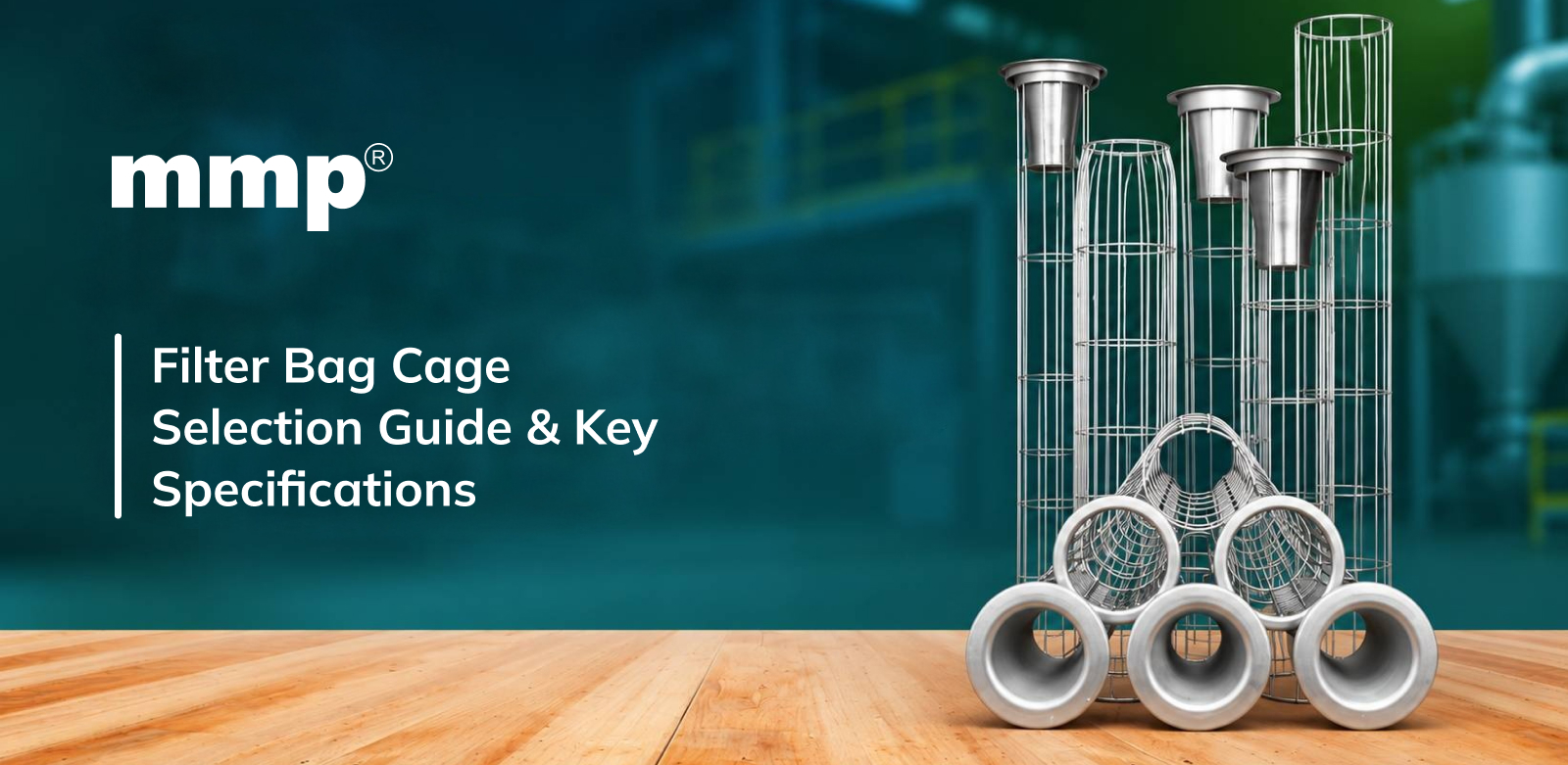
Industrial dust collection systems are as much about the filter bags as they are about the filter bag cages that they're supported by. Bag failure, torn seams and dust leakage are so often blamed on the filter bags themselves when in fact the cage can be just as important in determining the performance of the system. The cage has a direct bearing on the way the bag maintains its shape, the way it flexes during the pulse cleaning cycle and the rate at which the fabric will wear. A bent, corroded or poorly spaced wire can be the very thing that will cause a perfectly good bag to fail prematurely. For the plant engineer, the maintenance team, the OEM and the procurement manager this guide looks at what the cage does, the various types of cage, the key specifications, the materials available and how you go about selecting and maintaining the right cage for your system.
What Is a Filter Bag Cage? Understanding Its Role in Dust Collection
A filter bag cage is a wire frame which goes inside a filter bag. It's a series of long vertical wires held in shape by rings at regular intervals along the length of the cage, with a top fitting at one end and a closed cap or pan at the other.
The filter bag cage itself doesn't do the filtering of course but it's absolutely essential to the operation of the bag. It maintains the bag's shape, it supports the filter media and it's vital to the bag performing consistently both during operation and during the pulse cleaning. In most baghouses, the air is going from the outside of the bag to the inside so the fabric is being pulled in all the time. Bag supporting cages are there to stop the bag collapsing and to keep it open so that the air can pass through the full length of the filter medium.
That's why the filter bags and cages are always taken as a pair. The bag is the one that does the dust catching and the cage is what enables it to do that without the bag having to fold, rub or tear. For the full range of products, see our filter bag cages.
How Do Dust Collector Filter Cages Work?
Dustier air comes in from the outside of the bag. Dust accumulates on the outer fabric surface and clean air passes up through the center of the cage and out via the clean air plenum. The bag is pressed up against the cage wires during this process and it's that pressing against the wires which prevents it from collapsing.
Cleaning is where the baghouse filter cages really come into their own. In a pulse jet dust collector, a short burst of compressed air is introduced into the bag; the bag expands outwards away from the cage; the dust cake breaks off, and it drops into the hopper below.
During pulse jet cleaning, the filter bags go through a number of expansion and contraction cycles (thousands of them during the life of the filter). Bag filter cage design, wire spacing, and weld quality are all important in terms of preventing premature bag wear. If the wires are too far apart, the bag will flex too much and fatigue. A burr or a broken weld will rub against the bag with every pulse. In any cage filter bag arrangement, a small cage defect will quickly lead to bag failure.
Types of Filter Bag Cages
Filter bag cages come in a multitude of forms, and each is designed around the particular dust collector it is to be used in. They vary in the way they are loaded into the collector, how they are constructed, their shape, whether or not they have a venturi, and the way the top and bottom are finished. The correct cage for any application will obviously depend on the layout of the collector, the headroom available, the tube sheet design, and the type of filter bag being used. Good bag filter cage design always begins with a full understanding of the system that the cage is going into, as a cage that is well made in itself will still not perform correctly if it is not the right cage for the collector and the bag. At mmp, we also manufacture custom filter bag cages, so whatever the design of your collector or your operating conditions, we can provide a cage solution that is specifically built around your requirements.
Specification of Filter Bag Cages
Industrial buyers usually review the technical specifications before approaching a manufacturer. These are the key parameters to confirm before ordering:
| Material of construction | Strength & corrosion resistance | SS, GI |
|---|---|---|
| Number of vertical wires | Bag support and stability | 8, 10, 12, 20 or as required |
| Wire diameter | Rigidity and resistance to deformation | 3 to 5 mm |
| Ring spacing | Structural support along cage length | As per application |
| Cage length | Compatibility with filter bag and collector | Customised |
| Top fitting | Proper mounting and sealing | As per collector design |
| Venturi | Pulse-cleaning efficiency | SS, GI, cast iron, aluminium |
| Surface coating | Corrosion protection and smooth finish | As per application |
Wire count is important. The more vertical wires you have, the more the load of the bag is spread across the individual contact points and the less the fabric will flex between them. Delicate media like fibreglass will generally require a higher wire count than more robust needle felts.
Highlights of Dust Collector Filter Bags and Cages
A cage and a bag are only as good as their fit. The bag has to go over the cage quite snugly. It shouldn't be so tight that the seams are under tension, and it shouldn't be so loose that it balloons out and snaps back sharply with each cleaning pulse. A loose fit is one of the more insidious causes of early abrasion.
Length is important too in that the cage is normally kept a bit shorter than the bag so that the bag bottom doesn't get stretched over the cage end cap. The wire count should be appropriate for the fabric, with more rigid support required for the more delicate media and a bit more flexibility for the tougher felts. When you're looking at dust collector filter bags, you need to make sure the cage dimensions are correct for the bag. Our earlier guide on dust collector bags and cages covers the various types of bag used in different industries.
When the pairing is right, you see it in the operating data: stable pressure drop, fewer pinholes, and bags that go through their full service life.
Filter Bag Cage Materials: Galvanised Steel, Stainless Steel and Coated Options
The correct filter cage material will depend on the gas conditions, the moisture levels and the hygiene requirements of the application.
Galvanised steel (GI) has a zinc layer which protects against moisture and mild corrosion. Galvanised filter cages are a very practical and cost effective option for use in a humid plant or where condensation may form during start up and shut down.
Stainless steel (SS) is more expensive but is the material of choice for corrosive gases, higher temperatures, and in hygiene critical industries (food processing, pharma, etc.). In a chemical plant or a wet duty application, stainless steel filter cages will typically pay for themselves in terms of longer service life.
Coated filter bag cages provide an extra degree of protection over the base metal. The coating will improve corrosion resistance and can give a smoother wire surface, which is particularly beneficial when dealing with delicate media (e.g. fibreglass bags) where a clean release of dust is required. We supply bags, with the coating being selected to suit the gas conditions and bag type.
How to Choose the Right Filter Bag Cage for Industrial Dust Collector
Start with the dust collector details: is it a top load or a bottom load? What's the headroom? What's the tube sheet opening? Did it have venturis on it? All of that will dictate the correct cage type before you even get onto the material.
Next, look at the gas. Moisture or condensation would point to galvanised steel or a coated cage. Corrosive or high temperature gas would point to stainless steel. Then match the cage to the bag, as the bag diameter, length, and fabric will dictate the cage size and the cage wire count.
Always make sure the cage size, wire pattern, top fitting, and bottom construction are all compatible with the existing filter bag and dust collector. This is particularly important if you're ordering a replacement filter cage for an older or OEM type collector.
Finally, consider cleaning intensity and lifetime cost. A cheaper cage that corrodes or distorts within two years will often end up costing more in replacement bags than a more robust cage designed to last the lifetime of the collector.
Bag Filter Cages Installation & Maintenance
Cage inspection should be a standard part of every dust collector maintenance programme rather than something you only do after a failure has occurred.
During installation
- Inspect every cage for bent wires, sharp welds, and burrs prior to installation.
- Slide the bags over the cages carefully, without twisting or snagging the fabric.
- Carefully lower the cages into the tube sheet, making sure they're properly aligned and hanging vertically without touching any of the adjacent bags.
- Ensure the top fitting seats correctly with no gaps that would allow dust to go round the filter.
During routine maintenance
- Inspect the cages at every bag change.
- Look for corrosion, cracked welds, bent wires and damaged coating.
- Replace any damaged cages straight away, as a deformed cage can damage the new bag that's fitted over it.
- Store spare cages upright in a safe, protected area as they're very easily bent if they're dropped.
A cage can easily outlive several sets of filter bags if you look after it properly. Poor handling is the usual reason why the cage ends up being the cause of bags continually failing.
Why Choose mmp Filter Bag Cages
mmp is an established manufacturer of industrial filtration products, providing custom filter bag cages and filter bags for a wide variety of dust collection applications.
We have in-house manufacturing capability and therefore can produce filter bag cages in both SS and GI with a range of wire diameters, wire configurations, ring spacings and cage lengths to suit the customer's particular requirement. They can produce both top load and bottom load cages, venturi and non-venturi types, and have the capability to apply a range of surface coatings.
Using automated welding and very carefully finished wire surfaces, mmp is all about dimensional accuracy, structural strength, and a smooth cage finish in order to minimise filter bag abrasion and thereby support a longer service life. As a filter cage manufacturer who also makes its own MTEX filter bags, mmp designs its cages with the bag in mind.
Whether you need cages for a new installation or replacement cages to go with your existing OEM equipment, we can provide you with a fully customised manufacturing solution. mmp has the in-house manufacturing and export capability to serve customers in India as well as in the international market (USA, UK, UAE and Australia). Take a look at our full range of industrial dust collection and filtration products.
Customised Filter Bag Cage Manufacturing for OEMs and Industrial Buyers
Industrial filtration requirements are very application specific and will vary according to operating conditions and the particular dust collector configuration. mmp provides custom filter bag cage manufacturing for specific dimensional, material, and design requirements. Its in-house manufacturing capability enables it to support OEMs, filtration equipment manufacturers, distributors, and industrial customers with both standard and custom cage requirements. As a custom filter bag cage manufacturer in India, it can work from drawings, samples, or collector specs to provide consistent cages on repeat orders. For any queries on your requirements, please contact mmp.
Conclusion
Filter bag cages are easily missed, but they have a massive bearing on the performance of every bag in a dust collector. Choose the cage type that is appropriate for your collector, the material that is appropriate for your gas conditions, and the wire count and dimensions that are appropriate for your bags. Check the cages at every bag change and replace any damaged cages straight away to get longer bag life and more reliable industrial dust collection.