Menu

Blog
Water Filter Cartridge Replacement Guide: When and How to Change It
May 30 2026
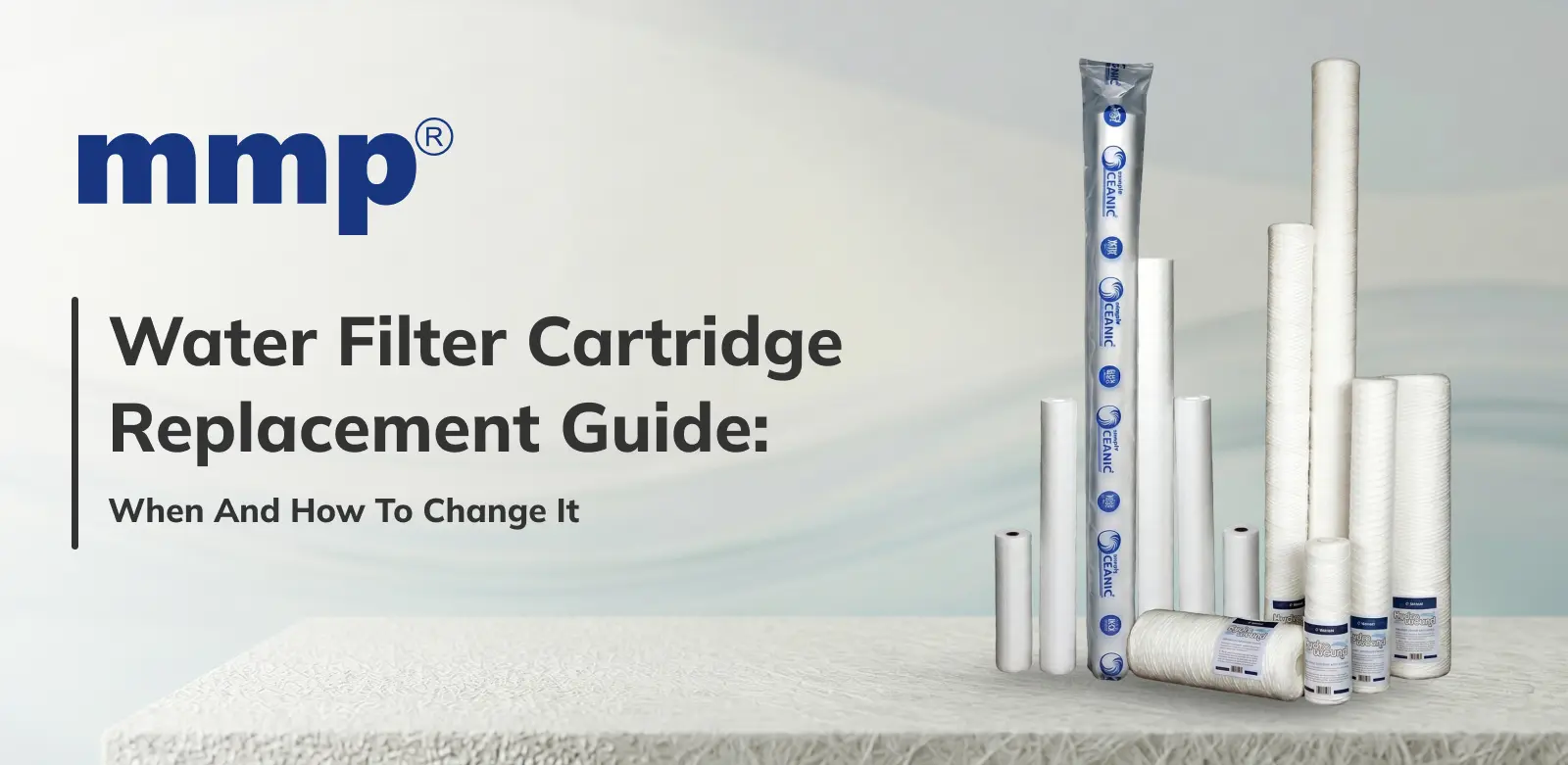
Clean, safe, great-tasting water starts with an effective filter cartridge, but most systems don’t fail all at once. They fade in small ways that are easy to ignore until they become annoying. First, the taste changes slightly. Then the flow feels weaker. Then you notice the filter is “working,” but the output isn’t as good as it used to be. The tricky part is that cartridges can look fine from the outside while they’re already clogged inside. If you wait until pressure is obviously low, you are usually already past the efficient zone. That is why replacement timing matters just as much as picking the right cartridge. This guide explains when replacement is needed, how to choose the correct replacement, and how to change it safely so performance actually comes back.
Why Water Filter Cartridge Replacement Is Important
Cartridges are not only about “clean water.” They protect the entire downstream system. When a cartridge is fresh, it traps particles efficiently and allows water to pass through with minimal restriction. As it loads up, it becomes a bottleneck. Pressure drops and flow slows, which is why the same purifier suddenly feels weaker. At the same time, a heavily loaded cartridge can start channeling, meaning water finds easier paths through the media, and filtration becomes uneven. In RO setups, inconsistent pre-filtration increases the stress on membranes and can push you into earlier cleaning or replacement cycles. In offices and commercial setups, late replacement usually shows up at the worst time, during peak usage. In industrial lines, delayed replacement can quietly cause fouling and wear that appear later as maintenance costs.
Why on-time replacement pays off
- Keeps the flow stable, so pressure and output do not gradually collapse
- Prevents contaminants from slipping through when the media gets saturated
- Reduces sediment-driven fouling in RO systems and booster pumps
- Helps protect downstream fixtures, valves, and nozzles from clogging
- Turns replacements into planned maintenance instead of emergency fixes
View More: What Are Water Cartridge Filters? All Types, Sizes & Applications
What Is a Water Filter Cartridge and How Does It Work?
A cartridge is a replaceable filter element installed inside a housing. Water flows into the housing, is forced through the filter media, and exits cleaner on the other side. The media can work by surface filtration (particles stop mostly at the surface), depth filtration (particles are trapped throughout the thickness), or a combination. Depth media is often preferred for variable sediment loads because it can hold more dirt before choking. Surface-heavy media can give good initial flow but may clog faster if inlet turbidity is high. Over time, trapped contaminants build up inside the media, and resistance increases. That is why the system may still run, but the output slowly reduces week by week. This is also why Water Filter Cartridges should be treated as consumables, not as permanent parts.
What cartridges typically capture over time
- Sand, silt, and sediment from the borewell or tank disturbance
- Rust flakes and fine corrosion particles from old pipelines
- Suspended particles that make water look hazy
- In staged systems, different cartridges handle different roles (bulk sediment first, finer protection later)
See Also: From Residential to Industrial – Complete Water Filter Cartridge Solutions
Types of Water Filter Cartridges (Quick Overview)
Cartridge type should be chosen based on construction because construction decides dirt-holding, pressure drop behavior, and how long the cartridge stays stable. Some cartridges are designed for heavy sediment loading and stable depth capture. Some focus on higher surface area and longer runtime. Many users keep replacing “what looks similar,” but even small differences in media structure can change performance significantly. That is why understanding cartridge families helps you choose correctly and avoid repeated clogging. For systems that see seasonal variation, like borewell usage during monsoon months, selecting the right family is more important than selecting only by micron. Below is a quick overview aligned with common selection behavior and your required keywords.
Quick overview
- Melt-blown filter cartridges: Depth-style cartridges are widely used for sediment capture and stable dirt-holding under variable loads.
- String Wound Cartridge Filter: Yarn-wound build over a core, often selected for layered capture and better handling of higher particulate loading.
- Lagoon Melt Blown Filter Cartridges: A common choice when progressive loading helps extend service interval in utility or industrial lines.
- Pleated cartridges: Higher surface area, often chosen when stable flow and longer runtime matter.
- PP spun/sediment cartridges: Common in domestic and commercial pre-filtration lines.
- Resin-bonded and grooved resin-bonded types: Rigid depth structures that can offer durability and longer cycles in certain applications.
How Often Should You Replace a Water Filter Cartridge?
There is no single “every 3 months” rule that works for all setups because replacement depends on water quality and usage. Municipal water may look clear yet still carry rust and fine particles from distribution lines, especially in older areas. Borewell sources often carry seasonal silt and turbidity spikes, which can load a cartridge rapidly after rains or tank cleaning. Offices and restaurants see high daily usage, so the same cartridge that lasts months in a home can clog much faster. Industrial systems often choose replacement timing using differential pressure trend rather than fixed dates because downtime is costly. A calendar schedule is fine as a starting point, but the more accurate approach is performance-based replacement. If you can monitor ΔP, do it. If not, track symptoms over time.
Factors that change replacement frequency
- Water source (municipal, borewell, mixed)
- Seasonal changes (monsoon silt spikes are common in India)
- Daily demand and peak-hour usage
- Housing size and cartridge surface area
- Staged filtration setup (coarse then fine lasts longer overall)
- For an industrial water filter cartridge, use ΔP and flow trend to avoid running outside the safe operating range
Signs Your Water Filter Cartridge Needs Replacement
Cartridges don’t fail dramatically. They leave patterns. The best indicator is rising differential pressure if your housing has a gauge. If it doesn’t, look for repeat symptoms. Flow weakening gradually is the most common. Taste or odor changes that return quickly after flushing can indicate that the relevant stage is exhausted or sediment stages are overloaded. Discolored water after tank cleaning often signals a disturbance that loads the filter fast. For RO systems, slow tank refill time is a practical sign that the inlet stage is restricting flow. A one-day change could be a temporary spike, but repeated signs across days mean the cartridge is loaded and replacement is due. This is when a water filter cartridge change becomes the right move, not a “maybe later” task.
Common signs
- Low water pressure or noticeably slower flow
- Bad taste or smell that returns quickly
- Discolored water or recurring haze
- Visible dirt buildup with poor flow recovery
- Slower RO tank refill time or reduced RO output rate
- Frequent clogging of tap aerators or appliance inlet strainers
- Air sputtering at the start of the flow (often seen when the restriction rises)
- ΔP rising above your normal baseline (most reliable if available)
- More frequent need to flush lines to restore acceptable flow
View Details: Water Filter Cartridges for Industrial and Home Use
What Happens If You Don’t Replace Your Water Filter Cartridge on Time?
Delayed replacement impacts both water quality and system health. A loaded cartridge restricts flow, so the system works harder to deliver the same output. A saturated cartridge may begin channeling, where water bypasses effective filtration paths, and contaminants slip through even though the cartridge is still installed. In RO systems, neglected pre-filtration increases particulate load on the membrane, which can accelerate fouling and shorten performance cycles. In commercial setups, the pain often shows up as sudden low flow at peak time, turning a small maintenance task into an operational disruption. In industrial lines, delayed replacement can cause downstream fouling that appears later as higher maintenance costs, unexpected shutdowns, or quality variation. The biggest issue is that the cost doesn’t appear immediately; it builds quietly.
Risks of delaying replacement
- Unstable taste and odor, and repeated complaints
- Sudden pressure drop spikes and inconsistent output
- More downstream fouling in membranes, pumps, and valves
- Emergency maintenance instead of planned replacement
- Higher long-term cost due to wear and rework
How to Choose the Right Replacement Water Filter Cartridge
Choosing the right replacement is not only about matching size. It’s matching purpose, media family, and compatibility. Start with the job: bulk sediment removal, equipment protection, or polishing. Then confirm housing compatibility: length, diameter, end caps, and sealing method. Then choose the media type based on your water source and solids loading. Borewell lines often need stronger dirt-holding and staged filtration, so fine stages don’t choke immediately. Municipal supply often needs stable sediment control and sometimes dedicated taste/odor stages, depending on setup. Commercial setups need a predictable flow under peak usage. Industrial utilities need stable ΔP behavior and repeatable specs. If you plan to Buy Water Filter Cartridges Online, do not treat it like a casual purchase. Online buying works well, but only when you lock in the correct specification.
Practical selection checklist
- Confirm the exact size and housing fitment first.
- Choose a cartridge family based on your water problem, not only what is common.
- Balance the micron with the dirt load and desired service interval
- Consider staged filtration for heavy inlet sediment
- Replacement Water Filters should be selected by duty conditions, not by habit
- Keep written specs consistent across sites when managing Replacement Water Filters & Cartridges
Read More: A Practical Guide to Water Filter Cartridge Selection
Micron Rating Explained: Which Cartridge Should You Use?
Micron rating is a particle size target, not a guarantee of performance by itself. A fine micron cartridge captures smaller particles but clogs faster if the sediment load is high. A coarse micron cartridge runs longer but may let fine particles through that can foul membranes or sensitive equipment. This is why staging is often the most stable approach in real systems: a coarser cartridge first to handle bulk sediment, then a finer cartridge closer to sensitive equipment. This improves runtime and stabilizes pressure drop. Many people choose micron based on “cleaner must be better,” and then end up changing cartridges too often. In practical terms, the water filter cartridges micron rating should match your inlet load and the risk you are controlling downstream, not the smallest number available.
Practical micron guidance
- Coarse capture where the sediment load is heavy
- Medium capture for general clarity and equipment protection
- Fine capture for polishing and RO membrane protection
- Use staging when you need fine protection but have heavy inlet solids
Step-by-Step Guide: How to Replace a Water Filter Cartridge
Replacing a cartridge is straightforward, but doing it properly avoids leaks, bypass, and the frustration of “new cartridge, same problem.” Start by shutting off the supply and depressurizing the system, because housings can be under pressure. Remove the cartridge and inspect the housing interior, because sludge in the sump can recontaminate water immediately after replacement. Clean the housing thoroughly and check the O-ring, because sealing is what prevents bypass. Install the new cartridge carefully and ensure proper seating. Tighten evenly and avoid over-tightening, which can distort seals or damage housings. Finally, flush properly so the system stabilizes, and any initial fines are cleared.
Step-by-step
1. Shut off the inlet water supply
2. Open a tap to release pressure
3. Open the housing with the correct wrench
4. Remove the old cartridge and inspect the housing interior
5. Clean housing and rinse thoroughly
6. Check O-ring, replace if cracked or flattened
7. Install the new cartridge and seat properly
8. Tighten housing evenly; do not over-tighten
9. Turn the supply on slowly and check leaks
10. Flush for a few minutes before regular use
Safety Tips Before Changing a Water Filter Cartridge
Cartridge replacement is simple, but careless changes can cause leaks, cracks, and messy spills. Always assume the housing is pressurized until you depressurize it. In offices and commercial lines, ensure supply is isolated properly because shared lines can reopen unexpectedly. In industrial setups, always confirm fluid is safe to handle, because some lines may carry process water with residues. Wear gloves if cartridges are heavily loaded with sludge or rust. Keep the area dry near pumps and electrical equipment. Do not force threads or over-tighten to “solve” leaks, because most leaks come from O-ring issues, not from insufficient tightening. Safety here is mostly about being slow and consistent.
Safety checklist
- Shut off the supply and depressurize before opening
- Wear gloves if the cartridge is heavily loaded
- Avoid harsh cleaners inside housing unless approved
- Keep floors dry near electrical connections
- Replace damaged O-rings instead of over-tightening
How to Check Water Quality After Replacing the Cartridge
After replacement, your job is to confirm that performance has improved and sealing is correct. Many people taste once and assume it worked, but the better approach is operational first, then sensory. Check leaks around the housing and ensure flow improves. Flush for a few minutes because the initial flush removes fines and stabilizes output. Then check clarity and taste. If the flow does not improve, the cartridge may be the wrong type, not seated properly, or the restriction may be elsewhere. If the taste persists, the problem may be a different stage, not the sediment cartridge. For RO systems, output stabilizes over time due to tank and line conditions, so observe across a day. The goal is not perfection in one minute; it’s a stable performance returning.
Post-change checks
- Leak check around the housing and the O-ring
- Flow and pressure improvement versus before
- Flush properly, then recheck taste and odor
- Clarity check for discoloration or haze
- RO: observe output and refill behavior over the day
Recommended Water Filter Cartridge Solutions by mmp Filter
Once you understand when to replace and how to choose, selecting products becomes easier. mmp’s water cartridge range includes multiple families such as melt blown, wound, pleated, PP spun/sediment formats, resin bonded and grooved resin bonded variants, antimicrobial wound cartridges, and high-flow pleated cartridges. The practical benefit of having multiple families is simple: you can match cartridge design to your water load, flow rate, and service interval goals instead of forcing one design into every line. Their range also includes high-flow pleated options designed for high-volume applications and fewer changeouts.
If you’re choosing a supply partner, this is where terms like water filter cartridges manufacturer & supplier matter to buyers who care about repeatability, correct fitment, and consistent performance. If you’re trying to get premium water filter cartridges, the real value is choosing the right cartridge family for your water problem, correct fitment for your housing, and stable performance across repeat replacements.
Final Checklist Before Buying a Replacement Water Filter Cartridge
Most replacement mistakes come from incomplete specs. People order “10-inch cartridge” and forget end caps, sealing method, or housing compatibility. Or they choose micron without considering the solids load. Or they swap a depth cartridge for a pleated cartridge and then see different pressure drop behavior and think something is wrong. A final checklist prevents these repeat mistakes and saves time. It’s especially useful if you manage an office, a building, or a facility where wrong stock causes urgent procurement. Treat it as your last gate before ordering, especially if you are buying online or stocking spares. Small spec errors cause the biggest frustration because they look like “filter isn’t working” when the issue is just a mismatch.
Final checklist
- Cartridge length, diameter, and end caps match housing
- The O-ring and sealing method are correct
- Micron choice matches the load and the downstream protection needs
- Media type matches purpose and source water
- Replacement trigger is defined (time plus trend)
- Staging is considered if the inlet load is heavy
- Keep written specs consistent across Replacement Water Filters & Cartridges.
- For an industrial water filter cartridge, confirm ΔP limits and duty expectations.
Conclusion
Cartridge replacement is simple maintenance with a big impact. When you replace on time, water quality stays stable, and flow stays predictable. When you delay replacement, performance drifts and downstream costs grow quietly. Use symptoms and pressure trend as your guide, match the replacement to the housing and purpose, and flush properly after installation. When replacement becomes routine, your filtration system stays predictable instead of becoming a recurring headache.