Menu

Blog
What Are Water Cartridge Filters? All Types, Sizes & Applications
Feb 28 2026
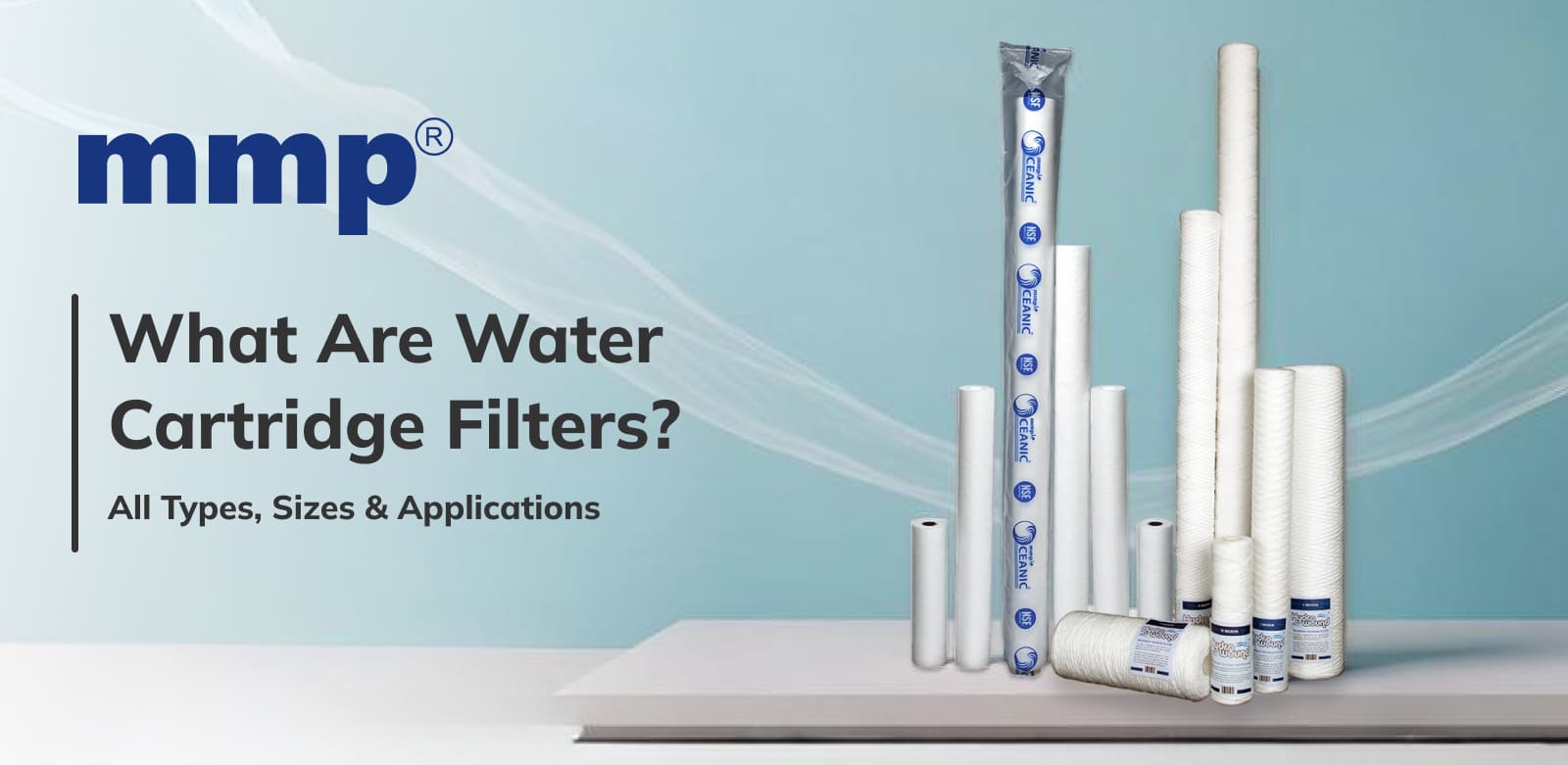
Water issues rarely show up as one clean, simple problem. Some days it’s visible sediment, some days it’s a sudden pressure drop, and sometimes it’s downstream equipment fouling that quietly increases maintenance until something fails. That’s why cartridge filtration is used so widely: it gives a controlled filtration stage inside a housing, where the working element can be replaced without dismantling the pipeline. This blog explains what cartridge filters actually do, what common water problems they solve, how different cartridge types behave under real loads, and how to decide size, diameter, and micron rating without guessing. It also covers technical selection factors, replacement discipline, and why choosing the wrong cartridge often increases cost even if the cartridge itself looks “cheap.”
What Are Water Cartridge Filters?
A tubular water filter cartridge is used to filter water as it is forced through filtration media before exiting the filter. The housing provides pressure for the cartridge, while the cartridge captures contaminants through its filtration media. Filtration can occur through particle capture by depth or surface capture depending on the properties of the media itself. Modular cartridge filtration allows for flexibility in system design by having multiple cartridges that can be changed at set intervals instead of requiring an entire new filter to be installed. Many times, cartridge filtration serves as "equipment protection" as well as "water improvement". For example, using a water filter cartridge will protect membranes, valves, pumps, spray nozzles and heat exchangers from dirt and prevent the failure of these devices.
Key points:
- A cartridge must seal and seat properly; even a perfect media cannot help if water bypasses around it through poor fitment or damaged O-rings.
- A replacement water filter cartridge should be treated as planned maintenance, because waiting for failure usually means contaminants have already traveled downstream.
- Cartridge filtration works best when the housing design distributes flow evenly across the media; uneven flow causes early clogging on one side and wasted media elsewhere.
- Cartridges can remove fine particulates (including very small particles, depending on media design), but service life will always depend on dirt load and correct sizing.
- In industrial setups, cartridges are part of water filtration for industry, because they create a predictable, replaceable barrier that stabilizes downstream operations.
Common Water Problems
Most cartridge decisions become easy once the “water problem” is described correctly. Sediment can be sand and silt from borewell sources, rust flakes from old pipelines, suspended fines after rains, or process dust entering tanks during handling. Some sites face turbidity spikes only during monsoon or after tank cleaning, and these spikes quickly choke fine cartridges if there is no staged approach. Many plants also confuse hardness with sediment: hardness is dissolved minerals that create scale, while sediment is physical dirt that clogs equipment and increases pressure drop. Chlorine taste and odour is another common complaint, but it needs the correct media strategy rather than a standard sediment element. When you define the contaminant type, you can choose the right cartridge construction and micron strategy instead of repeatedly buying the “same size” and expecting different results.
Key points:
- When it comes to clogged nozzles, needing to clean pump strainers regularly, or experiencing RO membrane fouling the issue you’re usually facing is a high particulate load due to a poor pre-filtration strategy.
- If the pressure drop after changing the cartridge increases significantly in a short amount of time then it usually means one of three things: either there is a high level of sediment in the water, the wrong micron should have been chosen for your application, or the area of the filter is too small for the flow rate.
- When dealing with chlorine taste/odour, changing out sediment cartridges will not fix the issue; you will require a cartridge designed specifically for chlorine/odour reduction.
- While cartridges can still help with removing sediment that contributes to the problems associated with scaling and heat-transfer loss, in most cases, hardness will require softening or some other type of treatment.
- When looking at India as a region, keep in mind that the seasons have a large effect on filtration selection/need. During monsoon rains the amount of silt in addition to the rust from pipelines can completely alter the amount of loading that you would see throughout the year; therefore, you should look at the worst-case-week situation, rather than an average of a few days.
See Also : Filter Cartridges vs. Filter Bags
Types of Water Cartridge Filters
Cartridge “type” is best defined by construction and how it behaves as dirt loads up, not by a marketing name. Depth cartridges are designed to trap particles throughout the media thickness, which usually gives better dirt-holding when inlet turbidity is high and variable. Pleated cartridges increase surface area using folded media, which can extend service life under steady loads and maintain stable flow longer. Wound cartridges use yarn wound around a core, forming a graded structure that captures particles across layers. Resin-bonded cartridges use a bonded porous structure chosen for durability and stable performance in certain industrial duties. High-flow pleated formats exist for large volumes where you want fewer changeouts and stable pressure drop under heavier duty. mmp’s cartridge range includes multiple families like melt-blown, wound, pleated, resin-bonded, and high-flow formats, which is useful because it allows selection by application rather than forcing one design into every line.
Key points:
- Depth-style cartridges are practical where inlet sediment is heavy or fluctuates, because they tolerate spikes without choking instantly.
- Pleated cartridges are often chosen when longer run time and stable flow matter, because the surface area is higher by design.
- Wound cartridges are used where layered capture helps keep performance consistent as the cartridge loads.
- Resin bonded cartridges are positioned for durability and particle retention in demanding industrial filtration duties.
- High-flow pleated formats are chosen when flow volumes are large and you want low initial pressure drop and high dirt-holding.
Learn More : Filter Bags: A Quick Guide to Dust Filtration Solutions
Water Cartridge Filter Sizes
Size is not just about “what fits the housing”it decides how much filtration area you have to handle your flow and dirt load. When a cartridge is undersized, it loads quickly, pressure drop rises fast, and replacement becomes frequent even if the micron rating is correct. Longer cartridges usually provide more media area/volume, which can extend run time, but only if flow distribution is correct and the housing seals properly. In practical terms, the right size is the one that keeps pressure drop and outlet quality stable for a predictable service interval. If your system repeatedly clogs earlier than expected, size is often the hidden root cause, especially in commercial lines with peak flow hours or in industrial utilities with high turbidity weeks.
Key points:
- Start from housing compatibility, then validate that the selected length/format can handle your real flow and dirt load without a rapid ΔP rise.
- If you replace too often, it’s usually either undersizing (not enough area) or a micron strategy that is too tight for the inlet condition.
- Standardizing sizes across a facility reduces mistakes during urgent changeouts and keeps stocking manageable for replacement cartridges.
- In industrial settings, consider peak flow and seasonal loading, not only average flow cartridges fail on worst-case days.
- Sizing discipline reduces emergency Filter cartridge replacement events and makes maintenance predictable.
Diameter Options
Diameter affects filtration surface area, dirt-holding, and how stable the pressure drop remains over time. Many systems use standard diameters simply because housings are standardized, but larger diameters or higher-area formats can be valuable when inlet dirt load is high or when you want longer intervals between changes. Diameter also affects sealing integrity: if the cartridge does not seat correctly, water can bypass and carry contaminants downstream even though the cartridge looks “installed.” In higher-flow systems, diameter and available media area often decide whether you replace frequently or on a stable, planned schedule. So, diameter selection should never be a “bigger is better” choice; it should be a “fits correctly and runs predictably” choice.
Key points:
- A larger effective area can slow down the pressure drop rise under heavy sediment load, improving service interval stability.
- Diameter must match the housing sealing geometry; bypass defeats filtration and creates hidden downstream contamination risk.
- In high-flow commercial and industrial lines, surface area is a practical lever for reducing frequent changeouts.
- Choose a diameter with stocking practicality in mind; exotic formats make maintenance harder during breakdown situations.
- If your outlet quality is inconsistent despite regular changes, suspect bypass/fitment before blaming source water.
Micron Ratings
Micron rating is one of the most misunderstood parts of cartridge selection because it gets treated like one “best” number. In reality, micron is a balance between protection and service life. A tight micron cartridge captures finer particles but can clog quickly if inlet turbidity is high. A coarser micron cartridge lasts longer but may allow fines through the foul membranes, clog nozzles, or cause process quality issues. The most stable approach is staged filtration: start with a coarser stage to handle bulk sediment, then move to finer filtration closer to sensitive equipment. This reduces choking, stabilizes pressure drop, and prevents you from forcing one cartridge to do everything.
Key points:
- If sediment load is heavy, starting too fine usually causes rapid choking and frequent Water Filter Replacement Cartridges consumption.
- If you’re protecting RO or precision equipment, place finer filtration after coarse pre-filtration so the fine stage lasts and stays stable.
- Micron's strategy should consider seasonal spikes and tank-cleaning events, because those are the days that break the filtration plan.
- “Best micron” depends on your goal: clarity, membrane protection, nozzle protection, or product consistency. Each demands a different balance.
- Staged selection reduces operating cost because you replace cheap coarse stages more often and protect expensive fine stages.
Applications of Water Cartridge Filters
Cartridge filtration is used across domestic, commercial, and industrial setups because it is modular, scalable, and easy to maintain. In domestic usage, cartridges are typically used to improve clarity, handle sediment fluctuations, and protect appliances from dirt-related issues. In commercial systems, restaurants, facilities, and institutions, cartridges help maintain stable water quality and reduce service calls by protecting equipment from clogging and inconsistent flow. In industrial systems, cartridges are used as pre-filtration and process protection to prevent particulates from damaging membranes, boilers, cooling systems, and utility water loops. What makes cartridges practical is that you can change the filtration behaviour simply by changing media type and micron strategy while keeping the same housing infrastructure.
Key points:
- Domestic water filter cartridges are commonly used where source quality varies, and visible sediment causes taste/clarity concerns and appliance issues.
- Commercial water filter cartridges support consistent water quality for high-usage environments where downtime and complaints carry real cost.
- Industrial systems use cartridge stages to stabilize inlet quality for downstream equipment and reduce particulate-driven failures.
- Cartridge filtration is especially useful when you need predictable maintenance: replace the element, restore flow, and keep the system running.
- A stable cartridge program reduces emergency Replacement Filter Cartridges procurement and makes service intervals predictable.
Read More : What Is Bag Filter: Everything You Need to Know
Industry Applications of Water Cartridge Filters
In industry, the “application” is less about the building and more about what the water is doing inside the process. Cartridges are used in pre-treatment lines, polishing loops, utility systems, and process water feeds where particulates can ruin product consistency or damage equipment. mmp lists common application sectors, including residential systems, restaurants, food & beverage, pharmaceuticals, power plants, and industrial water treatment, which reflects how broadly cartridge filtration is used when water quality must stay consistent. In real operating terms, a cartridge stage often pays for itself by preventing downstream cleaning shutdowns, membrane fouling, and repeated nozzle or valve issues caused by fine sediment carryover.
Key points:
- In food & beverage, cartridges help keep clarity stable and protect equipment from sediment carryover that affects consistency.
- In pharmaceuticals, particulate control supports predictable process performance and reduces contamination risk tied to unstable inlet water.
- In power and utilities, cartridges protect systems from sediments that increase maintenance and reduce efficiency.
- Industrial water treatment uses cartridges as protective stages before advanced treatment, improving overall reliability.
- Across industries, the goal is the same: keep particulates out of sensitive zones so the process stays stable.
Technical Factors
A cartridge is not selected only by “size + micron.” Real performance depends on flow rate, allowable pressure drop, dirt-holding capacity, media compatibility with chemicals, operating temperature, and how the cartridge behaves as it loads. Two cartridges with the same micron rating can behave very differently if one has better media structure, higher surface area, or stronger construction. High-flow pleated designs are often selected for industrial duties because they aim for low initial pressure drop and high dirt-holding under larger volumes. Pleated cartridges are also commonly described as having high surface area and substantial dirt-holding capacity, which affects lifecycle and maintenance frequency.
Key points:
- Flow rate must match cartridge area; too much flow through too little area guarantees early choking, regardless of micron rating.
- Media chemistry matters when water contains cleaning chemicals, process residues, or solvent traces, compatibility affects safety and lifecycle.
- Dirt-holding behaviour decides service interval; depth media often handles spikes, while pleated media often excels under moderate, steady loading.
- Housing fitment and sealing must be treated as technical requirements; bypass is a failure even when cartridges are replaced regularly.
- If your line is commercial or institutional, selecting Replacement Commercial Water Filter Cartridges should prioritize stable ΔP behaviour and predictable change intervals.
Maintenance & Replacement Guide
Cartridge filtration stays reliable when replacement is treated as routine discipline, not as a breakdown reaction. As the cartridge captures contaminants, differential pressure rises, and flow becomes more restricted, this is normal, and it signals the cartridge is doing its job. Replacement timing is best decided by pressure trend and outlet quality, not only by dates on a calendar. mmp notes that water filter cartridges generally last between 3 to 12 months, depending on water quality and usage, with commercial systems or higher flow rates needing earlier replacement based on contaminant levels. Proper installation matters just as much as replacement timing; if seals are damaged or seating is poor, water can bypass, and outlet quality will remain unstable even after a change.
Key points:
- Track ΔP trend; it’s the cleanest indicator for when filtration is becoming restrictive and needs a Filter cartridge replacement.
- If outlet quality does not improve after a change, suspect bypass/sealing or wrong cartridge type before blaming the source water.
- Keep a simple log: date, ΔP, flow notes, and any water quality observations. This prevents repeating the same selection mistake.
- Standardize spares so emergency changes don’t lead to wrong fitment and performance surprises.
- A consistent replacement water filter supplier makes replacement intervals more predictable by keeping specs stable batch to batch.
See Also : From Residential to Industrial – Complete Water Filter Cartridge Solutions
Advantages of Using High-Quality Cartridge Filters
High-quality cartridges reduce operational unpredictability. When pore structure and construction consistency are controlled, pressure drop rises more predictably, and replacement intervals become easier to plan. Poor-quality cartridges can show inconsistent porosity, early channeling, weak bonding, or media deformation, which creates either rapid clogging or poor filtration despite the same printed micron rating. In industrial setups, quality reduces downtime because fewer surprise changeouts and fewer downstream failures occur. High-flow pleated designs are positioned for low initial pressure drop and high dirt-holding, which directly influences operating stability under heavy-duty conditions.
Key points:
- Better media consistency means fewer surprises: one batch shouldn’t last 2 weeks while the next lasts 2 months under the same inlet condition.
- Better dirt-holding reduces labour and downtime, especially in industrial utilities where changeouts disrupt operations.
- Reliable sealing fit reduces bypass risk, which is the most damaging “silent failure” in cartridge filtration.
- Quality supports predictable replacement cartridge planning instead of reactive purchases after flow collapses.
- When your system depends on stable flow, investing in quality often reduces total cost even if the unit price is higher.
Why choosing the right water cartridge filter is important
Wrong cartridge selection not only wastes cartridge money; it creates downstream costs that are much larger. A cartridge that is too fine for heavy sediment load chokes quickly, causing frequent replacement and unstable flow. A cartridge that is too coarse can allow fines through the foul membranes, damage pumps, or clog spray systems, costing far more than the cartridge itself. A cartridge that doesn’t fit or seal correctly can bypass completely, creating a false sense of protection while contaminants pass through. Getting it right means matching contaminant type, micron strategy, flow rate, and housing fit so performance stays stable across real operating conditions, not only on day one.
Key points:
- Micron must match inlet loading; overly fine selection without staged filtration is a common reason for rapid choking.
- Size must match flow; undersizing is a frequent root cause behind constant Water Filter Replacement Cartridges usage.
- Fitment and sealing must be verified, bypass defeats filtration even if you replace cartridges on schedule.
- Staged filtration reduces pressure shocks and stabilizes life across seasonal water changes.
- Correct selection turns cartridge management into routine operations instead of recurring firefighting.
Why Choose mmp Water Cartridge Filters
Once you know your contaminant type, micron strategy, and sizing logic, supplier choice becomes simpler: you want range, consistency, and the ability to match cartridge type to real duty conditions. mmp manufactures and supplies multiple cartridge families for multi-stage filtration, and also offers custom water filter cartridges based on system requirements, such as micron rating, material, and application needs. Their portfolio includes options like melt-blown filter cartridges, wound filter cartridges, pleated cartridges, resin-bonded cartridges, and high-flow pleated filters, which help when a plant wants to standardize procurement while still choosing the correct cartridge type for each line.
Key points:
- A broad range makes it easier to match cartridge type to the water problem instead of forcing one “standard” cartridge into every application.
- Consistency across batches matters because it directly impacts replacement interval predictability and downstream equipment protection.
- A water filter cartridge manufacturer should be evaluated on repeatable performance, fitment reliability, and spec stability, not on claims.
- A water filter cartridge manufacturing company should also support standardization across sites so spares, training, and maintenance become simpler.
- If your operation depends on stable change cycles, a reliable replacement water filter supplier reduces emergency changeouts and procurement mistakes.