Menu

Blog
Filter Cartridges vs. Filter Bags: Key Differences & Uses
Jan 21 2026
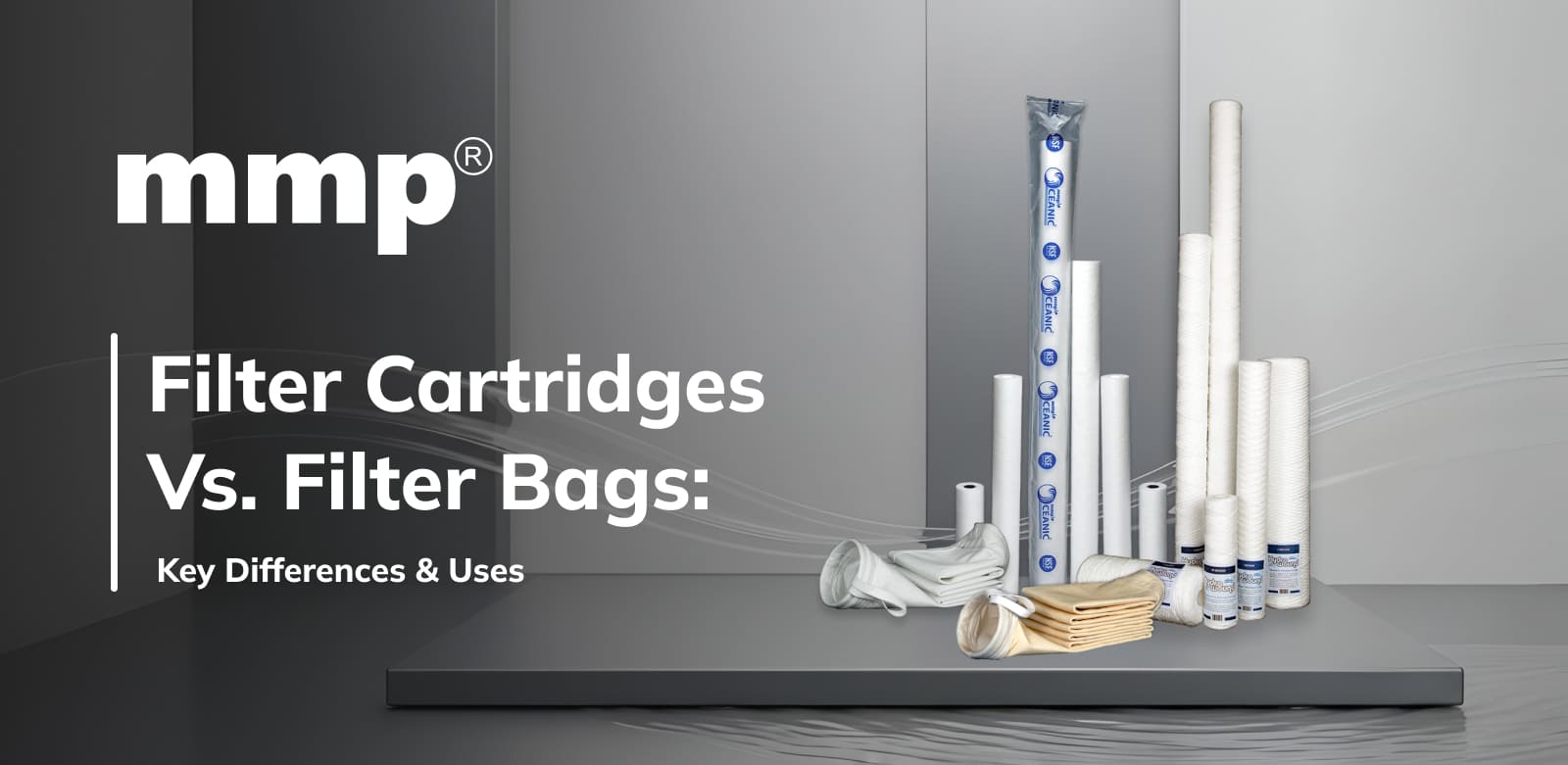
Selecting appropriate filter media is very important when using industrial filtration systems. This selection will help assure long-term equipment protection, stable operation, and a consistent quality of produce produced using that filtration system. The most common types of filter media used in air and water filtration applications are filter cartridges and filter bags. Both filter types provide the same basic function of removing contaminants; however, the design of each filter type is substantially different, and the application of each is also substantially different.
Bag filters have been the most commonly used industrial filtration product based on their strength and ability to handle large dust/solid volumes, while cartridge-based systems have received more attention recently due to their smaller design and greater surface area efficiency. The selection of either of these types of filtration technologies depends on a thorough understanding of the conditions of operation, the characteristics of the contaminants to be filtered out, and the overall goals of the operation.
The purpose of this blog is to explain in detail the operating principles of filter cartridges and filter bags (and to illustrate how those principles impact the efficiency of the filtration process, maintenance required to maintain the filter, initial & ongoing costs associated with purchasing & replacing the filter(s), as well as the overall functionality of the filtering system) in order to assist a decision maker in selecting the best filtration solution for an individual application.
Overview
While many industrial filtration systems utilise both a Bag Filter and Filter Cartridge technologies, people often use these technologies interchangeably and do not consider them in detail. Each technique was developed to solve a different type of industrial filtration challenge; therefore, the effectiveness of either technology depends upon how well it has been matched to a specific environment in which it operates.
A Bag Filter employs fabric filter bags to capture particles and contaminants from an airstream by means of both surface and depth filtration processes.
A Filter Cartridge employs a pleated media format that is arranged in a cylindrical shape, which utilises a larger filtration surface area than a Bag Filter within a compact footprint (for example, less than two feet in length). The arrangement and structure of each technology significantly affect how air flows through the filter, the pressure drop through the filter system, and the method and frequency of cleaning or replacing the filter media.
Recognizing these basic distinctions will enable one to assess performance indicators (essentially, micron rating, flow rate, and energy efficiency) with an understanding of their interrelationships. Filter system design often results in inefficiencies in operation because filters are improperly designed due to the absence of context.
Understanding Cartridge Filters
Filter cartridge systems are designed using cylinder-like items called filter cartridges, which can either be rigid or semi-rigid. The filter cartridges are typically made from pleated plastic (polyester) or cellulose and supported at the centre, or core, of the filter cartridge to keep structural stability when under liquid or air flow/pressure.
The addition of pleats to the design of filter cartridge systems provides an increase in the potential filtration surface area for a given volume of space, making it possible for these systems to be used in applications that would otherwise be unfeasible due to their physical size or where it is critical to achieve high filtration efficiencies even though low airflow volumes are used.
Applications for air filtration use pulse-jet systems to clean cartridges, which remove the dust that has accumulated on the pleated surfaces. There are two basic types of water filter cartridges used in liquid filtration: the disposable type, which is selected according to its micron rating, its compatibility with chemicals, and its flow rate; and the reusable type, which may be made of materials designed for long service life.
Learn: What Are Cartridge Filters? Types, Sizes, and Uses
Understanding Bag Filters
In a bag filtration system, the primary means of filtration is through a fabric-based filter bag, with these bags supported by metal cages and housed within housings designed for high-volume air or liquid fate processing.
Dust filter bags remove material from the air using a combination of two types of filtration surfaces, surface and depth filtration. As the dust filter bag builds a dust cake over time, it increases the efficiency with which it captures small particles. For this reason, industrial filter bags effectively continue to monitor and collect particulate from high amounts of dust.
Air filter cartridges assemblies are typically used in the dust collection of abrasive materials or in instances where the temperatures are high during the filtering process. In liquid filtration, the use of filtration bags allows for the removal of solids from clean process fluids to provide the best possible filtration at high flow rates without excessive pressure drop.
See Also – Filter Bags: A Quick Guide to Dust Filtration Solutions
What’s the Difference Between a Bag Filter and a Cartridge Filter?
Although both systems ultimately have the same goal, the effective removal of contaminants, there are significant differences between them in their design philosophies and how they behave during use. Cartridge filtration systems are built for compact growth and maximum usable surface area. In contrast, bag filtration systems are designed for greater durability and to withstand more extreme variations in the process conditions.
A bag filtration system is generally more tolerant of variations in the characteristics of dust particles from the product than is a cartridge-style filtration system, which performs best in controlled and repetitive operating conditions. These variations become even more critical in demanding industrial applications, where it is important to know what type of system will suit your application the best.
By understanding these differences, you can avoid the common cause of premature failure of the elements in a filter system and performance issues as well by knowing which filter will work for your operation.
Micron Ratings
The Micron Rating indicates the size of the smallest particle that a filter can filter out reliably. The micron rating for both filter cartridges and bags can vary; however, they have different ways in which they obtain their efficiency.
In comparison to filter cartridges, which typically use very fine surface filtration techniques to obtain a very low micron rating, industrial-grade filter bags use depth filtration and the creation of a "dust cake" to improve the overall effectiveness of filtration over time. When selecting a micron rating, you should also look at the distribution of the particles, not just at the smallest particle size.
Surface Area and Differential Pressure
Filter cartridges have an important benefit; their high surface-area-to-volume ratio enables them to have a significant filtration area, supporting less initial pressure drop, because they are constructed of pleated media.
The downside of pleated filter bags are that under heavy dust loading, the pleats will become clogged much more rapidly than bag filters and, therefore, the benefits of the high surface-area-to-volume ratio begin to cease during periods of heavy dust loading. Bag filters will have a longer cycle time between filter change-outs under heavy dust loads, and they can be designed with different surface-area-to-volume ratios.
Flow Rates
Flow rate capability is an important consideration for both air and liquid filtering systems, with filter bags providing higher maximum flow rates due to their higher level of coverage and their ability to trap impurities deeper within the medium.
Cartridge systems are usually designed for lower to moderate flow requirements with high filtration performance. Operating above recommended flow rates may cause a sudden rise in pressure, leading to excessive wear on the cartridge. By choosing the correct filtration medium, you will maintain a constant flow of filtered material while consuming less energy than would normally be required.
Read More: Types of Filter Cartridges and Their Benefits – A Detailed Guide
Cost Efficiency
Equipment costs for initial purchase, frequency of replacement, and ongoing operating costs all go into determining total filtration costs. Although the up-front cost of a cartridge system may be higher than the lesser-priced bags, they still provide advantages such as a space-saving design and higher efficiency.
In applications where high volumes of dust are generated, bag filters tend to offer much better cost-effectiveness than the cartridge system due to bags for industrial vacuum cleaners having a longer life span in these types of situations. Therefore, it is important to evaluate overall cost-effectiveness over the total lifecycle rather than simply looking at the initial price of the filter elements.
Performance Efficiency
A filtration system's ability to maintain a consistent operating condition over an extended period of time will affect its overall performance efficiency. For example, bag-type filters will provide optimal performance if the dust load, temperature, or size of particles passing through the filter media varies considerably.
If the system is utilized in a consistent, controlled environment, cartridge-type filters will typically provide optimal performance. However, in more severe operating environments, cartridge filters may need more frequent maintenance to provide optimal performance. In order to achieve consistent performance efficiency, it is important to match system design with variability in process conditions.
Maintenance and Replacement Frequency
There are substantial differences in terms of maintenance between cartridge filtration systems and filter bag systems. The cartridge filters tend to be lighter and more user-friendly to change, while, on the other hand, filter bags tend to be a more durable product with greater tolerance to rigorous cleaning procedures. In many cases, the Industrial Filter bags will have longer service intervals if maintained properly. When developing a Maintenance Plan, the following are important considerations: labor costs, downtime, and Safety Issues.
Storage, Disposal, and Carbon Footprint
Often, when selecting a filtration system the filtration system such as a filter cartridge or a filter bag will be a secondary concern for facilities due to the fact that these systems do not typically consider how to store or dispose of filtered liquid and/or waste from the filter. However, the long-term operations planning for using filtration systems requires understanding the need for storage, disposal, and the environmental impacts of both filter cartridges and filter bags. Depending on the space available within your facility's storage system, as well as the level of compliance with waste management programs that have been put into place.
Although cartridge filters take up very little room and are light enough to be easily stored, due to the fact that the filter cartridge must be changed more often in high dust applications, cartridge filter systems generate more waste and require more labor to manage than bag filter systems. On the other hand, bag filter systems utilize larger and larger filter bags that do not require to be changed nearly as frequently as cartridge filter cartridges. Therefore, while cartridge filter systems create more waste than bag filter systems, the longer the lifespan of bag filter systems and their less frequent replacement reduces the carbon footprint of bag filter systems because it results in fewer emissions from the production, transportation, and disposal of bag filters.
Downtime, Ease of Changeout, and Solid Collection
Maintenance-related downtime has a direct impact on operational continuity, making filter changeout efficiency an important practical consideration. How quickly filters can be accessed, handled, and replaced depends largely on the physical design of the filtration system and the type of filtration media being used.
Cartridge filters are relatively lightweight and compact, which makes them easier to handle during maintenance. In systems designed for frequent access, this can reduce the time required for individual changeouts. However, in applications with higher dust loading, the need for more frequent cartridge replacement can increase the cumulative downtime over longer operating periods.
Bag filtration systems typically use heavier industrial dust collector bags, but they are designed to operate for longer intervals between replacements. While individual changeouts may take more effort, the reduced frequency of maintenance can result in fewer total interruptions to operation. This difference becomes more noticeable in continuous-duty environments.
Solid collection behavior also varies between the two technologies. Bag filters tend to release accumulated dust in larger, more uniform quantities during cleaning cycles, improving hopper collection efficiency. Cartridge systems, by contrast, may retain dust within pleated media, which can complicate cleaning and increase the likelihood of dust re-entrainment during maintenance. These operational differences are important when evaluating overall system uptime and housekeeping requirements.
Which Filter Is Better for Your Dust Collector System?
There is no single filtration solution that is universally better for every dust collector system. The right choice depends on how closely the filtration technology aligns with the operating realities of the process. Factors such as dust loading, particle characteristics, available space, operating temperature, and expected process variability all influence whether a cartridge-based or bag-based system will perform more reliably over time.
1. Cartridge Filters: Cartridge filters are generally better suited for applications with relatively consistent dust characteristics and lower overall dust loading. Their compact design makes them attractive where space is limited, and their high surface-area media can deliver fine filtration efficiency when operating conditions remain stable. In controlled environments, cartridge systems can perform effectively with predictable maintenance schedules.
2. Bag Filter: Bag filter systems, on the other hand, are typically preferred for more demanding dust collection applications. Bag filtration performs well where dust loads are high, particles are abrasive, or process conditions fluctuate. The depth filtration mechanism of industrial filter bags allows them to tolerate uneven dust distribution and temporary overloads without immediate performance loss, making them more forgiving in heavy-duty industrial operations.
Ultimately, selecting the better filter for a dust collector system requires evaluating long-term operating behavior rather than short-term convenience. Systems that match filtration technology to real process conditions achieve greater reliability, fewer disruptions, and more stable dust control performance over time.
Conclusion
Filter cartridges and filter bags are both established filtration products that are widely used in a variety of industrial applications. While there are differences between filter cartridges and filter bags as far as effectiveness is concerned, the key differences are found in how filter cartridges and filter bags handle the amounts of dust accumulation and require maintenance.
When a user knows the difference between filter cartridges and filter bags, they can design their filtration systems more accurately with predictable airflow, pressure drop, and maintenance cycles. Designing filtration systems that match the process conditions will help ensure that all aspects of a facility operate efficiently and consistently.