Menu

Blog
What Are Cartridge Filters? Types, Sizes, and Uses
Dec 19 2025
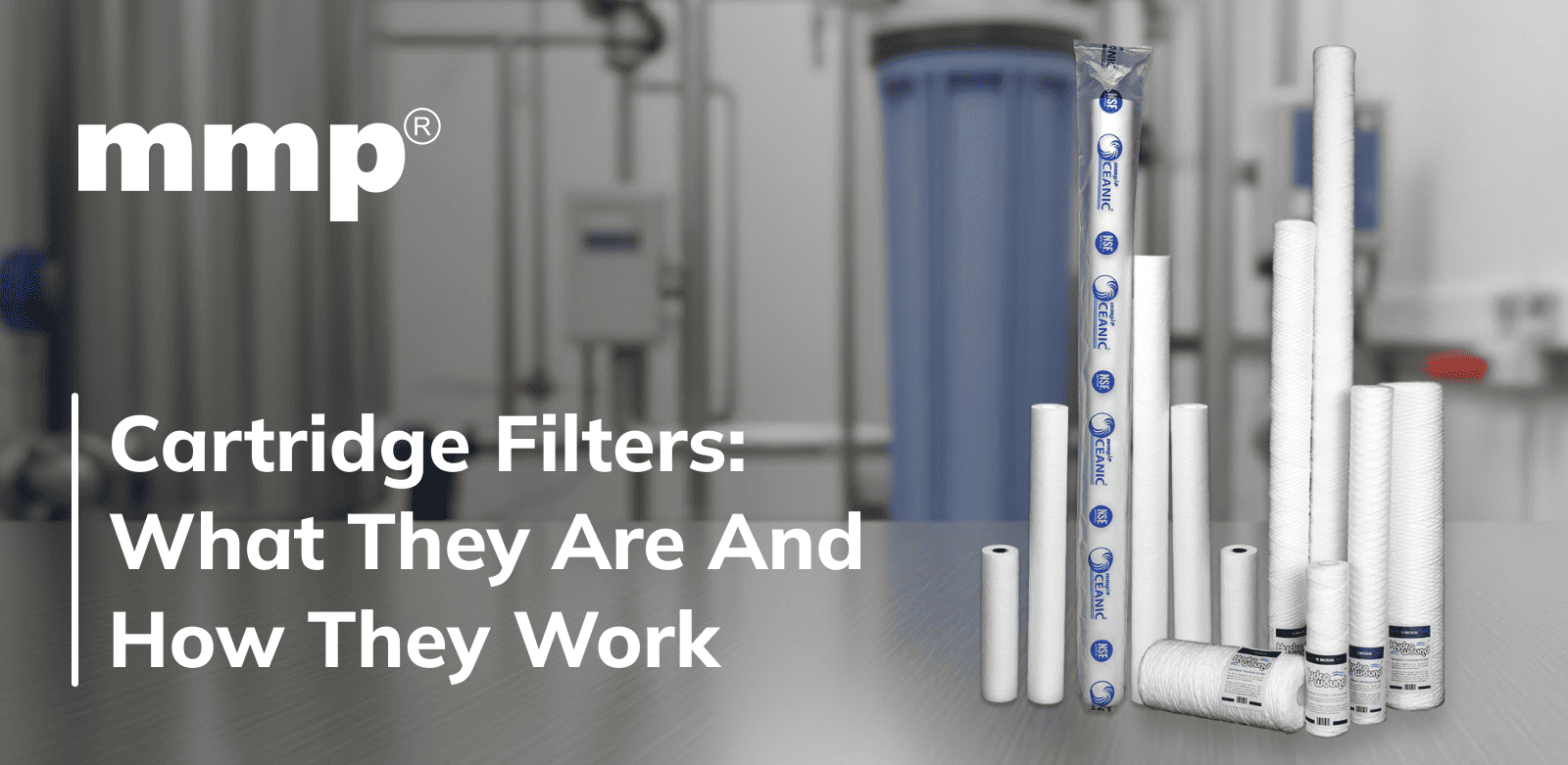
Cartridge filters are designed in a cylindrical form and are primarily used for filtering out contaminants, sediment, and other unwanted substances suspended within liquid streams for industries and businesses. When installed within a filter housing, cartridge filters serve an essential function for maintaining high-quality fluid, protecting against damage to downstream equipment, and providing consistency in product output through the filtering process.
From the sectors of Chemical Manufacturing, Food and Beverage Processing, Pharmaceutical & Water Treatment, filters are used based on the fact that they are easy to maintain and operate; however, there is still a large misunderstanding about the filter type, operation, and application.
In this blog, we are trying to give you a bigger picture and a structured explanation of cartridge filters, covering how they work, their usage, different types, operations, and how to choose the right option for particular applications according to your needs.
Cartridge Filters Explained: Definition and Working Principle
First things first, let us understand the basics of what cartridge filters are. What is its definition, and what’s its working principle? Before choosing any type of filtration solutions, this will help you step back and pause a moment to understand the fundamentals of your requirements or needs. A cartridge filter is an easy-to-detach cylindrical element installed inside a housing. As the liquid rushes through the stream of the housing, the cartridge media catches unwanted particles and impurities while giving access to only clean fluids to bypass through the filters.
Many filtration problems arise not because the filter is defective, but because the working principle was not fully understood at the start. This detailed and direct design is the reason why filter cartridges are trusted across industries.
The cartridge filter is structured such that:
- The filtered fluid enters the filter housing
- Pressure causes the fluid to pass through the cartridge filter media
- Particles larger than the micron rating of the cartridge filter get trapped in the filter
- The filtered fluid returns to the water treatment facility
See also: High-Quality Cartridge Filters for Industrial Use in Global Markets
Cartridge Filters Uses Across Various Industries
One reason why cartridge Filters offer such a high level of adaptability; you can use the same filter media type in cartridge format for many different types of fluids, operating pressures, and cleanliness requirements. Through the progression of time, industries have utilised cartridge filters for purposes such as maintaining cleanliness, process consistency, and protecting equipment.
Some of the most prevalent uses of cartridge-style filter media include:
- Water treatment for sediment and rust removal.
- Food and beverage processing for maintaining hygienic conditions and product consistency.
- Pharmaceutical manufacturing, primarily when used as pre-filters.
- Automotive manufacturing to filter coolant and cutting oil.
- The oil and gas industry needs to protect pumps, valves, etc.
- Chemical manufacturing processes to remove solid contaminants from liquid products.
Two Main Categories of Cartridge Filter
Filtration of contaminants through cartridge filters is approached in a variety of ways, in terms of both form and function. When choosing the proper filtering solution for an application, you can begin the selection process by understanding the two main methods of capturing contaminants during operation - the means of carrying out the capture and the method or media through which the material passes before it is actually captured.
Surface Filters
Cartridge filters of surface-type capture contaminants directly on their exterior. Due to the consistency of their pore size, it is straightforward to produce consistently accurate results with surface filters.
Surface filters are generally selected under the following conditions:
- A requirement for precise micron ratings
- A low level of contamination
- Easy visibility and cleaning of the filters
Two examples are Polypropylene pleated filter cartridges and High Flow pleated filter cartridges.
Depth Filters
Depth filters differ from surface filters in that they do not use a surface to catch particulates; they use a complete depth of filter media to catch each particulate as it passes through the filter media.
This means that depth filters have applications that include:
- Higher dirt-loading applications
- Application requirements vary for contamination levels
- Longer life expectancy between filter changes.
Common examples of this type of filter cartridge are Melt Blown Cartridge, Wound Cartridge, PP Spun Filter, and Resin Bonded Cartridge.
See also: Types of Filter Cartridges and Their Benefits – A Detailed Guide by mmp®
Which Types of Material Are Used in Cartridge Filters?
The actual performance of a cartridge filter is directly related to the type of material used. There is no one-size-fits-all material that can be deemed as the "top" performing cartridge filter. The type of material selected will have an effect on the chemical resistance (i.e., ability to withstand exposure to chemicals), the temperature range (i.e., ability to handle high or low temperatures), and the general durability (i.e., longevity) of the cartridge filter.
Cartridge filter typical construction materials include:
- Polypropylene (PP) is lightweight, resistant to chemicals, and commonly used
- Polyester is a stronger material than polypropylene; it can withstand temperatures that exceed those of polypropylene.
- Cotton yarn, although available as a wound cartridge, is the traditional fabric used for this application.
- Resin Bonded Media (R.B.M.) is a very rigidly constructed material that maintains stability within the pore structure of the filters.
Core Components of Filter Cartridges
Although cartridge filters appear to be an easy product, the filter's internal component design is critical to the reliability and performance of the cartridge. All components of a cartridge contribute to the performance of the cartridge. A properly designed cartridge will hold its form and functionality when subjected to changing pressure conditions.
Key components include:
- Filter media that captures contaminants
- Inner support core for mechanical strength
- End caps that ensure proper sealing
- Support layers that prevent media collapse
See also: What Are Cartridge Filters? Types, Sizes & How to Choose
Steps to Clean Industrial Filter Cartridges
In some applications, filters may be reused after proper cleaning. When performed correctly, cleaning the filter can increase its life without reducing its filtering capability. The filter media can be damaged if the improper method of cleaning is used, so follow the correct cleaning procedure.
The typical cleaning procedures for filter cartridges include:
- Shutdown and depressurizing system.
- Carefully remove the cartridge from the housing.
- Rinse the cartridge in either clean water or an approved cleaning solution.
- Use of low-pressure spray to remove contaminants trapped in or on the cartridge.
- Inspect the cartridge before reuse.
How and When to Replace Filter Cartridge (Step-by-Step Guide)
A cartridge filter must eventually be replaced regardless of how much upkeep has occurred on it. Replacing cartridges at timely intervals can help avoid pressure loss, as well as protect other equipment located downstream of the cartridge filter. Schedule replacement based on operating conditions and the level of contamination present in the filter, which will vary from system to system.
Indicators that indicate a new cartridge is necessary:
- Greater than usual pressure difference across the cartridge filter.
- Decrease in flow rate that is noticeably less than expected.
- Physical or visible contamination (fouling) on the inside and/or outside of the cartridge filters themselves.
- Scheduled maintenance intervals are another way to determine when to replace your cartridge filters.
Basic Instructions for Replacing Cartridges:
- Make sure that you have turned off your system and released all remaining pressure from it
- Remove the used cartridge from inside the housing
- Install the new compatible filter cartridge into the housing
- Complete the cartridge replacement by sealing the housing back up and restarting the system
See also: Top High-Performance Filter Cartridges by mmp®
Applications of Cartridge Filters
Cartridge filters are found in many situations due to their reliability and adaptability. The fact that they are designed as modules makes it easy to add to existing systems. Cartridge filters are also generally chosen when continuous performance and easy maintenance are needed.
Familiar applications include:
- Process water filtration
- Pre-filtration for RO and UF systems
- Food and beverage production
- Industrial wastewater treatment
- HVAC and air filtration systems
Types of Industrial-Grade Cartridge Filters Available
There are many different types of filter cartridges available on the market to accommodate the various industrial filtration applications. These cartridges are designed and constructed to meet different sets of operational requirements. Many filter manufacturers have improved their cartridge designs over the years so that they align more closely with the application-specific process conditions rather than just providing a generic solution.
Common industrial-grade cartridge filters include:
- Melt Blown Filter Cartridges
- Wound Filter Cartridges
- Lagoon Melt Blown Filter Cartridges
- Oceanic Melt Blown Filter Cartridges
- Core for Filter Cartridge
- PP Pleated Filter Cartridges
- PP Spun Filter
- Resin Bonded Filter Cartridges
- Grooved Resin Bonded Filter Cartridges
- Sediment Filter
- Anti-Microbial Wound Filter Cartridge
- High Flow Pleated Filter
- PPH One Piece Filter Housing
By working with manufacturers that prioritize consistency, comprehensive product application knowledge, and long-term reliability, your experience will lead to the most value for your company. Companies such as mmp filters, which uphold these principles, have successfully provided solutions to companies in many different industries and are active within various global marketplaces.
A Guide to Selecting the Best Filter Cartridge for Your Needs
Picking the right cartridge filter can be as simple as long as you carefully assess your operational needs. After completing this assessment, you'll make better choices about filter options for optimal performance and cost efficiency over time. When deciding which filter to buy, don't just focus on a single specification. Instead, consider the entire system to identify all relevant specifications.
Key factors to think and consider are listed below:
- Required micron rating
- Operating pressure and temperature
- Chemical compatibility
- Flow rate and system configuration
- Applicable industry standards