Menu

Blog
Why PP Melt-Blown Cartridge Filters Are Highly Efficient
Dec 31 2025
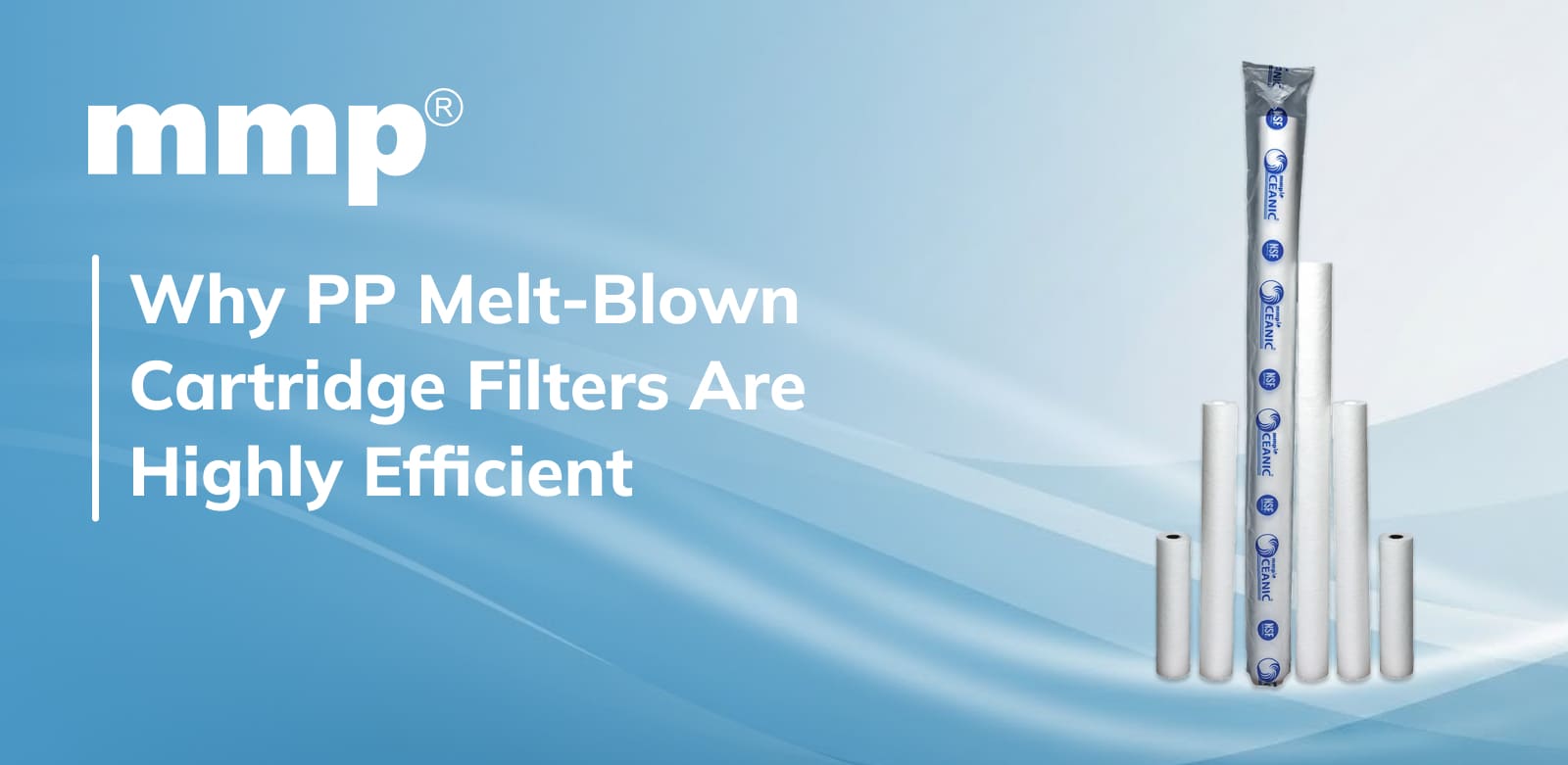
PP melt blown cartridge filters are filtration products that are found in many industries and are used for the removal of small particles from a liquid and gas stream. The PP melt blown filter is produced using polypropylene fibers, with film depth filtration, reliable and stable performance, and the ability to handle fluctuation in the amount of contamination without a dramatic drop in filtration efficiency.
The benefit of melt blown cartridges is not only their composition, but also their construction method. Unlike surface filter media, which only capture particles at the outer surface of the filter, the melt blown cartridges capture all particles by filtration, throughout the entire thickness of the filter media, helping provide longer time periods of efficient use and providing better filtration performance during Fluctuating operating conditions.
Melt-blown cartridges are designed for filtration of various applications, industrial (e.g., water treatment) to point-of-use (e.g., drinking water), where a high level of filtration is required to ensure the highest quality finished product. In these cases, not only is it important to consider the level of filtration required, but it is equally important to understand how and why the particular cartridge performs as intended so that users can maximize the value of their investment.
Understanding the Melt-Blown Cartridge Filters
The first relevant point towards assessing efficiency is the definition and construction of melt-blown cartridge filters. Often, decisions made regarding valid filtering practices result from confusion regarding how depth filtration works, and therefore, how it ultimately works for the user.
A type of depth filter is a melt-blown cartridge filter, which implies that contaminants can become trapped within the actual thickness of the filter material (the media itself) instead of just at the outside surface. The media is composed of polypropylene microfibres, thermally fused to form a very strong, self-supporting structure.
Since no adhesives or chemical bonding agents are involved, the filter media remains clean, chemically stable, and will not interfere with more sensitive applications. Furthermore, the internal gradient structure has been purposely designed to facilitate the trapping of a wide range of particle sizes in an efficient manner.
The following are key characteristics of melt-blown cartridges:
- Melt-blown filter occurs simultaneously in the filtration process (as opposed to surface filtering).
- All components of a cartridge are made of polypropylene.
- The media has a gradient density.
- High capacity of dirt holding and stable flow characteristics.
See also: Melt-Blown Filter Cartridge: What Is It? How Does It Work?
Science Behind the Filtration Mechanism of Melt-Blown Filters
In melt-blown filter systems, particles build on themselves in three dimensions as they move through the media. The way melt-blown filters work is quite different from the way surface filtration systems work.
When fluid enters a melt-blown cartridge, larger particles are intercepted and retained in the outer layers of the media. Smaller particles travel further into the filter before being captured. This staged capture process spreads contamination evenly throughout the cartridge.
Melt-blown filters are designed to avoid only loading at the surface in order to reduce rapid clogging and sudden pressure spikes from occurring. This allows for more consistent, predictable performance over time, particularly in systems where contamination levels fluctuate.
The primary mechanisms of filtration for melt-blown filters include:
- Inertial collection for larger-sized contaminants
- Interception of mid-sized contaminants
- Diffuse collateral capture at particulate levels
- Individual media layers capturing and entrapping particulates in depth
Understanding Melt-Blown Technology
An appreciation of the reasons for Melt Blown Depth Filters’ great performance requires an understanding of the technology and manufacturing methods. Melt-blown technology is a specific process that creates very fine, consistent, and continuous fibers.
Through the melt-blown process, polypropylene is heated until it turns into a liquid. This liquid is placed into machines that use high-speed air to force the molten polypropylene through tiny holes, which causes it to become finely fibrous. The fibrous material is then deposited randomly by the machines and joined together using heat to form a non-woven filter media. By manipulating the airflow and temperature, manufacturers can customize the diameter of the fibers and size of the pores.
PP melt blown filter's level of control creates an environment that produces melt blown filters with repeatable performance and consistent ratings. The process employs only thermal bonding, which produces a clean medium. Therefore, a filter can be used in critical filter applications.
The PP melt blown Filter has many advantages:
- Identical distribution of microfibre
- Pores of predictable gradient size
- Purely heat-bonded with no additional bonding agent
- Best stability for both chemi/electro-chemicals and temperatures.
See also: Leading Melt Blown Filter Cartridge Manufacturer - mmp filter
Efficiency Analysis: Melt-Blown Cartridge Filters vs. Other Filters
Other types of filters may be compared to melt-blown cartridge filters, such as pleated filters, wound filters, and resin-bonded filters. All types of cartridges have applications; they differ significantly when it comes to filter performance based on the conditions of their application.
Pleated filters are ideal for surface filtration and accurate micron control; however, they can clog quickly in high particulate loading situations. Wound cartridges provide a depth of filtering but have a less uniform pore structure.
Melt-blown cartridges provide evenly spaced depth filtration while offering a known performance level. Therefore, melt-blown cartridges are very useful in industries where contamination levels can change frequently, or where a filtration method requires longer material life.
Examples of efficiency comparisons are:
- Much greater dirt-holding capacity than surface filters.
- Stable pressure drop through the cartridge over time.
- Excellent performance under fluctuating contamination loads.
- Economical for fine particulate filtration.
Micron Ratings and Performance Levels
The performance of melt-blown cartridge filters when put into practice relies heavily on their Micron rating. Melt-blown cartridges can be purchased with many different micron ratings, which makes them suitable for both coarse and fine filtration applications.
The design of a gradient density filter allows for gradual capture of the particles, rather than an initial spike in capture rate. This helps maintain an even level of efficiency over the entire life of the cartridge, rather than dropping off significantly following the first few uses of the cartridge.
When selecting the appropriate micron level, one must take into consideration their requirements for the balance between filtering efficiency, flow rate, and the service life of the filter.
Available performance ranges would include the following:
- Coarse filtration removes large and visually identifiable particles and debris
- Medium filtration protection of the process from contaminants in the bulk liquid
- Fine micron filtration protection of sensitive systems, such as pharmaceutical manufacturing and food production.
See also: String Wound vs. Melt Blown Filter Cartridges: Key Differences for Water Filtration
Factors Which Improve Melt-Blown Cartridge Filter Performance
A poorly matched application of melt-blown filter cartridges will reduce their ability to work correctly; design and conditions determine how well a filter operates.
Filters capture contaminants based on flow rate, pressure, and temperature, where the chemical composition to extend their lifespan will depend upon how they are used in ways that are conducive to their capabilities.
Important performance improvement factors can be determined by:
- Choosing the right application-specific micron rating for the cartridge.
- Maintaining a stable (recommended) flow rate.
- Staying within both recommended pressure and temperature limits.
- Confirming chemical compatibility with polypropylene.
- Replacing cartridges based on a pressure drop rather than merely time.
How to Select the Right Melt-Blown Filter for Your Industry
Since your industry will have requirements that vary based on the application that you are using the filter, you will select a PP melt-blown filter. One common mistake is to think all filters can be treated equally.
Water treatment systems will generally require the removal of particulate matter, as well as the ability to withstand chemical exposure during the treatment process. Conversely, pharmaceutical applications require filters that can provide a clean and consistent environment when creating pharmaceutical-grade products. Industrial applications typically have higher durability and service life requirements.
Selecting your filter using a methodical approach will help identify the best fit for your needs and provide you with reliable performance, and reduce your total cost of ownership.
Considerations for selecting filters include:
- Filter manufacturer
- Size of filter
- Type and size of contaminants present
- Operating Temperature and Pressure
- Flow Rates
- Regulatory Requirements, such as industry standards and hygiene requirements; Compatibility of the housing of the filter.
The support of an experienced filtration manufacturer that understands the application-specific challenges is often helpful when determining which type of filter to use. mmp filtration provides a complete range of consistent melt-blown cartridge design solutions for many different industries and applications.
See also: High Flow Pleated Filters vs. Melt Blown Cartridges: Which Is Right for You?
Applications of Melt-Blown Cartridge Filters
Melt-blown cartridge filters are typically used in many different industries because of their extreme flexibility and adaptability. With their specialty for capturing small particles while still providing consistent flow rates, they make ideal Primary and Pre-Filter applications.
Downstream equipment, membranes, and final filtration stages are usually protected from premature fouling or damage by their use.
Melt-blown cartridge filters have multiple applications.
- Water Treatment and Drinking Water Systems
- HVAC Systems (for air and particulate cleaning)
- Pharmaceutical Manufacturing (pre-filtration)
- Chemical and Industrial Processing
- Food and Beverage Process Filtration
Future of PP Melt-Blown Cartridge Filters
With evolving global standards for efficiency, sustainability, and consistency, therefore, PP melt-blown filter manufacturers must adapt in order to continue to meet these higher standards. Advances in fiber control and manufacturing precision have enabled improved performance of the filters and decreased material waste.
The next phase of development for PP melt-blown filters will be focused on longer service life of the filter, improved micron stability of the fibers, and environmental impact during and through the entire lifetime of a filter. While other types of technology develop new applications, melt-blown technology will remain flexible enough to support these upcoming developments without sacrificing filter efficiency.
Melt-blown cartridge filters are expected to remain one of the core products utilized across the majority of industries globally, as companies increasingly focus on contamination control and operational reliability through the use of high-performance filtration solutions.