Menu

Blog
How to Choose the Best Industrial Bag Filters for Your Factory
Apr 22 2026
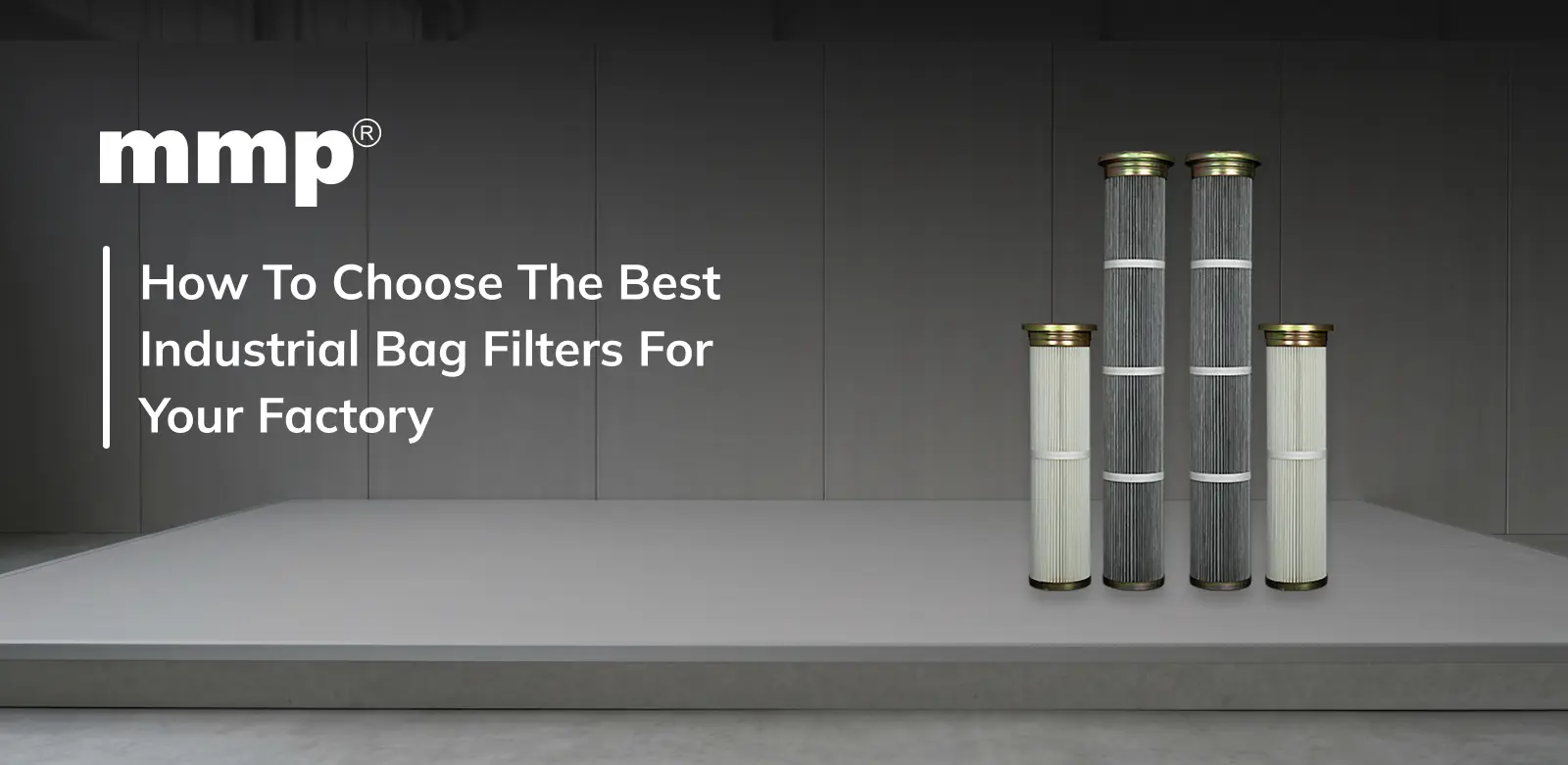
Quick Answer: Industrial bag filters remove solid particles from air or liquid streams by passing contaminated flow through a fabric or felt filter medium. Five things decide whether a bag performs well or turns into a recurring maintenance problem: fabric type, micron rating, operating temperature, chemical compatibility, and fitment. Nail all five, and the system runs reliably for months. Miss one and you will know about it quickly, usually at the worst possible time.
Why the Wrong Bag Filter Costs More Than People Expect
Pressure drop climbing overnight with no obvious cause. Output failing inspection. An air quality audit that did not go well. When someone finally traces the problem back to its source, it is almost always the same finding: the wrong bag filter went in.
That happens more than it should, and the reasons vary. Procurement teams working from incomplete specs. Engineers reordering what was used before without checking whether process conditions have changed. Suppliers are recommending whatever fabric they have in stock. Any one of those missteps produces the same outcome downstream.
Cement plants in Gujarat and Rajasthan, chemical facilities in Dubai and Abu Dhabi, pharmaceutical units in Mumbai and Hyderabad, power stations across the UK and Australia all deal with this. The product category does not get much attention until something goes wrong, and by then the cost of fixing it is significantly higher than the cost of specifying correctly would have been.
This guide is written for engineers and procurement teams who need straight answers, not another brochure.
How do industrial bag filters work?
Contaminated air or liquid enters the housing and gets pushed through the bag. Particles stay trapped in the fabric. Clean output exits the other side. In air systems, a pulse-jet mechanism knocks collected dust off the bag surface into a hopper below. In liquid systems, fluid moves from inside the bag outward, leaving contaminants behind in the media.
What Types of Industrial Bag Filters Are Available?
Picking the wrong product category before even thinking about fabric selection is a common and expensive mistake, mostly because the failure takes weeks to diagnose.
1. Dust Collector Filter Bags are what most heavy industry runs on. Coal ash from power plants in Maharashtra, cement dust from grinding units in Rajasthan, metal fines from foundries in Pune and across the UK. Felt or woven fabrics, fitment matched to the housing configuration in use.
2. Pleated Filter Bags exist for a specific situation: you need more filtration area but cannot change the housing. mmp’s Pleatex pleated bags use 16mm and 25mm standard pleat depths, producing higher dirt-holding capacity, better airflow, and service life up to five times longer than a conventional bag in the same space. Pharmaceutical production, food and beverage processing, cement grinding, paint and chemical manufacturing, textile, and timber processing are the industries where these earn back their cost difference.
3. Liquid Filter Bags handle water, chemicals, oils, coolants, syrups, and food-grade fluids. mmp manufactures liquid filter bags in polypropylene, polyester, nylon, PTFE, and carbon media across a 1 to 200 micron range.
4. Dust Collector Filter Cages are what keep the bag in shape inside the housing during operation. Dimensions have to match the bag precisely. Any gap between cage and bag creates bypass, and once bypass starts, filtration efficiency falls regardless of what the bag itself is rated at.
What is the difference between a pleated filter bag and a standard dust collector filter bag?
Standard bags cost less per unit and handle most general dust collection reliably. Pleated bags use 16mm or 25mm pleat depths to pack significantly more filtration surface into the same housing, extending service intervals and cutting replacement frequency. For operations with heavy dust loads or where downtime for bag changes is operationally expensive, pleated bags typically work out cheaper across a full operating year even though the unit price is higher. One practical point to remember is that bag filters are available in various materials, micron sizes, and lengths, so the right choice is always the one matched to your duty conditions and housing
Also: Industrial Bag Filter: Working Principle, Design, Components & Uses
What Materials Are Used in Industrial Filter Bags?
The material question is where most specification errors actually happen. Choosing what was ordered previously, or what is most common across the industry, is not the same as choosing what is right for the actual process conditions.
1. Polyester covers moderate temperature dust collection in most factory environments. The majority of general industrial dusts across Indian and international facilities fall within its range, which is why it is the default starting point for most air filtration specifications.
2. Polypropylene handles what polyester cannot. Acidic process streams, alkaline environments, water treatment applications where chemical resistance matters more than temperature performance.
3. Aramid (Nomex) is specified once temperatures climb past what polyester can handle continuously. Cement kilns in Gujarat, dryers across Surat and Ahmedabad, UK power generation. These applications run Aramid because the alternative is premature failure and an unplanned shutdown mid-production.
4. PPS (Polyphenylene Sulphide) addresses the situation where high heat and aggressive chemical exposure arrive together. Chemical plants in Dubai and waste processing in Abu Dhabi frequently face both at the same time. PPS is built for exactly that combination.
5. PTFE works as a base fabric and as a surface coating applied over other fabrics. As a membrane lamination, it stops fine dust from embedding into the media, keeps pulse-jet cleaning effective as the bag ages, and extends service life in demanding environments without changing the housing setup.
Two coatings worth noting separately: oil and water repellent finishing prevents moisture-related blinding in humid plant environments. Antistatic treatment is non-negotiable wherever grain dust, coal, or certain chemical powders are part of the process. That is a safety issue with consequences that go well beyond filtration performance.
What is the right fabric for a cement plant bag filter?
Aramid is the standard starting point for kilns operating above polyester's continuous temperature limit. Where chemical aggression is also present, PPS handles both demands. PTFE membrane lamination is worth adding in most cement applications because it keeps cleaning effective across the full service life of the bag rather than just early on.
How to Choose the Right Bag Filter for Your Operation
No two factories run the same, even if the product looks identical on paper. Dust load, moisture, temperature swings, and chemical exposure change from line to line, and that’s exactly why “use what worked there” often backfires. The good news is, the selection process doesn’t need to be long or complicated. It just needs to be done in the right sequence. First, get clear on what you’re filtering, because air and liquid behave like two different worlds. Then check how quickly the contamination builds up, because that decides how hard the bag has to work. After that, temperature and chemistry narrow your options fast. And finally, don’t treat fitment like a minor detail, because one small sealing issue can undo everything.
Pointers (the practical way to do it):
- Start with the basic question: Are you filtering air or liquid? And is the problem fine particulate or mostly larger debris? That answer sets the direction immediately.
- Look at how fast your system loads up: If your bags are clogging in days, the issue might be loading rate and dirt-holding capacity, not “bag quality.”
- Get your temperature reality right: Lines with dryers, kilns, or hot exhaust can push standard fabrics beyond their comfort zone faster than expected, especially right after commissioning.
- Be honest about exposure: Acidic fumes, alkaline dust, solvents, or moisture can quietly attack certain media. When a bag fails here, it usually looks like a manufacturing problem, but it’s often a specification miss.
- Fitment is not a small detail: If the bag doesn’t seal cleanly at the collar or housing, flow will bypass the media. You can have the perfect fabric and the perfect micron and still get poor filtration.
-
For liquid jobs, keep micron selection simple:
- 1–5 micron: for polishing and sensitive equipment protection
- 10–25 micron: for general process fluids where visible particle control is enough
- 50–100 micron: for sediment removal and coolant pre-filtration
- 150–200 micron: when you’re only removing coarse debris before it reaches downstream equipment
How do you know when a bag filter needs replacing?
Differential pressure across the housing is the most reliable indicator. When it rises beyond the normal operating range and does not recover after a cleaning cycle, the bag needs to come out. Reduced throughput and declining output quality appear alongside that. The mistake most operations make is waiting until output quality drops visibly rather than watching pressure drop, because by that point, downstream equipment is already under stress. This is exactly why filter bags for your factory should be specified from your own process conditions, not copied from another plant.
Which Industries Use Industrial Bag Filters?
Industrial Bag Filters in India
Cement plants in Gujarat, Rajasthan, and Madhya Pradesh rank among the highest-volume users of industrial filter bags globally. The operating temperatures and abrasion levels in these plants make Aramid or PPS the practical specification rather than polyester. Pharmaceutical factories in Mumbai and Hyderabad run pleated filter bags for cleanroom air quality alongside fine-rated liquid filter bags in process water treatment. Chemical plants across Surat, Vapi, and Ankleshwar deal with corrosive process streams where polypropylene or PPS is the only fabric that makes sense. Across food and dairy facilities in India, FDA-compliant materials and traceability documentation are baseline requirements, not premium options.
Bag Filter Supplier for UAE and Middle East
High ambient temperatures combined with chemically aggressive process conditions put most standard fabrics under pressure faster than the specification anticipated. PPS and PTFE dominate in chemical plants in Dubai and Abu Dhabi. Water treatment facilities across the UAE run liquid filter bags at pre-filtration and polishing stages where consistent performance across repeat orders matters as much as the initial specification.
Dust Collector Bags for UK and Australia
Power plants burning coal or biomass in both markets generate high-temperature flue gas loaded with fly ash. Aramid or PPS with PTFE membrane lamination is the well-established specification for these applications. What makes these markets different from others is that UK COSHH regulations and Australian workplace air quality standards make certification documentation a procurement requirement before the order is placed, not something confirmed afterwards.
Are food-grade and pharmaceutical bag filters available from Indian manufacturers? Yes. mmp manufactures FDA-compliant liquid filter bags and dust collector bags for food, dairy, beverage, and pharmaceutical production. They are produced from traceable materials, individually packaged, and available with full documentation for regulated market procurement in the UK, USA, UAE, and Australia.
What to Look for in a Bag Filter Manufacturer and Supplier
The first order is rarely the problem. Everyone is careful, everyone checks the spec, and the sample looks fine. The real test starts when you reorder and you expect the same fit, the same pressure drop behaviour, and the same service life. That’s when small “drifts” show up, and you only notice them after the dust collector starts acting up on the shopfloor. A supplier with real application experience usually catches these issues early because they ask better questions before freezing a spec. And if your process changes, a capable manufacturer should be able to tweak the construction without turning it into a six-week guessing game. That is where the difference between a catalogue vendor and a true filter bag manufacturer shows up, and why buyers compare the repeatability and controls of a Filter bag manufacturing company or Filter Bags Manufacturer and Supplier before scaling repeat orders.
You will also see buyer searches written plainly, like High-quality filter bags for your industry and filter bags for your factory, but those phrases still need a specification that matches process conditions and fitment.
Pointers (what this means in practice):
- Judge them on repeat orders, not the first shipment. The best suppliers have tight controls so the 4th order matches the 1st, dimensionally and performance-wise.
- Look for application questioning, not catalogue selling. The right questions are about dust type, temperature, moisture risk, cleaning method, and failure history, not just “bag size and quantity.”
- For regulated applications, verify documents before you commit. For mmp specifically, their site lists a D-U-N-S number 92-067-2339 and shows NSF listings for water contact components (NSF/ANSI/CAN 61 listing under MMP Filtration Pvt. Ltd.).
- Check food/pharma material claims in the product scope. mmp states its dairy dust-collection bag filters are made using FDA-approved food contact materials and also states it makes food/pharma grade liquid filter bags using FDA-compliant raw materials.
- Track record is useful only if it’s published and consistent. mmp lists “Our Customers” (including Reliance, Adani, ONGC, Indian Oil, Bayer, Otsuka) on multiple industry pages.
- Customization should be specific, not vague. Ask what they can actually vary: micron ratings (for liquid bags), fabric type, coatings, fitment configurations, pleat depth (if applicable), dimensions, sealing options. (mmp describes standard and custom industrial bag systems for liquid bags, and covers multiple bag/cage categories across products.)
- Bulk buying needs paperwork discipline. Before any bulk order, lock every detail in writing: material, fabric weight, finish/coating, fitment type, bag dimensions, micron requirement (for liquid), and joint method. Bulk problems rarely show up on day one, they show up later when specs drift. If procurement is being driven mainly by the filter bag Bulk & Wholesale price

Conclusion
Specification errors in bag filtration take time to surface and cost more to fix than most operations expect. Wrong material, wrong micron, fitment that allows bypass. Each one produces problems that look like something else entirely until someone traces them properly.
mmp Filters manufactures Dust Collector Filter Bags, Pleatex Pleated Filter Bags, Liquid Filter Bags, and Dust Collector Filter Cages. NSF certified. D&B registered (DUNS 92-067-2339). Trusted by Reliance, Adani, ONGC, Indian Oil, Bayer, and Otsuka. Located at C3-602 Anushruti Tower, SG Road, Thaltej, Ahmedabad, Gujarat 380059. Manufacturing since 1994. Exporting to the USA, UK, UAE, and Australia.