Menu

Blog
Water and Air Filtration for Food, Beverage, and Dairy Plants
Jul 09 2026
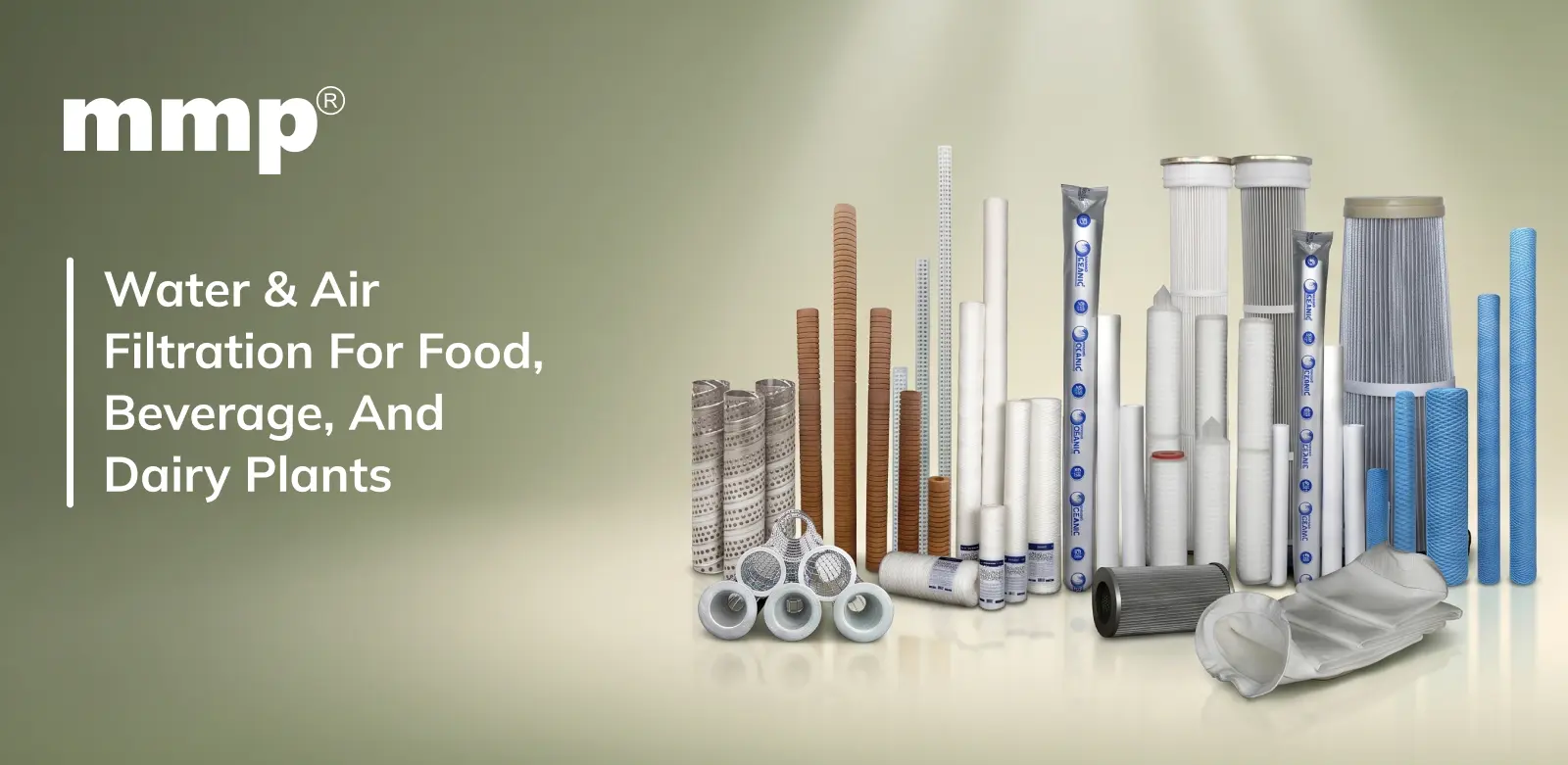
You can buy the best equipment for a food or dairy floor and still lose hours every week. The cause is often boring stuff: dirty water and dusty air. It creeps up on you. Water drags in sand, rust, silt, and fine grit, and that grit ends up in pumps, valves, nozzles, and treatment systems. Over in the dry areas, flour, sugar, spices, starch, and milk powder drift about and settle on machines, floors, and anything nearby.
On any single day, none of it looks like much. That's the catch. Give it a few months and it becomes blockages, extra cleaning, worn parts, and a schedule that keeps slipping. This is where filtration earns its keep.
Here's the simple version. For a food, beverage, or dairy business, clean water and controlled air just make the day run smoother. Filtration backs up your hygiene programme, protects the kit you paid good money for, and keeps the workspace easier to manage. Does it replace proper cleaning, testing, and food-safety steps? No. And nobody should treat it that way. But it's a real part of the bigger picture, and it's usually the part people forget.
Why Water Filtration Matters in Food and Dairy Processing
Water is everywhere in a plant. Washing, cleaning, rinsing, cooling, boiler feed, utility lines, process support. In beverage making, the quality of that water can change the taste and how consistent each batch turns out. In dairy, it runs through cleaning cycles and support systems. In a food factory, it keeps equipment and work areas ready for the next run.
Then sediment shows up, and the early signs are so small you almost miss them. A nozzle clogs. A pump loses a bit of flow. A filter blocks sooner than it should. An RO membrane suddenly wants cleaning more often. One at a time, minor. Together? That's the system trying to tell you something.
A water filter cartridge usually stands at the front of the queue. It grabs particles before they get deeper and reach the parts you really care about, which takes the strain off the pumps, valves, membranes, and other sensitive gear downstream. Good Food and Beverage Filtration Systems do more than clear up cloudy water. They let a plant run with fewer nasty surprises, and fewer surprises is what everyone on the floor actually wants.
Common Water Contaminants in Food and Beverage Facilities
Your incoming water might come from a municipal line, a borewell, a storage tank, a tanker, or some rotating mix of the lot. Every source brings its own baggage. And here's the annoying bit: even water that looks perfectly clean can be quietly dropping particles inside your filters and pipes.
The usual troublemakers? Sand and silt, and borewell water is famous for both. Rust flakes off old pipelines. Scale and other deposits. Fine particles that leave the water looking hazy. Then add the sediment stirred up after a tank clean, plus the way water quality wobbles during monsoon and seasonal shifts. Put it together and you can see why a cartridge that lasted months on municipal water might quit after a few weeks on heavy borewell water. So the rule is short and simple: know what your incoming water is doing before you pick the filter, not after.
The most common particles found in industrial water lines include:
- Sand and silt
- Rust flakes from pipelines
- Pipe scale
- Fine suspended particles
- Sediment from tanks
- Dirt carried through changing water sources
One fair reminder, though. Filters are brilliant at removing suspended particles. They don't fix everything. Depending on what you make, you might still need RO, UV, membranes, or another treatment stage sitting alongside them.
See Also: Cartridge Filters Explained: Types, Sizes & How They Work
Water and Liquid Filtration Systems Used in the Industry
No single filter fits every job. The one you put before an RO system isn't the one you'd drop into a utility-water line. A process line often wants something finer. A storage-tank outlet might only need basic sediment control.
That's why most industrial water filtration systems run in stages. A coarse filter takes the big particles first. A finer filter behind it deals with the smaller stuff. In plain terms, the options are: Water filter cartridges for sand, rust, silt, and general particles; string-wound cartridges when the sediment is heavy; melt-blown or spun cartridges for finer work; pleated cartridges when you need more surface area; and liquid filter bags for the liquid lines that suit them.
Be firm on one thing. Keep liquid and air filtration separate in your head. Liquid filter bags strain particles out of liquid. They are not dust collector bags, which do a completely different job pulling dust out of air. And wherever a filter sits close to a product-contact area, check the material suitability and your own quality rules before you commit.
Why Air Filtration Matters
Water quality hogs all the attention in food plants. Air quality deserves just as much. It rarely gets it.
Fine dust doesn't ask permission. It lands on equipment, packaging zones, storage areas, whatever surface is closest. In dry-processing areas it lifts off flour, sugar, milk powder, spices, starch, and premixes. The result is harder cleaning, machines that don't run quite right, and a work area nobody enjoys standing in.
Air filtration won't do your cleaning for you. What it does is cut how much dust is floating around in the first place, and keep more of it near the point where it's made. That alone makes the cleaning you're left with far easier.
Where Airborne Contamination Comes From
Dust is hardly ever a big source. It's a dozen little ones, all part of normal work. Opening ingredient bags. Dumping and unloading. Moving powder. Mixing, blending, grinding, sieving. Filling, packing, sealing. Handling flour, sugar, starch, or spice puts some in the air. So does moving and packing milk powder, doing maintenance near dry equipment, and dust drifting in through doors, ducts, or weak ventilation.
Common sources include:
- Opening ingredient bags
- Bag dumping
- Powder transfer
- Mixing and blending
- Grinding and sieving
- Flour and sugar handling
- Milk-powder transfer
- Spice blending
- Filling and packing
- Dry cleaning or maintenance work
- Poorly managed ventilation points
Picture a milk-powder packing line. Before the shift, spotless. Twenty minutes into filling and transfer, fine powder is airborne, and with nothing to catch it, it settles on every machine and surface around the line. So step one never changes: work out where the dust is really coming from. Once that's clear, the right air filtration or dust collection more or less picks itself.
Air Filtration and Dust Collection Systems
Air filtration in a food plant usually has two jobs. Job one, manage the general air quality across the facility. Job two, grab the dust right where it's made, before it can spread.
Air Filter Cartridges are the workhorse of dust collection, especially where dry ingredients like flour, sugar, milk powder, starch, spices, or premixes get handled. Depending on the setup, a plant might use air filter cartridges for dust collection, pleated cartridges inside compact collectors, dust collector filter bags in baghouse systems, filter bags for specific tasks, ventilation filters to stop dust getting in through the air system, or full air pollution control systems where process dust and emissions are in play.
When you weigh air filter cartridges against dust collector filter bags, the real question underneath is refreshingly simple. Where's the dust coming from, and what am I protecting? The worker? The machine? The product zone? The wider area? Answer that honestly and the right system follows on its own.
Water and Air Filtration in Dairy Processing
Dairy is a bit different. Most plants run wet and dry processes under one roof, so the filtration needs shift as you walk from one part of the building to the next.
Take the wet side first. Water goes into cleaning, rinsing, utilities, and treatment, and what you need depends entirely on the job. General cleaning is one thing. RO pre-treatment or boiler feed is another thing altogether. Now the dry side. Milk powder throws off fine dust as it's conveyed, filled, transferred, and packed, and that dust wants controlling before it spreads across the floor.
So a dairy plant might run sediment filters on incoming or utility water, finer water filter cartridges ahead of sensitive treatment stages, liquid filter bags for selected liquid duties, air filter cartridges near the powder handling, and dust collector filter bags on the bigger collection systems. The trick is to plan it area by area. A filter that suits utility water may be wrong for a process line. And the collector near powder transfer probably needs a different setup from the one handling general ventilation.
Filtration Across Food and Beverage Manufacturing
Every category has its own quirks. Beverage plants tend to use filtration to protect the water-treatment gear, the rinsing systems, and the filling lines, and a steady setup takes a load of stress off everything downstream. Bakery and snack plants usually fight dust around flour, starch, sugar, and seasoning, all of which lift into the air during unloading, mixing, and transfer. Spice processing is its own beast. Dust spreads through the room fast, and a proper collection system stops it caking around the machines.
Dairy, as we said, often needs water and powder filtration at the same time. Which is exactly why the water systems and the air systems are best looked at together, not filed as two separate projects.
Benefits of Good Water and Air Filtration
A filtration system should make life easier, not hand you more maintenance. Pick it well and it does. Cleaner water for utility and process-support use. Better protection for pumps, valves, nozzles, and membranes. Far fewer of those sudden clogs that stop a line dead. Flow holds steadier. Less dust settling on machines and work surfaces, so cleaning gets lighter. Replacement cycles you plan for, instead of ones that jump out at you. And a lower chance of an avoidable production stop.
But if one benefit stands above the rest, it's consistency. When the plant knows which filter is in, where it sits, and roughly when it's due for a change, maintenance stops being a scramble and turns into something calm and planned.
Some practical benefits include:
- Cleaner water for utility and process-support use
- Better protection for pumps, valves, nozzles, and membranes
- Fewer flow-related issues
- Less dust settling around machines and work areas
- Easier housekeeping
- More predictable filter replacement
- Reduced maintenance pressure during production hours
- Fewer avoidable interruptions
The value becomes more visible over time.
What to Consider Before Choosing a System
Before you buy a thing, get clear on what the system has to deal with. For water, that's the source, the particle load, the flow rate, the temperature, and the equipment you're protecting. For air, it's the dust type, the airflow, the moisture, the operating temperature, and where the dust is actually made.
A few blunt questions usually sort it out, including:
- Is the issue sand, rust, silt, powder dust, or fine particles?
- What needs protection: equipment, process water, workers, or production areas?
- How much water or air moves through the system at peak operation?
- Does the process involve moisture, heat, or cleaning chemicals?
- Can the filter be replaced easily?
- Will one stage be enough, or is a multi-stage setup required?
Whatever you land on, choose it for the process. Buying on price alone, or on a nice photo, or by just repeating the last order, is the surest way to watch the same problem come straight back.
Replacement, Maintenance, and Monitoring
Every filter has a working life. The skill is changing it at the right moment. Too early and you're binning good service life. Too late and the system starts to fail. Your best guide is the filter itself, showing signs it's loading up.
For water filters, that's rising pressure drop and dropping flow. For dust collection, watch for weak airflow, dust escaping, shifting pressure readings, or a collector that isn't cleaning itself the way it used to. A sensible plan is nothing fancy: Regular pressure and flow checks, a look at housings, seals, and filter condition, a simple log of your replacement water filters and cartridges, routine checks on collector performance, sticking to the same approved specification when you reorder, and a quick review any time a filter keeps failing early.
That last one is worth sitting with. When a cartridge blocks way sooner than it should, it's a message. Maybe the incoming water changed. Maybe the filter's too fine for a first stage. Or maybe the plant needs an extra pre-filtration step it just doesn't have yet.
Why Plants Choose mmp
Food and dairy plants often need a hand with both sides, water and air, and it genuinely helps when one filtration partner can look at those needs together, instead of forcing you to stitch two suppliers into one system.
mmp works right across industrial water, liquid, air, and dust-control filtration. The range runs from cartridge filters and liquid filtration options through to pleated cartridges, pleated filter bags, and dust collection products. So when you're weighing up an air filter cartridge manufacturer don't let price be the whole conversation. The better questions are these. Does the product actually suit your process? Can the same specification be supplied again next time? Are different media and sizes on hand when you need them? Can the supplier guide your team through the choice? And does the filter fit your real operating conditions, not just the ones on paper?
Because mmp brings these product lines together in one place, food, beverage, and dairy plants can look at their water, air, and dust-control needs as one connected picture, which is usually how the plant runs into them anyway.
Conclusion
Food, beverage, and dairy plants lean on clean water and controlled air every single day, thought about or not. Water filtration protects the equipment and keeps operations cleaner. Air filtration and dust collection keep powder and fine particles in check across the dry areas.
The best filter is almost never the finest or the priciest. It's the one that matches the process, the contamination level, and the equipment it's protecting. Get that match right and the payoff is easy to see. Fewer clogs. Less dust piling up. Easier maintenance. A plant that just runs more steadily.