Menu

Blog
Sediment Filters for Water Treatment: The Complete Guide
Jun 19 2026
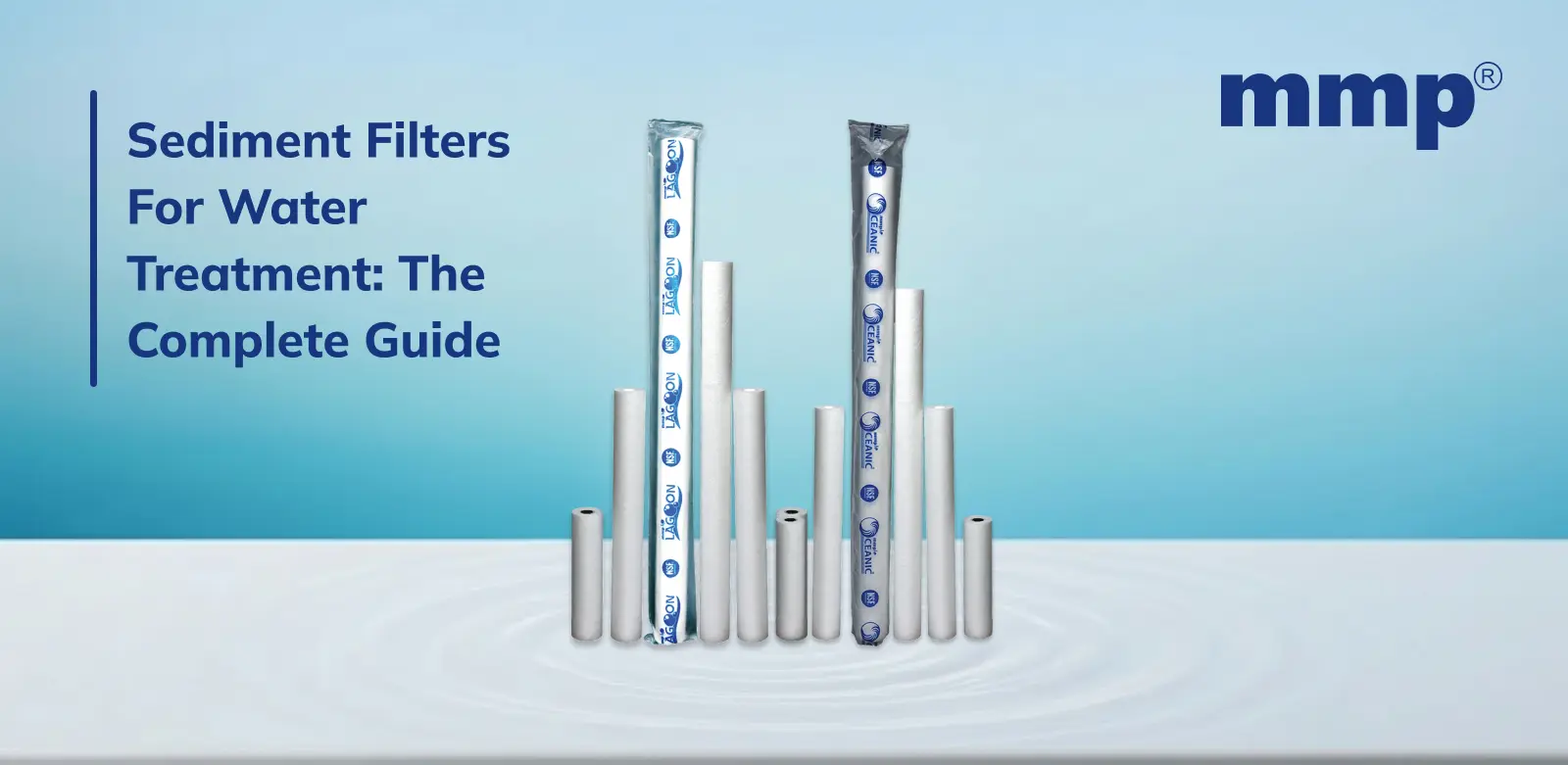
Sediment is one of those problems that sits quiet until it doesn't. A little sand in the line. Some silt after heavy rain. Rust flakes off old pipes. Then one day the outlets just aren't the same: pressure drops, aerators clog, RO prefilters choke faster than they used to, and a tank you cleaned last week somehow looks dirty again.
The tricky part is how quietly it builds. Water can look fine in a bucket and still carry tiny particles that settle inside valves, heaters, pumps, and fittings. Give it time and that becomes a maintenance headache, not just a water-quality one. That's the reason a sediment filter usually sits first in a water treatment system, as a kind of stability layer. It won't replace softening, RO (reverse osmosis), or UV. Its job is narrower: stop physical particles from making trouble before the water gets to those stages.
So this guide walks through why sediment shows up so often, what it does to operations, how the filters actually work, the types you'll meet on real sites, how to think about micron ratings, and how all of this protects equipment like softeners, RO, UV, and heaters.
Why Sediment Is a Common Problem in Water Treatment Systems
Sediment is common because it has multiple entry points. Sometimes it comes straight from the source, especially groundwater and borewell supply carrying sand, silt, or clay. Sometimes it’s created inside the system itself: older pipelines shedding rust and corrosion, or scaling that breaks loose over time. Storage tanks add another layer. They act like settling chambers, and every refill or cleaning cycle can disturb settled particles and send them back into circulation.
What turns sediment into a repeat problem is that water conditions never hold still. Plenty of sites flip between municipal and borewell supply. Some regions get cloudier water at certain times of year. In setups with big tanks, even ordinary draining and refilling shifts what gets pulled in. A filter for sediment, then, isn't only about clarity. It's there to shield the system from slow, grinding buildup.
Why it keeps showing up
- Borewell and groundwater that shift with the seasons
- Rust and internal scaling in older pipework
- Tank settling that gets disturbed during refill or cleaning
- Mixed-source water that changes quality from one week to the next
Lean More: Sediment Filter: What It Is and Why It’s Important
How Sediment Can Affect Your Business Operations
Sediment doesn’t usually cause one obvious failure. It causes “small irritations” that keep returning. One day the flow feels weaker. The next week someone reports discoloured water for a few minutes. A nozzle clogs again. A valve needs cleaning. Then maintenance starts spending time on the same issues repeatedly.
For businesses, the bigger cost is what happens downstream. Sediment acts like an abrasive. It wears pump components, valve seats, and fittings. It narrows flow paths and increases pressure drop. In facilities with many endpoints, the issue can even look inconsistent: one section of the building struggles while another is fine, simply because the particles are settling differently.
That’s why many setups rely on a sediment water filter cartridge early in the line. When that stage is right, the rest of the system behaves more predictably.
Typical operational impacts
- Pressure drop and reduced flow at outlets and equipment inlets
- Frequent clogging of fixtures, strainers, and spray nozzles
- Premature wear in pumps and valves due to abrasive particles
- Higher maintenance hours and occasional downtime
- Downstream filtration stages clogging faster than they should
What Is a Sediment Filter and How Does It Work?
Sediment filters are filter stage meant to remove physical particles before they travel through the rest of your system. Water passes through filter media. Particles get trapped based on pore structure and media design. Some filters catch more at the surface. Others trap particles throughout the depth of the media.
Depth-style filters generally handle variable sediment loads better because they have more internal space to hold particles before choking. Surface-heavy filters can deliver good flow when the load is moderate, but they can block quickly when turbidity spikes.
The practical aim isn’t only “clean-looking water.” It’s preventing particles from reaching and damaging things like softeners, RO membranes, UV stages, heaters, pumps, and fittings.
What sediment filtration actually does
- Traps sand, silt, rust, and suspended solids before they circulate downstream
- Reduces abrasive wear in moving components and valves
- Helps keep flow stable by slowing pressure drop rise
- Extends life of downstream consumables by reducing early loading
Signs Your Water Treatment System Needs a Better Sediment Filter
A lot of sites already have “a filter.” The real question is whether it’s doing enough for the actual load. When it isn’t, the symptoms repeat quickly even after replacement. That’s usually a clue that the strategy is wrong, not just the cartridge.
A common example: a facility swaps cartridges more and more often, but flow still drops quickly. That usually points to one of three things: the micron is too fine for the inlet load, the housing is undersized for peak flow, or sediment spikes are being handled without a staged approach.
Common signs
- Pressure drops fast after a cartridge change
- Visible haze or recurring discoloration at outlets
- Aerators and shower heads clogging again and again
- RO prefilters blocking too quickly or membranes fouling early
- Sediment collecting in tanks despite routine cleaning
- More frequent sediment filter replacement than the team can sustain comfortably
Different Types of Sediment Filters Used in Water Treatment
Sediment filters get classified mainly by construction and how they behave when they load up. Some are better at holding a lot of dirt without choking quickly. Some maintain stable flow under moderate load. The “right type” is the one that matches your load profile and gives a predictable service interval.
In many practical installations, polypropylene-based options are common, which is why you’ll see pp sediment water filter formats used widely. You’ll also see a spun filter style used in general sediment reduction, and a spun filter cartridge is often chosen where availability, consistent replacement, and easy stocking matter.
Common sediment filter formats
- Depth-style cartridges for higher dirt-holding under fluctuating loads
- Surface-heavy cartridges for stable flow under moderate sediment load
- Graded or layered structures that catch coarse particles first, then finer particles
- Inlet housings used at the main line to protect all downstream points
See Also: Sediment Filter for Well Water: Types, Micron Ratings, and Uses
How to Choose the Right Sediment Filter for Your Application
Selection becomes easier when you stop thinking “Which filter is best?” and start thinking “What is this filter protecting?” First, look at the source and how it behaves across the year. Then define what you’re protecting downstream. Homes usually focus on fixtures and purifiers. Businesses may need to protect heaters, softeners, RO systems, dosing units, pumps, and process lines.
Next decide placement. Some sites need whole-line protection at the inlet. Others only need point protection right before sensitive equipment. Then choose filter type and micron strategy that suits the load, without choking too quickly.
This is also where the use-case keywords matter:
- sediment filter for home for fixtures and appliances
- sediment filter for well water for higher variability and silt spikes
- sediment filter for water tank where storage and settling are involved
- sediment filter for water heater when hot-water equipment needs protection
Selection checklist
- Confirm source water and how it changes seasonally
- Decide inlet protection vs point protection
- Match filter type to sediment load pattern
- Size the housing for peak flow, not average
- Standardise the spec so procurement and maintenance aren’t guessing each time
Understanding Sediment Filter Micron Ratings
Micron rating is where people often over-correct. Going finer can feel “safer,” but fine cartridges clog faster under heavy sediment loads. Coarser cartridges last longer, but may allow fine particles through that still irritate sensitive equipment.
The most stable approach in many systems is staging: a coarser filter first for bulk solids, then a finer stage closer to RO or other sensitive equipment. That setup protects performance without forcing one cartridge to do everything.
Many systems use a 5 micron water filter as a practical balance point. A 5 micron sediment filter is commonly used before sensitive equipment when the inlet load is controlled. If sediment load is heavy, jumping straight to 5 micron at the first stage can create short cycles unless there’s a coarser pre-stage.
Filter cartridges Micron selection guidance
- Start coarser when load is heavy or unpredictable
- Go finer closer to sensitive equipment
- Use staging when you need both long life and fine protection
- Track pressure drop to refine micron strategy over time
How Sediment Filters Support Other Water Treatment Equipment
Sediment control makes other treatment equipment behave better. Softener valves and beds don’t like grit. RO membranes foul faster when pre-filtration is weak. UV works best when water isn’t turbid. Sensors and dosing units drift when suspended solids keep passing through.
That’s why sediment filtration is often the “quiet stage” that improves everything else. A water softener sediment filter is commonly used to protect softener valves and improve stability. A sediment filter for water heater reduces sediment accumulation that can lower efficiency and increase service frequency.
What sediment filtration protects
- Softener valves and media beds from clogging and wear
- RO prefilters and membranes from rapid fouling
- UV effectiveness by reducing turbidity
- Heaters and heat exchangers from sediment buildup
- Flow instruments and valves from abrasive particle damage
What Businesses Should Consider Before Buying Sediment Filters
Businesses need predictable cycles. The cartridge has to fit, yes, but it also has to load predictably and be easy to standardise across replacement cycles. That means checking fitment, peak flow capacity, and how the media behaves under real sediment load. It also means avoiding spec drift between batches.
Cost matters too, but the better lens is the total cost. That’s why the sediment filter price should be viewed against service interval, pressure drop stability, and downstream protection. A cheaper cartridge that clogs quickly usually costs more in labour, downtime, and emergency procurement.
Buying considerations
- Fitment and sealing method to avoid bypass
- Peak flow capacity to avoid undersizing
- Dirt-holding behavior under your load
- Repeat-order consistency
- Total cost view when comparing the sediment filter price
Why Businesses Choose mmp for Sediment Filtration Solutions
At this stage, supplier choice becomes a repeatability question. Businesses typically prefer suppliers that can keep specifications consistent across repeat orders and support standardisation across multiple filtration points. That’s the difference between a system that runs smoothly and one that constantly needs attention.
For many businesses, the practical benefit of a stable supply partner is simple: the same spec should behave the same way each cycle, so maintenance planning becomes predictable instead of reactive.
Conclusion
Sediment is one of the most common and most underestimated water problems in treatment systems. It enters through sources, pipelines, and storage tanks, then slowly affects flow, equipment life, and maintenance stability. A properly selected sediment stage reduces clogging, stabilises pressure drop, and protects downstream equipment like softeners, RO, UV, and heaters. The most reliable approach is matching filter type and micron strategy to your real load profile, then standardising replacement so performance stays predictable. When sediment filtration is treated as a system decision, everything downstream becomes easier to operate and maintain.