Menu

Blog
Industrial Filter Cartridges: How to Choose the Right Type
Apr 18 2026
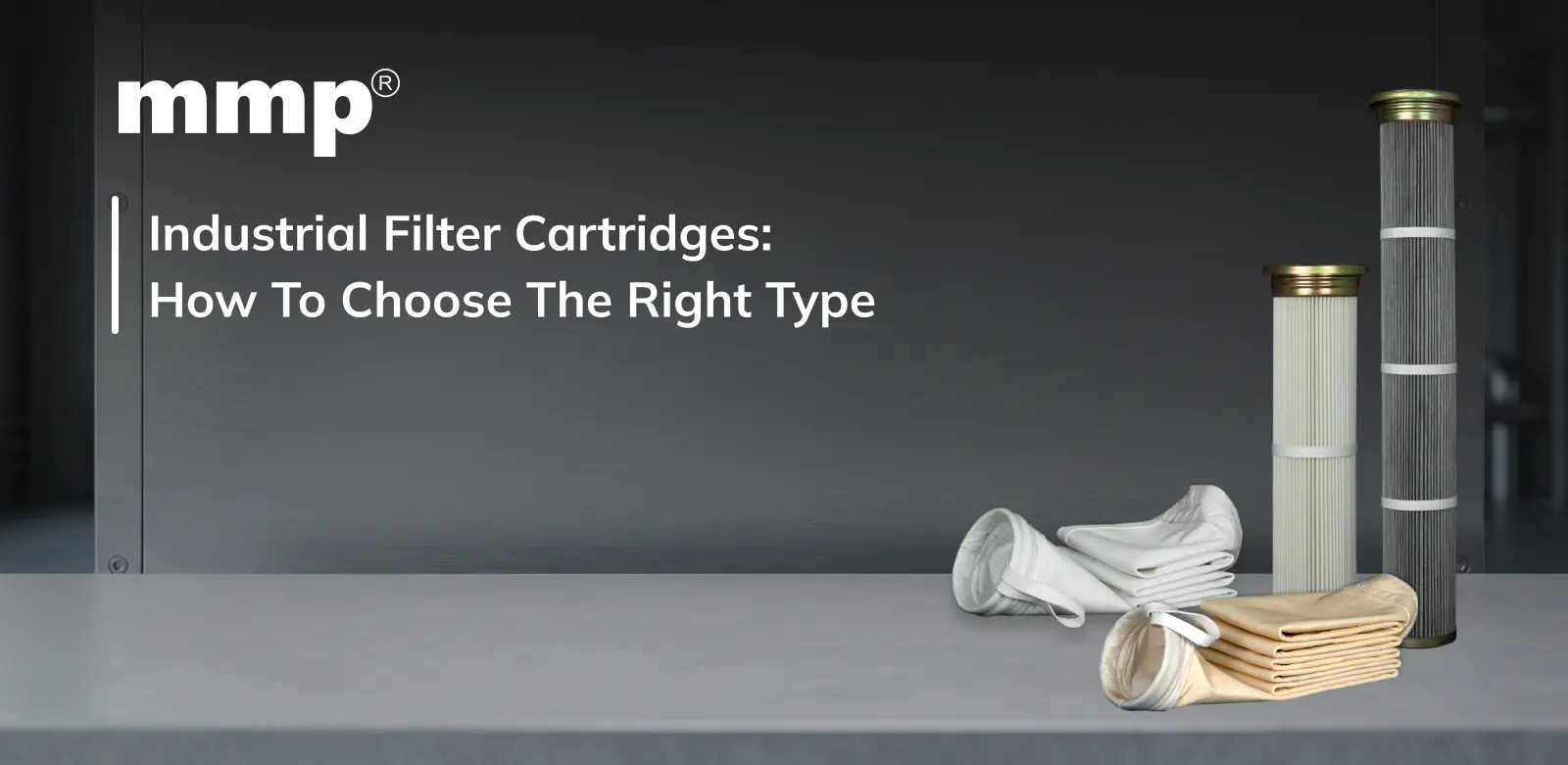
Let me be straight with you. Most industrial buyers pick a filter cartridge the same way they pick a spare part: whatever was used before, or whatever is cheapest on the next order. It works until it does not. And when it does not, you are looking at a failed RO membrane, a contaminated batch, or a pump that should have lasted five more years sitting idle while someone figures out what went wrong.
A water filter cartridge is a cylindrical filtration element placed inside a housing that traps contaminants as liquid passes through it. Sounds simple. But choosing the wrong one for your industrial setup costs far more than the cartridge itself ever would.
Honestly, choosing the right industrial water filtration cartridges is not that complicated. It just requires knowing what to actually look at before placing the order. That is what this is about.
Why Industrial Water Treatment Starts and Ends With the Right Cartridge
Industrial water treatment is not one process. It is a chain. And like any chain, it breaks at its weakest point.
In a pharmaceutical plant in Ahmedabad, that weak point could be a melt blown cartridge running past its service life. In a textile dyeing unit in Surat, it might be the wrong micron rating causing inconsistent colour output batch after batch. In a food processing facility in Pune, it could be a cartridge without NSF certification sitting in a line that feeds a regulated export market. A chemical plant in Vadodara could be running wound cartridges that are chemically incompatible with the fluid they are filtering, and nobody has connected that to the equipment wear showing up downstream.
Same product category. Very different consequences depending on which facility you walk into and what decisions were made when the system was first set up.
Getting this right matters beyond just water quality. It is about equipment lifespan, product consistency, compliance headaches you never want to deal with, and the kind of operational reliability that means your team is not firefighting problems every other week when production targets are already tight.
The Types of Industrial Filter Cartridges and What They Actually Do
1. Melt Blown Filter Cartridges: Picture polypropylene being melted down and pushed through nozzles at high speed. The fibres that come out get thermally bonded into a structure that is tight near the core and more open toward the outside. No glue involved. No binders. Just clean, layered filtration that catches coarser particles on the outer layers and finer ones deeper in where it matters most.
That is a melt blown filter cartridge. The gradient density is precisely why it performs so well as RO pre-filtration, in pharmaceutical process water lines, and anywhere contamination from the filter media itself is simply not an acceptable risk in the production environment.
mmp’s Lagoon and Oceanic series carry NSF certification. If you supply food-contact products to buyers in the USA or UK, or run pharma manufacturing in Hyderabad or Baddi, your compliance team will eventually ask for this documentation. Better to already have it sorted before an audit rather than scrambling after one.
See Also: A Practical Guide to Water Filter Cartridge Selection
2. Wound Filter Cartridges: A wound filter cartridge is exactly what it sounds like: yarn, usually polypropylene or cotton, wound tightly around a core in a diamond pattern. Those layers build up a gradient structure that catches different particle sizes at different depths through the body of the cartridge as the fluid passes through it.
These are built for dirty water situations. Borewells in Rajasthan where groundwater carries heavy mineral sediment and TDS levels run high. River intakes in Maharashtra where monsoon season sends turbidity through the roof for weeks at a time. Open cooling water systems across industrial estates in Gujarat where hard water deposits and suspended solids are a daily reality. Sand, silt, rust, suspended debris, these things load up a wound cartridge slowly and gradually before pressure drop becomes a real operational issue. That translates to longer intervals between cartridge changes and meaningfully lower maintenance costs when sediment loads are genuinely heavy day after day.
They are not glamorous. They do not offer the filtration precision of a pleated membrane. But for first-stage heavy-load filtration, there really is not a more cost-effective option available at this price point.
3. PP Pleated Filter Cartridges: A folded membrane packed into a standard cartridge body. The folding is the whole point because it gives you far more filtration surface area within the same physical space. More surface area means longer contact time with the media, longer service intervals before the pressure drop becomes a problem, and the ability to handle higher flow without forcing water through the media faster than the filter can cope with under normal operating conditions.
PP pleated filter cartridges are standard in beverage plants, breweries, biotech facilities, and sterile water systems where you need fine filtration and decent throughput running simultaneously without one compromising the other. They cost more upfront than depth filters. Across a full year of operation including energy use and replacement frequency, the gap between them usually closes more than most buyers initially expect when they run the actual numbers.
4. High Flow Pleated Filter: Same pleated design, much bigger format. A single high flow pleated filter handles 50 to 500 gallons per minute. For large water treatment plants, power stations, and desalination facilities across India and internationally, this cuts the total number of cartridges per housing dramatically, shrinks the overall system footprint, and makes routine maintenance considerably faster than managing multiple standard cartridges in parallel housings.
Plants along coastal Maharashtra and Gujarat where large-scale water treatment is a daily operational reality rather than a periodic requirement are increasingly shifting to high flow formats for exactly these reasons. The capital and labour savings compound over time in ways that make a real difference to operational budgets.
5. PP Spun Filter: Made from 100% virgin polypropylene through thermal spun bonding. The PP spun filter works on the same depth filtration principle as melt blown cartridges and the two often get used interchangeably in domestic RO pre-filtration and lighter industrial applications where the contamination load is moderate. Consistent pore structure, reliable chemical compatibility, and straightforward day-to-day performance make it a solid workhorse option for facilities that need dependable filtration without complexity.
Nobody Talks About the Core for Filter Cartridge. They Should.
The core for filter cartridge is the internal spine that stops the whole cartridge collapsing under system pressure. Standard polypropylene cores handle most applications just fine under normal conditions. Stainless steel cores become necessary when system pressures run higher than standard or when the process fluid is chemically aggressive enough to degrade PP over time during extended operation.
Learn: Water Filter Cartridges for Industrial and Home Use
Here is the problem that catches facilities off guard. A compromised core fails quietly. The cartridge looks perfectly fine from the outside. Housing pressure readings might even look normal for a while after failure begins. But the media is no longer doing what it is supposed to do, and by the time that shows up in the downstream process, the damage has already happened and accumulated.
Specify core material explicitly every single time you order cartridges for industrial use. Do not assume it is adequate just because the micron rating looks right on the spec sheet.
How to Actually Pick the Right One: Five Things That Matter
1. Test Your Water. Seriously, Do It First.
Particle size, turbidity, pH, temperature, chemical composition. You need all of this data before you choose anything at all. Without a proper water analysis, every decision after this point is guesswork, and guesswork in industrial filtration shows up as either premature clogging that costs you in replacement frequency or contamination getting through that costs you in product quality and equipment damage. Neither situation is cheap to fix and both are avoidable.
2. Micron Rating Is Not One-Size-Fits-All
Nominal-rated cartridges capture 85 to 95% of particles at the stated micron size. Absolute-rated ones hit 99.9% or more consistently across operating conditions. Any process where the consequence of particle breakthrough is serious needs absolute rating, full stop. Nominal works perfectly fine when a downstream filter stage is picking up whatever passes through the first stage anyway.
Here is how to think about it practically for most industrial buyers:
- 0.5 to 5 microns: Pharmaceutical, RO pre-filtration, electronics water, food-grade process lines requiring high purity
- 5 to 25 microns: General industrial water filtration solutions, chemical processing, textiles, printing and dyeing
- 25 to 50 microns: Coarse first-stage pre-filtration, borewell water, irrigation and agricultural applications
3. Your Flow Rate Either Works With the Cartridge or Against It
A cartridge rated below your actual flow requirement forces water through the media too fast. Filtration efficiency drops because contact time with the media is insufficient, pressure spikes faster than normal, and the cartridge loads up and needs replacement sooner than it was designed to. Oversizing in the other direction wastes capital on housing and infrastructure that simply did not need to be that large.
A practical rule that holds up well in real field applications: choose a cartridge rated for at least double your target flow rate. It gives you the headroom you need as the media gradually loads up through its service cycle and flow resistance naturally increases.
4. Chemical Compatibility Is Not Always Obvious
Polypropylene resists most acids, alkalis, and organic solvents reliably. That is a significant part of why it dominates commercial and industrial water filtration solutions globally across so many different industry types. Halogenated solvents and strong oxidising agents are a different story entirely and they do attack PP in ways that cause gradual degradation. If your process fluid sits outside standard industrial water profiles, verify compatibility with the manufacturer before the bulk order goes in. Chemical plants in Vadodara, Dahej, and Ankleshwar regularly deal with fluid profiles that are genuinely aggressive and this verification step matters more there than in almost any other setting.
5. Stop Matching to the Spec Sheet. Match to Your Industry.
Pharma units in Ahmedabad and Hyderabad need absolute-rated melt blown or pleated cartridges at 0.2 to 1 micron, NSF or FDA compatible without exception.
Food and beverage plants in Pune and Delhi need adhesive-free, food-safe melt blown or pleated cartridges at 1 to 5 microns. If you are exporting to regulated markets in the USA, UK, or UAE, the adhesive-free requirement is not negotiable under any circumstances.
Textile and dyeing mills in Surat and Tirupur need consistent melt blown cartridges for ink and dye filtration where micron consistency across batches directly determines colour output quality and product rejection rates.
Chemical processing facilities in Vadodara and Ankleshwar need wound or PP spun cartridges matched specifically to the fluid being processed. Chemical resistance takes priority over everything else in those environments.
Water treatment plants across Maharashtra, Gujarat, and Rajasthan typically run multi-stage systems: coarse wound cartridges at 25 to 50 microns handling the first stage, stepping down to fine melt blown or pleated cartridges at 1 to 5 microns before RO membranes take over.
Cartridge Filtration Systems for Industrial Applications: Stage It Properly
One cartridge doing all the work is almost always the wrong answer for serious industrial applications and it shows up quickly in replacement costs and downstream problems.
Effective cartridge filtration systems for industrial applications run in stages, and the difference it makes is bigger than most buyers initially expect:
Stage 1: 25 to 50 micron wound or melt blown cartridge takes the heavy sediment load upfront. Protects everything downstream from clogging rapidly under normal operating conditions.
Stage 2: 5 to 10 micron pleated or melt blown handles the general particle reduction work in the middle of the system where bulk contamination is addressed.
Stage 3: 1 to 5 micron absolute-rated cartridge does the final polishing before RO membranes or any other sensitive downstream equipment that cannot tolerate fine particulate contamination.
The fine filters in Stage 3 cost the most and matter the most to protect from overloading. Staging means they are not doing the heavy lifting from day one of their service life. That alone extends their operational lifespan considerably, and the annual replacement spend across the whole system drops in ways that genuinely add up when you run the full year cost.
Cartridge Filter Replacement Benefits:
Most plants don’t push cartridge changes because they’re careless. It’s usually because everything still looks “normal” on the line, and nobody wants to pause production for something that feels minor. But cartridges don’t fail dramatically. They fade out. Pressure drop starts inching up, flow gets less comfortable, and fine particles begin slipping through in the background. You won’t always notice it right away, but your pumps, valves, membranes, and heat exchangers definitely will. By the time the flow drop becomes obvious, you’ve already been paying for it in wear, fouling, and quality risk. A timely cartridge change is one of those quiet maintenance habits that keeps bigger problems from showing up later.
Pointers (benefits you actually get):
- Better RO protection: Good pre-filtration means the RO is not constantly fighting suspended grit. That usually shows up as steadier output and membranes that last longer instead of getting exhausted early.
- Less downstream wear: Once a cartridge is spent, more particles travel further. They settle in valves, chew at pump components, and slowly rough up heat exchanger surfaces. It’s not instant damage, it’s the kind that builds until it becomes expensive.
- Lower quality risk in sensitive lines: In food and pharma, a weak filtration stage is not a small issue. It can trigger deviations, hold-ups, and sometimes even batch rejection. Compared to that, a cartridge change is the easy call.
- Fewer surprise shutdowns: Changing before the system chokes helps avoid sudden pressure drop spikes and those last-minute maintenance stops that disrupt schedules.
- Smarter timing: Don’t rely only on dates. Keep an eye on the differential pressure versus your normal baseline. When the trend climbs and stays there, the system is telling you it’s time.
mmp Filtration: Three Decades of Manufacturing Behind Every Cartridge
mmp Filtration has been making industrial filter cartridges since 1994. Based in Mumbai, they supply clients in the USA, UK, UAE, Australia, and across India from a single in-house manufacturing operation that covers PP yarn, filter cores, winding machines, and finished cartridges all under one roof. That matters more than it sounds when consistency across large bulk orders is the actual requirement rather than just a preference.
They were the first company in India to earn NSF certification for filter cartridges, a credential that carries genuine weight with compliance teams and international buyers in regulated industries who need documentation that holds up to scrutiny.
Their product range covers the full spectrum of industrial water filtration cartridges: Lagoon and Oceanic melt blown series, Hydro wound cartridges, PP pleated cartridges, high flow pleated filters, and PP spun filters. Custom micron ratings, sizes, end cap configurations, and core materials are all available for bulk and OEM orders without the lead time uncertainty that comes with overseas sourcing.
Conclusion
There is no single best water filter cartridge. There is only the right one for your water quality, your process requirements, and the specific conditions your system runs under day to day across your production schedule. mmp Filtration has been helping manufacturers and treatment facilities across India and internationally get filtration right since 1994. Three decades of in-house manufacturing experience, NSF-certified products across the full range of cartridge filtration systems for industrial applications, and a direct supply model that keeps quality consistent whether you are running a mid-sized processing unit in Pune or a large-scale industrial water treatment plant in Gujarat.