Menu

Blog
Bag Filter Types Explained: Uses, Benefits & Applications
Jan 20 2026
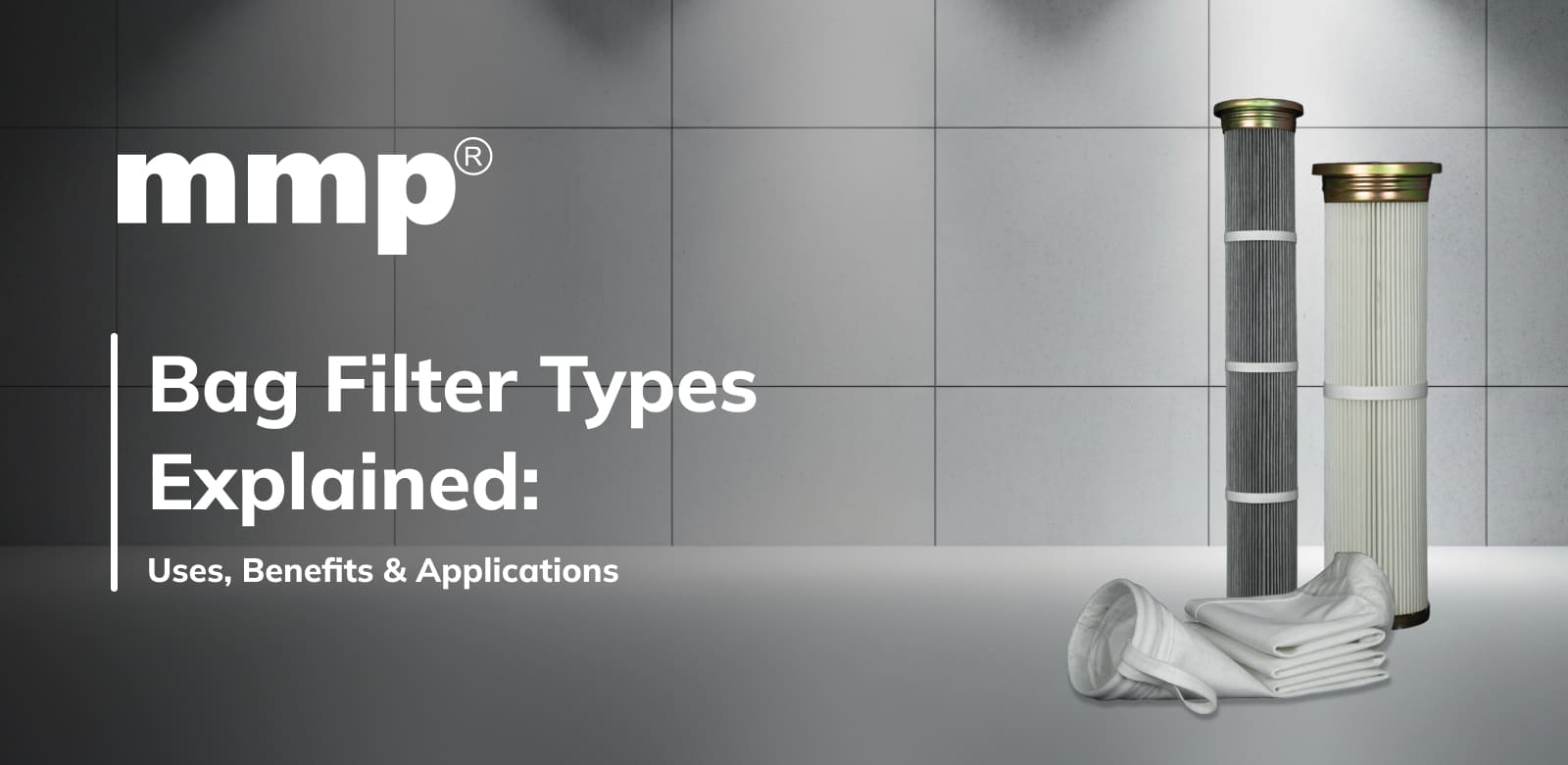
Industrial Filter Bags play a vital role in Industrial Filtration Systems for controlling the emissions of airborne Dust & Solid Contaminants created through Manufacturing and Material Handling Processes. Filtration must take place in industries utilizing large volumes of aircraft-carrying particles in air; the protection of equipment, the stability of process conditions, and the protection of the working environment depend heavily on filtration through Filter Bags.
Bag filters act as mono-functional bag filter systems that create a physical blocking mechanism that separates solid contaminants from the air stream by directing the contaminated air through purposely designed filtration bags. Dust particles are trapped inside the fabric of the dust filter bag as the air continues to flow through the bag and will remain there until the filter reaches its saturation point. The thickness of the saturating layer of dust provides increased filtration capability as it captures even smaller-sized particles beyond the dust in the air stream.
This blog explains the working principle of bag filters, the different types of industrial filter bags, the fabrics used in their construction, and how they are applied across industries. It also covers manufacturing considerations, benefits, maintenance practices, and answers commonly asked questions related to industrial dust collector bags.
Basic of Bag Filter and Working Principle
The operation of bag filter systems utilizes both surface and depth filtering technologies. Dusty air gets sucked into the unit and through an inlet duct toward the air filter bag, where it strikes the bag and collects dust particles from its fabric members.
When first filtered through the bag, larger particles accumulate on top of the dust filter bag, while fine particles can sometimes penetrate the fibers of the material and become stuck. As time progresses and more particles pass through the filter, a dust cake will form on the top surface of the filter envelope material. With the accumulation of this dust layer, total dust retention becomes significantly improved due to the presence of an additional retention material.
To maintain uniform airflow, debris that accumulates in the system should be regularly cleaned out. Typical methods include using pulse jet air cleaning, reverse-air cleaning, or mechanical agitation to dislodge (or "shake off") the dust accumulated on filter bags, which are then cleaned and returned to service to filter out the dust again.
Learn: What Is Bag Filter
For this process to be successful, choosing the right fabrics is critical. It must also include proper airflow velocities and cleaning cycles. The right type of fabric provides excellent filtration efficiency as well as maintaining a low level of pressure drop.
Different Types of Filter Bags
The classification of industrial filter bags mainly hinges upon the fabrics that comprise them, since each fabric provides distinctly different performance characteristics when exposed to various types of operating conditions.
See Also: Filter Bags: A Quick Guide to Dust Filtration Solutions
- Polyester filter bags: Among the various types of filter bags found in industrial applications, polyester filter bags exhibit balanced performance and durability and, therefore, are some of the most widely produced filter bags. Polyester filter bags possess good abrasion resistance and perform well when utilized in conjunction with dry dust and moderate temperatures.
- Polypropylene Filter Bags: Polypropylene filter bags are used when a filter bag will be exposed to moisture and/or chemicals. These filter bags are made from a fabric that has good moisture absorption characteristics and great chemical resistance; therefore, they can be used in highly corrosive dust environments.
- Acrylic Filter Bags: The purpose of acrylic bags is to allow for applications that require moisture and hydrolysis to be resistant to those conditions. Acrylic bags also provide an effective way of filtering dust that contains acid (or an environment with acidic dust). Acrylic bags will perform satisfactorily in moderately elevated temperatures.
- Aramid (Nomex) Filter Bags: Aramid fabric filter bags are designed to be used for high-temperature dust collection applications. When exposed to high temperatures, these types of filter bags will provide structural stability and maintain their filtration effectiveness during continuous thermal stress.
- PPS Filter Bags: PPS (Polyphenylene Sulfide) filter bags are manufactured from the highest quality materials, allowing them to be used in environments that experience high temperature and chemical aggression. The materials are designed to withstand extremely high levels of acid, base, and oxidation.
- PTFE Filter Bags: PTFE filter bags are known for their exceptional chemical resistance and superior ability to capture extremely fine particles. Most applications in which PTFE filters are used require constant, efficient filtration.
- Pleated Filter Bags: Pleated filter bags & pleated cartridges consist of the same high-quality industrial fabric as standard filter bags; however, they have been designed with folded media so that the surface area available for filtration has been increased, which allows for more air flow to pass through the bag and therefore lowers the amount of pressure lost through compact dust collectors.
With 40+ years of experience, mmp manufacture and supply all types of industrial filter bags worldwide, along with offering customized filter bag solutions for diverse industrial applications.
Manufacturing of Industrial Bag Filters
Before manufacturing an industrial bag filter, manufacturers will determine the proper weave material based on the filter bag's intended application. Using precision manufacturing processes, they will prepare the fibers of the filter bags in either a woven or non-woven format, so that they have the same degree of permeability and strength throughout the entire length of the industrial filter bags.
The rolls will then be cut and sewn, or welded, according to the type of material used to make the filter bag. The manufacturer will take great care to control the seam strength, dimensional accuracy, and surface finish of the filter bag in order to ensure that the filter bag performs consistently.
Manufacturers also may treat the industrial dust collector bags with various processes, such as calendaring or lamination of membranes, to enhance the bag's ability to release dust and filter efficiently. Because fabric variations during the manufacturing process can greatly impact the performance and life of filter bags, it is important for manufacturers to implement quality control throughout the manufacturing process.
Read More: Buy Dust Collector Bags: Customized Solutions for Your Needs
Benefits of Bag Filtration
One of the reasons bag filtration has been a preferred choice of manufacturers for controlling dust in industrial environments is that bag filters combine effectiveness with flexibility and dependable operation. In contrast to most filtration systems, which have been designed for a particular set of operating conditions (for example, high moisture content), bag filters can operate effectively under a wide variety of conditions (e.g., dust loads, particle sizes, air flow rates) with high effectiveness. In addition to being a suitable method for controlling dust in a given industry, they can also be used for many different types of processes. This makes bag filters an ideal choice for applications where continuous duty is performed.
Effective dust cake formation and maintenance from bag filtration systems increases the amount of fine particles captured while minimizing energy use. Predictable pressure drop behaviours and consistent system performance can be achieved through optimal fabrication choices and cleaning cycles. This consistency will lead to reduced operational downtime and extended filtration cycles over time.
Liquid Filter Bags: Types, Applications, and Benefits
The modular structure of industrial dust collector bags provides maintenance and replacement options that don't require an entire system redesign, which represents another significant benefit. Modular bag design offers important benefits for facilities that experience changes in production volumes or changes in process conditions.
There are several advantages to bag filtration, such as:
- High efficiency in filtering out large and small particles.
- Continuous operation, even under high concentrations of particulate matter present in the air.
- Versatile bag fabrics that can withstand different temperatures and chemical environments.
- Extended life expectancy when cleaned and maintained correctly.
- Ability to design a bag filtration system that is scalable to fit various air flow rates.
Choosing the Right Bag Filter Manufacturer for Your Application
When selecting the appropriate filter bag, you need to consider the specific process conditions, such as dust composition, maximum temperature, airflow rate, and method of cleaning the filter bag. You should select a fabric based on the parameters associated with the process type selected above to avoid either excess wear on the bag from a combination of incorrect fabric choice or improper performance.
See Also: Performance Analysis of Filter Bags in Various Industrial Applications
Manufacturers of industrial filter bags that have been in the industry long enough to have gained experience typically analyze the application data to help recommend the appropriate fabric types and construction methods. Manufacturers that are focused on fabric performance, consistency, and quality control are typically able to provide long-lasting, consistent performance.
At this early stage of the filter bag selection process, manufacturers such as mmp filters are referenced not for advertising purposes, but rather as manufacturers focusing on the manufacturing of their filter bags on specific types of fabrics and supporting industrial processes.
Installation of Bag Filter and Maintenance
The effectiveness of a bag filtration system can be impacted to a considerable degree by proper installation techniques and regular maintenance procedures. Damaged or poorly manufactured filter bags will not perform at their designed efficiency and will generally fail well before their anticipated lifespan if the installation tolerances, sealing techniques, or airflow patterns are not correct. When installed properly, the contaminated air that is being filtered must be forced through the filtration media evenly and consistently, rather than being able to flow around the filter media through openings or gaps caused by poor seals or poorly located connections.
Learn: Guide to Dust Collector Filter Bags
Correct alignment of the dust filter bags within the bag cage is necessary to reduce fabric abrasion and equalize the distribution of stress across the filter bags when installing the filter bags. Properly seal the bags to the tube sheet to prevent any potential leakage of unfiltered air; if unfiltered air enters the downstream equipment, it will impact emission control and increase the amount of dust that accumulates on the downstream equipment. Careful consideration of these points will therefore have an immediate and significant effect on both the performance of your filtering system as well as the duration that your filter bags will last.
Monitoring the differential pressure across an air filter bag will give you an early indication of when to clean it due to issues such as clogged filters or a lack of cleaning efficiency. Cleaning systems that keep your filter bags clean must be set so as to get the maximum amount of dust out of the filter bag, without damaging the fabric structure.
Key maintenance practices include:
- Regular visual inspection of the condition of the bags being used in an industrial dust collector
- Visual verification of the operation of cleaning/jet pulse systems
- Establish a schedule for bag replacement based on a decreasing pressure drop trend
- Control the entrance of moisture on the bag that could facilitate adhesion and the degradation of the fabric material
Consistent maintenance extends the life of a bag and the stability of air, and energy consumption.
Bag Filters vs Other Filtration Systems
When evaluating bag filters against other types of filtration systems, the key differences can be seen in the extreme environments typically found in the industry today. Although every type of filtration technology has its own advantages, bag filtration particularly excels in environments where there are large amounts of dust, mixed particle sizes, and high temperatures operating at high levels.
While cyclone separators may be used to pre-clean coarse particles in most applications, they do not provide a high level of efficiency for capturing small particulate matter. In addition to their compact design, cartridge filters generally have a higher surface area than cyclone separators; however, due to the nature of the applications where there is a higher load of dust or abrasive particulate matter, the life expectancy of cartridge filters will be shorter due to premature clogging.
Wet scrubbers work well for some types of gas contaminants but they add many additional issues with handling water, managing sludge and corrosion. Unlike wet scrubbers, industrial filter bags are dry systems, providing the same high filtration efficiencies as wet scrubbers without the complications associated with using water.
mmp Bag filters have become the dominant choice for industrial dust filtration due to the advantages of:
- Able to accommodate higher weights of dust before their operational effectiveness declines rapidly.
- Broad spectrum of tolerable operating temperature ranges while remaining operationally efficient.
- Predictably decrease in pressure drop over time.
- Have minimal shutdown time during operation due to continual operation without stopping manufacturing.
All of these advantages create a consistent, highly accepted method of controlling dust emissions from industrial processes using bag filtration technology.
Summery:
mmp Filtration bags are widely used in dust collection systems because they can handle high dust loads, varying particle sizes, and continuous operation. Their performance depends not only on system design but also on selecting the correct fabric type based on operating temperature, dust characteristics, and chemical exposure. In dust collection systems, dust collector filter bags act as the primary filtration media, directly influencing efficiency, pressure drop, and service life.